



Introduction: A Tale of Two Strategies
In the high-stakes arena of travel marketing, the traditional assumption has long been that the loudest voice—backed by the deepest pockets—commands the greatest market share. For the first half of 2026, Marriott International operated under this very premise, deploying a staggering $40 million budget into the U.S. national television landscape. Yet, as the dust settles on the mid-year metrics, a counterintuitive narrative has emerged. Despite Marriott’s aggressive dominance in airtime, it was Airbnb—a platform that has historically favored digital-native, grassroots-style outreach—that successfully captured the cultural zeitgeist during the World Cup.
This divergence in results raises fundamental questions about the efficacy of modern advertising. When a massive, diversified portfolio like Marriott is eclipsed by a leaner, more focused competitor during a marquee global event, it signals a shift in the travel industry’s marketing paradigm. It suggests that in the attention economy, the precision of a campaign’s context is far more valuable than the sheer volume of its distribution.
Main Facts: The Spending Gap
The data, provided exclusively by iSpot.tv, paints a clear picture of the fiscal disparity between the industry’s largest incumbent and its most disruptive challenger. Marriott International solidified its position as the largest spender in the hotel sector, allocating $35.5 million toward its masterbrand and its loyalty program, Marriott Bonvoy. When including the advertising spend for its extensive portfolio of sub-brands—ranging from Fairfield Inn & Suites to Courtyard—the figure surpassed $40 million.
To put this in perspective, total national TV spending for the entire hotel industry during the same period reached approximately $77.5 million. Marriott’s footprint accounted for nearly 45% of that total expenditure.
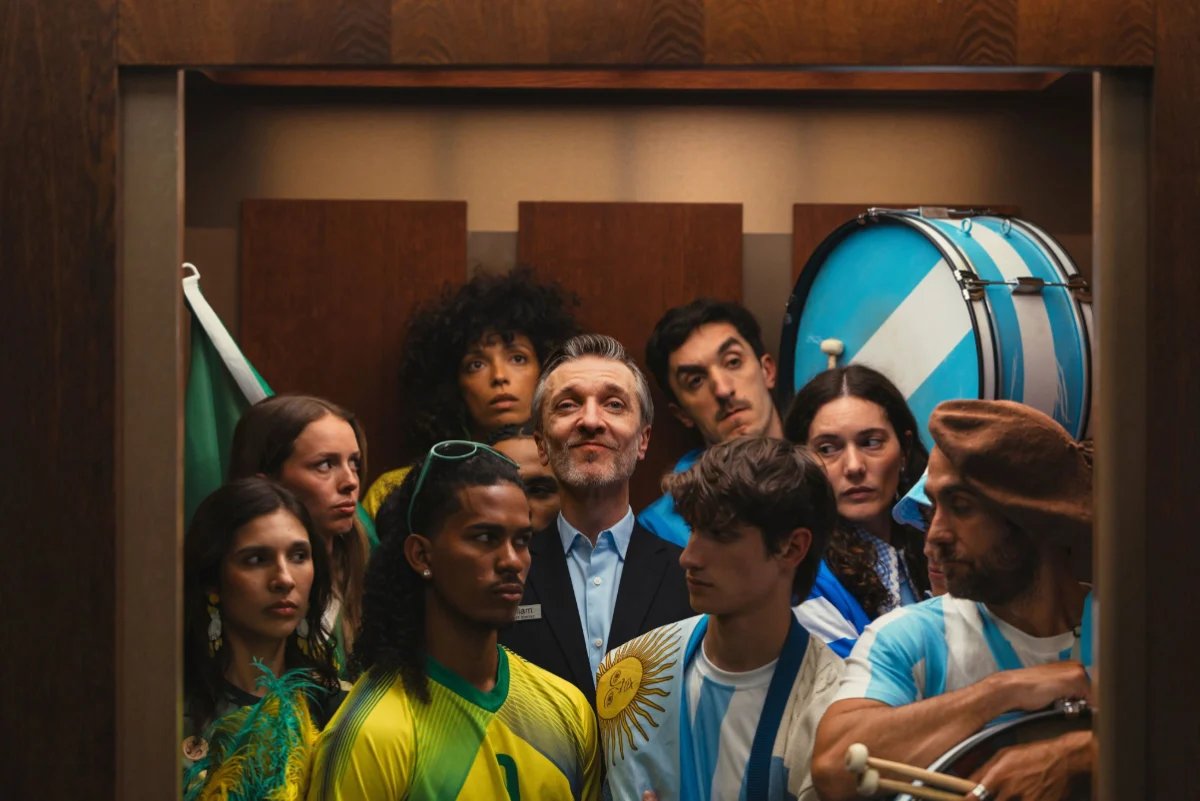
However, impressions—the industry-standard metric for how many eyes actually land on an advertisement—tell a different story. While Marriott saturated the airwaves with broad, brand-building messaging, Airbnb executed a surgical strike during the World Cup. By aligning its creative assets directly with the intense, localized excitement of the global tournament, Airbnb achieved higher audience reach and engagement, effectively “out-advertising” the hotel giant without needing to match its total spend.
Chronology: The First Half of 2026
The first six months of 2026 were defined by a massive push to capture the post-pandemic travel surge, culminating in the quadrennial fervor of the World Cup.
- Q1 2026: Marriott International initiates its aggressive spending strategy. The focus is on brand awareness, promoting the Marriott Bonvoy ecosystem as the premier choice for luxury and business travel. Throughout January and February, national TV spots for Fairfield Inn & Suites and Courtyard by Marriott begin to saturate prime-time programming.
- April 2026: Marriott’s sub-brand spending becomes more pronounced. Fairfield Inn & Suites leads the pack with $3.3 million in dedicated spend, attempting to capture the mid-tier market.
- May 2026: As the World Cup approaches, industry leaders finalize their media buying strategies. Marriott continues its "broad-net" approach, buying slots across diverse programming to maintain its 45% market share of hotel TV ads.
- June 2026: The World Cup commences. Airbnb pivots its strategy, moving away from its traditional digital-only bias to deploy high-impact, contextually relevant spots during tournament matches.
- Mid-2026 Review: iSpot.tv data confirms that while Marriott dominated the total volume of ad placements for the first half, Airbnb achieved superior impression density during the specific window of the World Cup, marking a significant victory for tactical marketing over traditional blanket coverage.
Supporting Data: Where the Money Went
The iSpot.tv data highlights a granular breakdown of the hotel sector’s spending habits. Marriott’s strategy was clearly predicated on portfolio-wide visibility.
Marriott’s Spending Breakdown:
- Marriott Bonvoy/Masterbrand: $35.5 million.
- Fairfield Inn & Suites: $3.3 million.
- Courtyard by Marriott: Significant investment (exact figures pending final Q2 tallies, but noted as a top-three sub-brand).
- Portfolio Share: 45% of total industry national TV spending.
The Contrast: Airbnb’s Leaner, Sharper Approach
While Airbnb’s total TV spend remained significantly lower than Marriott’s, the cost-per-impression (CPI) for their World Cup campaign proved vastly superior. By choosing to concentrate its budget on a single, high-intensity event, Airbnb ensured that its brand was synonymous with the excitement of the tournament. Marriott, by spreading its $40 million across a broad range of programs throughout the six-month period, saw its message diluted across a more fragmented audience.
Official Responses and Industry Sentiment
When approached for comment, industry analysts noted that Marriott’s strategy serves a different purpose than Airbnb’s. Marriott’s goal is "top-of-mind" awareness for a massive, diverse portfolio of properties. As one industry spokesperson noted, "Marriott isn’t just selling a room; they are selling a loyalty ecosystem. Their spend is designed to maintain the status quo and keep them as the default choice for business travelers."
Airbnb, conversely, has leaned into its role as an "event-based" travel platform. Their marketing team has historically avoided traditional TV in favor of social media, but their move into World Cup advertising demonstrates a newfound confidence in leveraging global television events.
Representatives from both companies have remained publicly tight-lipped regarding specific ROI (Return on Investment) metrics, though marketing experts suggest that the "Airbnb effect" during the World Cup is a textbook case of leveraging cultural relevance. By placing their brand in the middle of a global conversation, they bypassed the need for the repetitive, high-frequency advertising that Marriott relies on.
Implications: The Death of the "Broad-Net" Strategy?
The success of Airbnb’s campaign, relative to Marriott’s massive spend, carries significant implications for the future of travel marketing.
1. Context Over Volume
The most critical takeaway is that modern audiences are increasingly resistant to generic, high-frequency advertising. Marriott’s approach—buying across the board to ensure saturation—is a relic of the "Mad Men" era of marketing. Today, the consumer is bombarded with content; reaching them requires meeting them where their passions lie. Airbnb’s World Cup ads were not just commercials; they were part of the event experience.
2. The Rise of Event-Based Marketing
For travel brands, the calendar is the new frontier. Instead of maintaining a constant, expensive presence on national TV, brands are likely to shift toward "burst" marketing strategies. By saving their budgets for specific, high-interest windows—like the World Cup, the Olympics, or major cultural festivals—brands can achieve higher resonance with a smaller budget.
3. Loyalty vs. Experience
Marriott’s focus on the Bonvoy loyalty program is a defensive strategy aimed at customer retention. Airbnb, however, focuses on the experience of the stay. In a world where travelers are increasingly prioritizing unique experiences over brand-standard consistency, Airbnb’s marketing is perfectly aligned with the current consumer sentiment. Marriott’s challenge, moving forward, will be to inject that same sense of experiential urgency into its marketing, rather than relying on its sheer size to dominate the conversation.
Conclusion: A Shift in the Balance of Power
The first half of 2026 has served as a wake-up call for legacy hotel brands. While Marriott’s $40 million investment in national TV was a massive display of financial strength, the metrics suggest it was not the most efficient use of capital.
As the digital age continues to mature, the barriers to entry for high-impact marketing are lowering. Brands that rely solely on the "brute force" of a large budget will find themselves increasingly out-maneuvered by leaner, more agile competitors who understand the value of cultural timing. For Marriott, the path forward may involve refining its massive portfolio to speak to consumers with the same tactical precision that allowed Airbnb to win the World Cup. For the industry at large, the message is clear: when it comes to the battle for attention, being smart is far more important than being loud.
