




As Hungary approaches its pivotal parliamentary elections on April 12, 2026, the nation finds itself at the epicenter of a high-stakes geopolitical struggle. Far from being a localized contest, the upcoming vote has become a lightning rod for the competing interests of global superpowers. With the nation’s energy infrastructure serving as both a lifeline and a flashpoint, the international community is watching closely to see whether Budapest will deepen its ties with Eastern powers or pivot toward a more integrated European energy strategy.
To unpack the complexities of this transition, Clean Energy Wire (CLEW) is hosting a specialized, expert-led webinar for journalists worldwide on April 9, 2026, from 16:00 to 17:30 CEST. This session, supported by Journalismfund Europe, aims to equip members of the press with the analytical tools necessary to navigate the intersection of Hungarian energy policy and European sovereignty.
Main Facts: The Stakes of the 2026 Election
The 2026 parliamentary election is arguably the most significant test of Hungary’s strategic orientation in the last decade. At the heart of the debate is the "Paks II" nuclear power plant project—a multi-billion euro endeavor that symbolizes the tension between national economic interests and the European Union’s goal of reducing strategic dependence on non-democratic actors.
- Date of Election: April 12, 2026.
- Core Conflict: The balancing act between Russian, Chinese, and American interests in Hungary’s energy mix.
- The EU Context: Brussels is actively seeking to curb "outside interference" in critical infrastructure, viewing the influence of external powers in the energy sector as a threat to the bloc’s collective security.
- The Webinar: A virtual briefing on April 9, 2026, designed to provide journalists with the historical, political, and technical context required to cover the energy dimensions of the election effectively.
Chronology: A History of Strategic Entanglement
Understanding the current landscape requires looking back at the evolution of Hungary’s energy policy over the last twenty years.
The Foundation of Dependency (2000–2010)
During the early 2000s, Hungary, like many post-Soviet states, remained heavily reliant on Russian gas and oil infrastructure. This period was characterized by a gradual shift toward EU integration, yet the underlying dependency on Moscow remained a structural reality that dictated foreign policy outcomes.
The Pivot toward the East (2010–2020)
Following the 2010 elections, the Hungarian government initiated a "Look East" policy. This period saw the cementing of the Paks II nuclear agreement with Russia’s Rosatom. Simultaneously, Chinese investment began flowing into renewable energy projects, specifically solar parks, and telecommunications infrastructure, creating a multi-layered dependency that challenged EU regulatory norms.
The Era of "Strategic Sovereignty" (2020–Present)
The post-pandemic landscape, compounded by the energy crisis following the invasion of Ukraine in 2022, brought the reality of Hungary’s energy architecture to the forefront. The EU’s "REPowerEU" plan, designed to end reliance on Russian fossil fuels, has placed Budapest on a collision course with Brussels, as Hungary continues to advocate for exemptions and bilateral energy deals that deviate from the collective European approach.
Supporting Data: Infrastructure and Influence
To understand the scale of the influence being exerted, one must examine the physical assets that define the landscape.
The Paks II Nuclear Power Plant
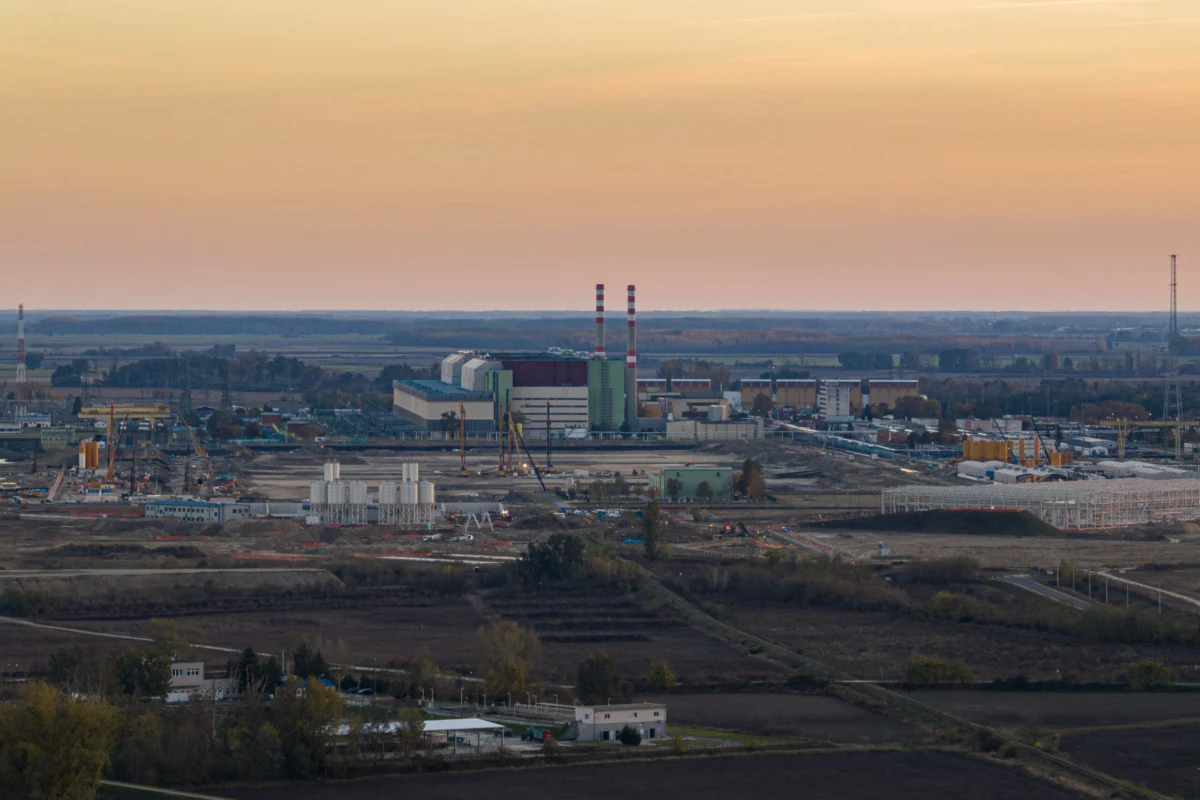
The Paks II project is the crown jewel of Russian influence in Hungary. Utilizing VVER-1200 reactors, the project represents a multi-decade technological and financial commitment to Moscow. Despite international sanctions and calls for diversification, the construction site—visible in the recent imagery provided by Paks II Zrt.—continues to be a focal point of industrial activity.
The Rise of Chinese Photovoltaics
While nuclear energy occupies the headlines, China has quietly secured a dominant position in Hungary’s renewable transition. Chinese manufacturers supply a significant percentage of the solar panels and battery storage systems currently being installed across the Hungarian plains. This "green" transition, while aligning with EU climate goals, creates a new form of technological dependency on Beijing.
The American Interest
The United States, through diplomatic pressure and private investment, has sought to counter-balance these influences by advocating for the expansion of LNG import capacities and regional energy interconnections. The U.S. narrative emphasizes "energy security as national security," pressuring Budapest to diversify away from its reliance on Rosatom and state-backed Chinese firms.
Official Responses: The Battle of Narratives
The rhetoric surrounding these energy investments is as fragmented as the global political landscape.
- The Hungarian Government: Budapest maintains that its energy policy is purely pragmatic. Officials argue that securing low-cost energy—regardless of the source—is essential for the country’s industrial competitiveness and the maintenance of the "utility price cuts" that have been a cornerstone of domestic political support.
- The European Commission: Brussels views the situation through the lens of "de-risking." The Commission has consistently warned that relying on non-EU actors for critical infrastructure exposes the member state to political blackmail and undermines the unity of the European Single Market.
- Opposition Voices: Domestic opposition groups in Hungary frequently frame the reliance on Russia and China as a "betrayal of European values." They argue that these deals lack transparency, are prone to corruption, and ultimately isolate Hungary from its natural allies in the West.
Implications: A Future at a Crossroads
The outcome of the April 12 election will send a clear signal regarding Hungary’s future trajectory.
The EU-Hungary Relationship
A continuation of the current policy could lead to further friction within the EU. We may see an increase in legal challenges from Brussels regarding energy tenders and potentially a tightening of the conditions for accessing EU structural funds. Conversely, a pivot toward a more "Europeanized" energy policy could lead to a thawing of relations and a reintegration of Hungary into the bloc’s strategic energy planning.
Climate Goals vs. Geopolitical Reality
Hungary has pledged to meet ambitious climate targets, including the expansion of solar and nuclear capacity. However, if these projects remain tied to foreign geopolitical agendas, the implementation may be stalled by international sanctions or regulatory hurdles. The real question is whether Hungary can achieve a green transition while simultaneously navigating the demands of its Eastern partners.
The Role of the Media
For the international press, the challenge lies in moving beyond the headlines to understand the granular details of these energy deals. It is not enough to report on the tensions; journalists must investigate the supply chains, the financing models, and the long-term political costs of these infrastructures.
The webinar on April 9 is designed to provide this necessary depth. By bringing together regional experts, energy policy analysts, and investigative journalists, CLEW hopes to foster a more nuanced understanding of how global power dynamics manifest in the Hungarian energy sector.
Join us on April 9, 2026, at 16:00 CEST to prepare for the critical coverage of the Hungarian elections. Your questions will shape the discussion as we explore the future of European energy security in an increasingly polarized world.
For more information and to register for the webinar, please visit the Clean Energy Wire event portal.
