
Main Facts
Tesla is undergoing a fundamental restructuring of its product roadmap, delaying the timeline for "volume production" of several of its most anticipated next-generation technologies. According to the company’s second-quarter shareholder letter, Tesla has officially abandoned its previous goal to reach volume production for the Cybercab, the Tesla Semi, and its Megapack 3 commercial energy-storage solution by the end of 2026.
Furthermore, the electric vehicle and robotics pioneer has quietly removed language from its previous quarterly communications regarding the timeline for its Optimus humanoid robot to reach volume production.
This retreat from aggressive production targets highlights the operational bottlenecks currently facing the Texas-based manufacturer. Chief among these is the challenge of scaling its proprietary 4680 battery cells, which are crucial for the mass-market deployment of both the Cybercab and the heavy-duty Tesla Semi. While Tesla confirmed it has initiated early-stage manufacturing of the Cybercab at its Gigafactory in Austin, Texas, it admitted that production lines for both the Semi and the Optimus robot remain in the build-out phase.
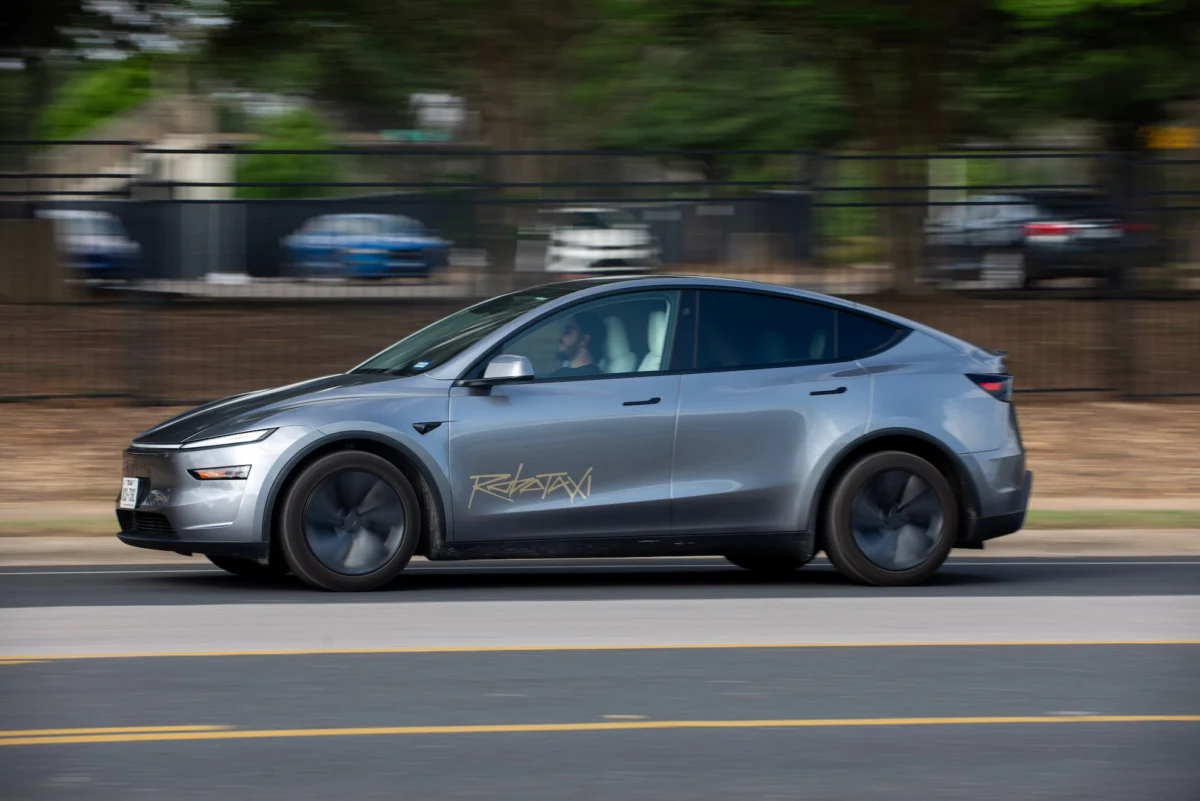
The operational delays coincide with a massive financial reallocation. Tesla is aggressively transitioning from a pure-play electric vehicle (EV) manufacturer into an artificial intelligence and robotics enterprise. This strategic pivot has come at a significant short-term cost:
- Capital Expenditures: Projected to reach an unprecedented $25 billion, roughly triple historical spending levels.
- Operating Expenses: Surged by 47% year-over-year to $4.3 billion.
- Free Cash Flow: Slipped into negative territory, recorded at negative $1 billion for the quarter.
- Net Income: Declined by 5% year-over-year to $1.1 billion.
- Operating Income: Fell 57% to $398 million, down from $932 million in the same period last year.
Despite these profitability pressures, Tesla’s top-line revenue grew to $28.2 billion, driven by a recovery in vehicle deliveries and strong growth in its energy storage division and Full Self-Driving (FSD) software subscriptions.
                       TESLA Q2 FINANCIAL PERFORMANCE
         ┌────────────────────────────────────────────────────────┐
         │ Revenue: $28.2B (▲ 26% YoY)                            │
         │ Automotive Revenue: $20.5B (▲ 23.5% YoY)               │
         │ Energy & Solar Revenue: $3.1B (▲ 13% YoY)              │
         │ Operating Expenses: $4.3B (▲ 47% YoY)                  │
         │ Net Income: $1.1B (▼ 5% YoY)                           │
         │ Operating Income: $398M (▼ 57% YoY)                    │
         │ Free Cash Flow: -$1.0B (Down from +$1.44B in Q1)       │
         └────────────────────────────────────────────────────────┘
Chronology
The shift in Tesla’s strategic direction and production timelines represents a multi-year journey marked by aggressive forecasting, industrial bottlenecks, and structural product sacrifices.
Mid-2025: The "Seminal Point"
A year prior to the current report, Tesla declared its second-quarter results a "seminal point" in the company’s history. Faced with falling EV sales, compressed average selling prices (ASPs), diminishing returns from regulatory credits, and a temporary downturn in its solar and energy divisions, CEO Elon Musk formally announced a pivot. Tesla would transition from a company focused primarily on manufacturing electric cars to one dedicated to leading the global market in artificial intelligence, autonomous robotics, and decentralized energy.
January: Reaffirming Aggressive Targets
At the start of the current fiscal year, Tesla’s leadership reiterated highly optimistic timelines. The company publicly stated that the Cybercab, the Tesla Semi, and the Megapack 3 commercial battery storage system were on track to achieve "volume production" before the end of the year. This gave Wall Street and industry analysts confidence that Tesla’s manufacturing bottlenecks were resolving.
Spring: Sacrificing Legacy Models for Optimus
In a dramatic operational move, Tesla ceased production of its flagship Model S luxury sedan and Model X premium SUV at its historic Fremont, California factory. This decision was made to repurpose valuable factory floor space and engineering talent toward the development and assembly of the Optimus humanoid robot. Concurrently, Chief Financial Officer Vaibhav Taneja warned investors that capital intensive product developments would likely lead to negative free cash flow for the remaining quarters of the year.
The Present: The Q2 Report and Timeline Rollbacks
The publication of the second-quarter shareholder letter revealed a stark departure from January’s forecasts. The phrase "volume production" was stripped from the target timelines for the Cybercab, Semi, and Megapack 3, pushing scaling expectations beyond the 2026 horizon.
Additionally, references to volume production timelines for the Optimus robot were removed entirely, signaling that the humanoid machine remains deep in the prototyping and pre-production refinement phases.
Supporting Data
While Tesla’s profitability metrics showed signs of strain due to massive capital investments, its core commercial segments demonstrated resilience, buoyed by international market expansion and software monetization.
Revenue and Delivery Rebound
Tesla generated total revenue of $28.2 billion in the second quarter, representing a 26% increase compared to the $22.5 billion reported in the same period of the prior year. This also marked a sequential improvement from the previous quarter’s revenue of $22.38 billion.
  Total Quarterly Revenue (in Billions USD)
  ─────────────────────────────────────────
  Q2 Prior Year: █ █ █ █ █ █ █ █ █ $22.5B
  Q1 Current:    █ █ █ █ █ █ █ █ █ $22.38B
  Q2 Current:    █ █ █ █ █ █ █ █ █ █ █ $28.2B
  ─────────────────────────────────────────
The primary engine of this growth was the automotive division, which generated $20.5 billion in revenue, up from $16.6 billion in the prior-year period.
- Vehicle Deliveries: Tesla delivered more than 480,000 vehicles during the quarter, reflecting an increase of over 120,000 units compared to the first quarter. This represented Tesla’s strongest sales performance since the third quarter of the prior year, when deliveries neared the 500,000-unit mark.
- Geographic Drivers: The delivery surge was primarily driven by record sales in non-U.S. markets. Key growth regions highlighted in the shareholder letter included South Korea, Australia, Colombia, Japan, Taiwan, Thailand, Portugal, the Philippines, Chile, Slovenia, and Lithuania.
Energy and Software Subscriptions
Tesla’s non-automotive segments also posted strong results:
- Energy Storage and Solar: Revenue from the generation and storage of energy rose 13% year-over-year to $3.1 billion.
- Full Self-Driving (FSD) Subscriptions: Active subscriptions for Tesla’s premium driver-assistance software, FSD (Supervised), reached 1.48 million users—a 56% increase compared to the same period in the prior year.
Profitability and Cash Flow Pressures
The cost of funding simultaneous high-tech development programs heavily impacted Tesla’s financial margins:
- Operating Expenses: Jumped 47% to $4.3 billion.
- Operating Income: Slipped to $398 million, a 57% collapse from the $932 million recorded in the prior-year quarter.
- Net Income: Fell 5% to $1.1 billion.
- Free Cash Flow: Turned negative, with an outflow of $1.0 billion. This is a sharp contrast to the positive free cash flow of $1.44 billion recorded in the previous quarter, and the positive $146 million reported in the same period last year.
Official Responses
Tesla’s executive leadership addressed these strategic shifts and financial challenges directly during the second-quarter earnings call, emphasizing long-term technological dominance over short-term margin preservation.
Elon Musk on the Optimus Scaling Challenge
CEO Elon Musk urged patience regarding the commercialization of the Optimus humanoid robot, acknowledging the unprecedented manufacturing hurdles involved.
"This is going to be the hardest product to scale manufacturing that we’ve ever made at Tesla, because everything on the robot is new," Musk explained. "There is no existing supply chain for humanoid robot actuators, sensors, or specialized gearboxes. We are having to design and build virtually every component from scratch."
CFO Vaibhav Taneja on Capital Allocation and Cash Flow
CFO Vaibhav Taneja defended the company’s negative free cash flow, pointing to the deliberate decision to front-load capital expenditures to secure leadership in AI training infrastructure. Taneja reiterated his prior guidance that the company’s capital expenditure would hover around $25 billion for the fiscal year—roughly three times Tesla’s historical average. He confirmed that cash flow would likely remain under pressure for the foreseeable future as Tesla constructs its specialized supercomputing clusters and expands its manufacturing footprints in Austin and Monterrey.
Corporate Disclosures on the 4680 Cell Bottleneck
In the shareholder letter, Tesla formally attributed the delayed volume production of the Cybercab and Semi to battery supply constraints. The company stated it is actively prioritizing the optimization of its in-house 4680 cell production lines.
The primary goal is to lower production costs and increase energy density before attempting to scale the Cybercab and Semi manufacturing lines, which are currently operating at pilot-scale capacity.
Implications
Tesla’s decision to delay its volume production timelines while sustaining high capital expenditures has profound implications for its market valuation, competitive standing, and the broader automotive landscape.
                           THE STRATEGIC SHIFT
  Legacy Automotive Focus                  Future AI & Robotics Focus
  ┌────────────────────────┐               ┌────────────────────────┐
  │ • Model S/X Production │  ──────────>  │ • Optimus Humanoid     │
  │ • Volume Delivery Focus│               │ • Cybercab / Robotaxi  │
  │ • Capital Preservation │               │ • $25B Capex / FSD     │
  └────────────────────────┘               └────────────────────────┘
The 4680 Battery Bottleneck
The delay of both the Cybercab and the Tesla Semi highlights the ongoing challenges of Tesla’s in-house battery manufacturing. The 4680 cell, featuring a dry-electrode manufacturing process, was designed to lower battery costs by over 50% and dramatically accelerate vehicle production.
However, scaling this dry-coating process to high-volume commercial production has proven difficult. Without a steady supply of cheap, energy-dense 4680 cells, neither the heavy-duty Semi nor the low-cost Cybercab is economically viable at scale. This delay leaves Tesla dependent on third-party battery suppliers, limiting its ability to cut vehicle prices in an increasingly competitive global EV market.
Structural Sacrifices and Product Pruning
The end of Model S and Model X production at the Fremont factory marks the end of an era. By retiring the premium vehicles that established the brand, Tesla is signaling that its future lies entirely in autonomous platforms and robotics.
While this frees up factory space and engineering talent for the Optimus project, it also removes high-margin products from Tesla’s portfolio. This decision increases the pressure on the Model 3 and Model Y to sustain the company’s automotive revenues during a costly, multi-year transition.
Wall Street’s Valuation Dilemma
Tesla’s financial results present a challenge for investors. On one hand, the company is growing its top-line revenue, expanding internationally, and successfully monetizing its FSD software. On the other hand, its core automotive profitability is declining, and its capital expenditures are rising.
Investors must decide whether to value Tesla as a traditional automotive company—where negative cash flows and falling operating margins are viewed as warning signs—or as an AI and robotics startup, where heavy early-stage spending is expected before achieving long-term dominance. By pushing volume production of its next-generation products past 2026, Tesla is asking its shareholders to accept near-term financial volatility in exchange for a highly automated, software-driven future.
