





By Editorial Staff
July 30, 2026
Overview: A Region Submerged
Cleanup crews mobilized across upstate New York last Thursday, grappling with the aftermath of a catastrophic weather event that dumped nearly a foot of rain on the region in just 48 hours. The relentless downpour, which overwhelmed local infrastructure, triggered emergency water rescues, severed transport corridors, and claimed the structural integrity of historical landmarks.
While the waters have begun to recede, the scars of the flash flood remain visible across Columbia and Rensselaer counties. For the residents of the Capital Region, the events of Wednesday and Thursday serve as a sobering reminder of the increasing volatility of regional weather patterns. Despite the significant property damage and the destruction of centuries-old infrastructure, officials have confirmed that there were no fatalities or serious injuries reported, a testament to the swift actions of first responders.
Chronology of the Disaster
The crisis began early Tuesday as a slow-moving storm system stalled over the Hudson Valley, dumping heavy, tropical-like moisture across a wide swath of the state.
Tuesday: The Warning Signs
Rainfall intensity began to pick up late Tuesday evening. By the early hours of Wednesday, the National Weather Service (NWS) had issued urgent flash flood warnings for the Albany area. The ground, already saturated from previous weeks of sporadic rain, reached its absorption capacity rapidly, turning creeks and drainage systems into torrents.
Wednesday: The Peak of the Crisis
Wednesday proved to be the most harrowing day for residents. By dawn, emergency services were inundated with calls. In Castleton-on-Hudson, residents were jolted awake by the sound of rising water. By 8:00 a.m., property owners were being warned of imminent danger as local waterways breached their banks.
Throughout the day, social media feeds were flooded with harrowing footage: vehicles submerged up to their windows, farmland transformed into temporary lakes, and high-velocity currents washing over major roadways. First responders utilized boats and high-clearance vehicles to extract trapped residents from homes and stalled cars.
Thursday: The Aftermath
By Thursday morning, the rainfall had ceased, allowing the NWS to assess the cumulative totals. As the sun rose, the true scale of the destruction became apparent. Municipalities began the arduous task of pumping out flooded basements, inspecting compromised roadbeds, and establishing triage centers for those displaced by the rising tide.
Supporting Data: A Statistical Anomaly
The meteorological data provided by the National Weather Service underscores the severity of the event.
- Extreme Precipitation: Parts of Columbia and Rensselaer counties recorded nearly 12 inches (30 centimeters) of rain over the 48-hour period ending Thursday morning.
- The Capital Impact: Albany, the state capital, saw 8 inches (20 centimeters) of accumulation. To put this in perspective, such levels of rainfall in such a short window are statistically rare for the region, placing the event well outside historical norms for late July.
- Regional Reach: The impact was not confined to New York. The same weather system brought similar chaos to New Jersey and Pennsylvania, where emergency management teams were also stretched to their limits conducting water rescues and managing flooded infrastructure.
The Loss of History: The Grist Mill Tragedy
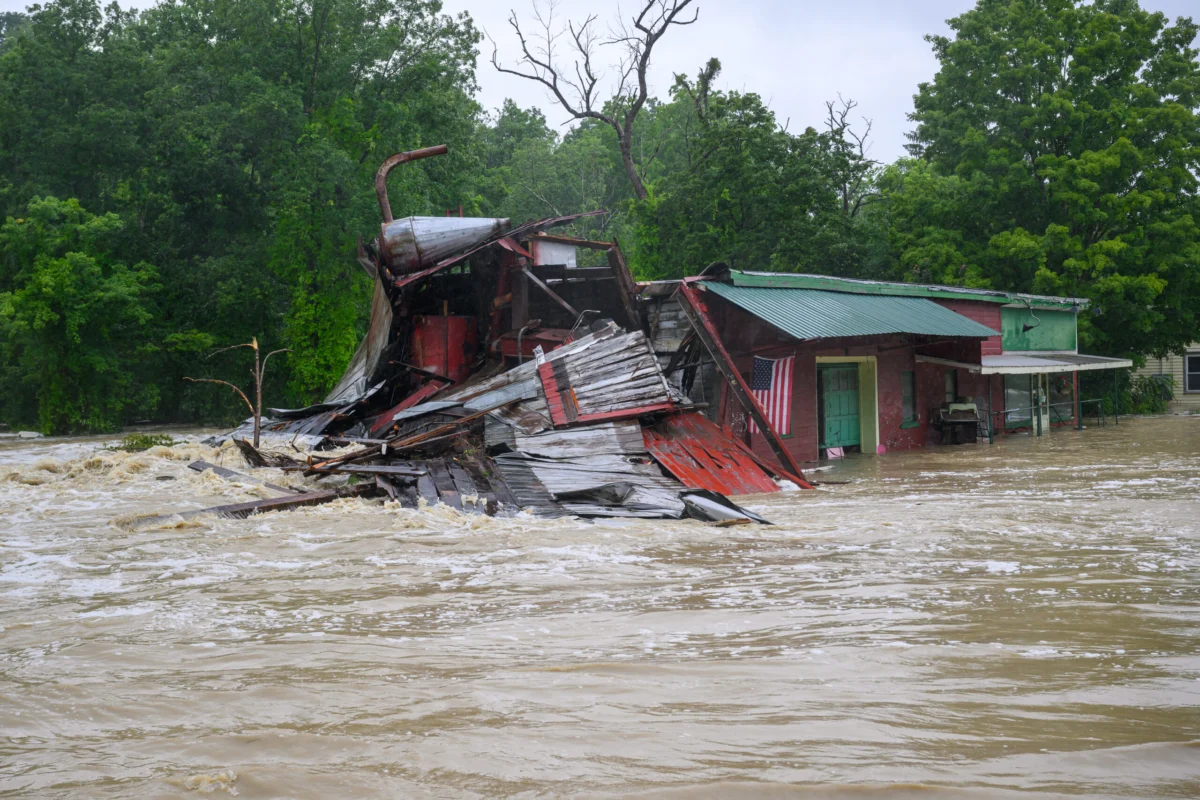
Among the most poignant losses was the destruction of a centuries-old grist mill in Castleton-on-Hudson. For owner Andy Klein, the loss was not merely financial; it was the erasure of a piece of local heritage.
Recounting the morning of the disaster, Klein described being alerted by a neighbor as a nearby creek surged toward his property. "It’s just a horrible event," Klein said, surveying the debris. "The mill’s been there for hundreds of years. I’m a big fan of history, and I just watched a building being torn apart."
The water, reaching depths of three to four feet in a matter of minutes, overwhelmed the structure’s foundation. The oldest section of the mill, which had survived floods and seasonal changes for generations, could not withstand the force of the flash flood. This loss has sparked a broader conversation in the community about how to protect historical sites against the increasingly erratic and severe weather events of the modern era.
Official Responses and Infrastructure Challenges
Local governments have shifted from emergency response to recovery and remediation. In Castleton-on-Hudson, the impact on public utilities was immediate.
Water Quality Advisory
The flooding caused significant damage to the local water treatment plant. Officials issued a mandatory boil-water advisory for residents, citing concerns over potential contamination from runoff entering the system. Residents have been urged to significantly reduce water usage while repairs are underway. This measure is expected to remain in place until water quality tests confirm that the supply is safe for consumption.
Emergency Management Efforts
State and local emergency management agencies have been working around the clock to restore power to affected areas and clear debris from major thoroughfares. The New York State Department of Transportation (DOT) has been conducting structural assessments on bridges and culverts to ensure they remain safe for travel.
"We are currently in a recovery phase," noted one municipal spokesperson. "The priority is public health, ensuring clean water access, and stabilizing critical infrastructure. We are asking the public to stay off the roads where possible to allow our crews to perform their work."
Implications: A Changing Climate, A New Reality
The flooding in upstate New York highlights the growing vulnerability of inland communities to extreme precipitation. Historically, flooding in this region was often associated with spring snowmelt or localized summer thunderstorms. However, the intensity of this week’s storm—characterized by its duration and the sheer volume of water dropped—aligns with broader climate trends suggesting that the region should prepare for more frequent, high-impact weather events.
Urban Planning and Resilience
The event has raised questions about the adequacy of existing drainage systems and flood mitigation strategies. Many of the towns affected were built along waterways that served as the lifeblood of 18th and 19th-century commerce. Today, those same locations are increasingly at risk. Urban planners are now being pressed to re-evaluate floodplain mapping and consider whether current infrastructure can withstand the “new normal” of high-frequency flash floods.
Economic Consequences
The economic toll is expected to be significant. Beyond the damage to private residences and historic sites, the agricultural sector is bracing for impact. Farmland inundated by heavy rains often suffers from soil erosion, crop loss, and the introduction of sediment and debris that can render fields unusable for the remainder of the season. Local farmers are currently assessing their fields to determine the extent of the damage to their yields.
Community Resilience
Despite the destruction, there is a strong spirit of resilience in the affected counties. Community centers and local organizations have begun collecting donations for those who lost personal property. The rapid response from neighbors helping neighbors—as seen with the warning provided to the grist mill owner—remains the backbone of the recovery efforts.
As the region moves forward, the focus will undoubtedly shift toward long-term adaptation. Whether through stricter zoning laws, investment in green infrastructure to absorb excess runoff, or the fortification of historic assets, the lesson of July 2026 is clear: the environment in upstate New York is changing, and the region’s infrastructure must evolve to meet the challenge.
For now, the cleanup continues. The sounds of heavy machinery have replaced the roar of the floodwaters, and for the residents of the Hudson Valley, the work of rebuilding begins.
Copyright 2026 Associated Press. All rights reserved. This material may not be published, broadcast, rewritten or redistributed.
