




In the race to achieve climate neutrality by 2045, Germany is confronting a sobering reality: reducing greenhouse gas emissions to zero is an impossible target for certain hard-to-abate sectors. As the government moves to finalize its long-awaited strategy on "negative emissions"—technologies and natural practices designed to pull carbon dioxide (CO2) directly from the atmosphere—it is signaling a fundamental shift in its climate policy architecture.
For years, the discourse on climate change in Berlin focused almost exclusively on mitigation: transitioning to renewables, electrifying transport, and improving energy efficiency. Now, policymakers are acknowledging that "residual emissions"—those from agriculture, specific industrial processes, and waste management—must be balanced by active carbon removal. This transition marks the move from a pure "reduction" strategy to an "active removal" paradigm.
Main Facts: What Are Negative Emissions?
Negative emissions, or Carbon Dioxide Removal (CDR), refer to a diverse portfolio of activities that remove CO2 from the atmosphere and store it in geological, terrestrial, or ocean reservoirs, or in products. Unlike traditional carbon capture and storage (CCS) at the point of combustion (which prevents new emissions), CDR focuses on reversing the historical accumulation of CO2.
The Technological Spectrum
The German strategy is expected to balance two main categories of removal:
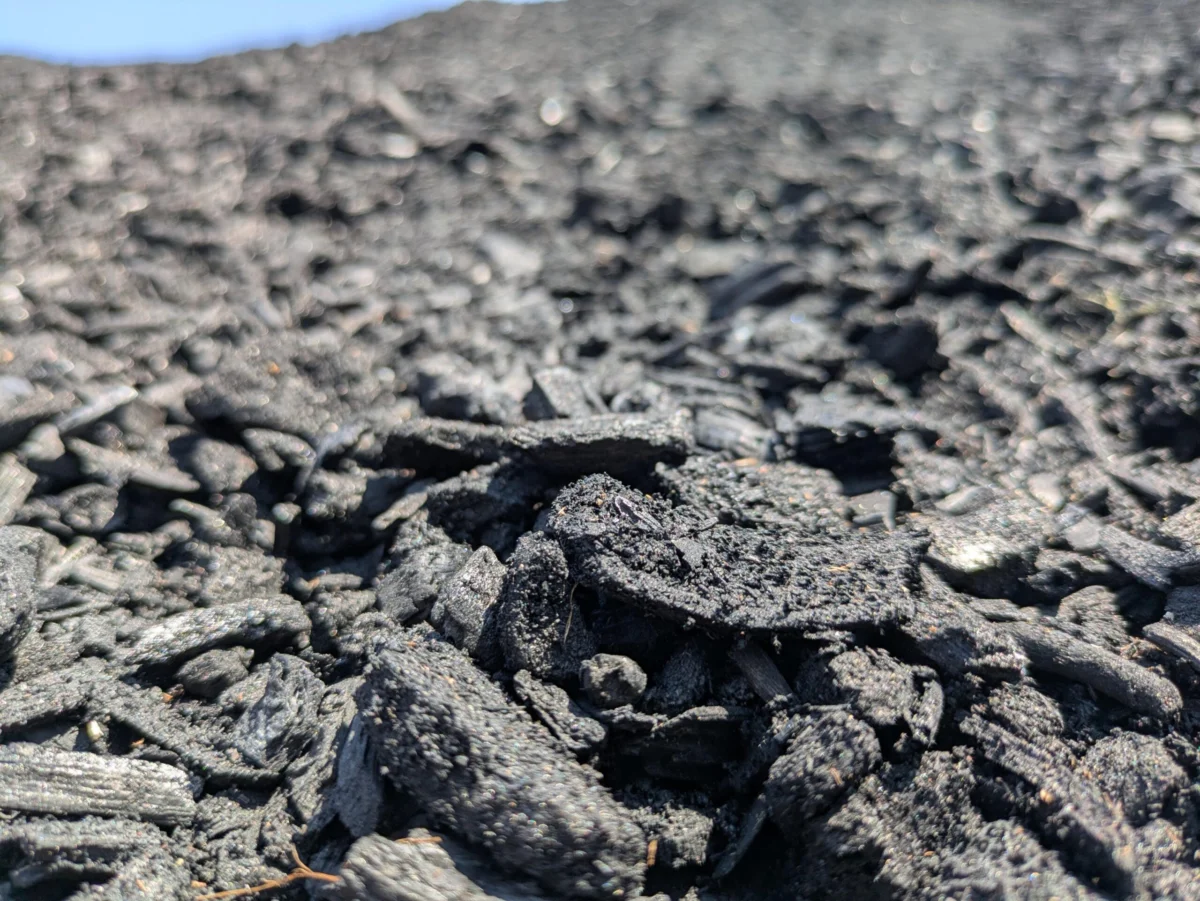
- Nature-Based Solutions: These include reforestation, afforestation, and the enhancement of soil carbon sequestration. A notable example is the production of biochar—a stable, charcoal-like substance produced by heating biomass in an oxygen-deprived environment. Biochar locks away the carbon absorbed by plants during their growth, effectively turning biological waste into a permanent carbon sink when buried in soil.
- Technical Solutions: This includes Direct Air Capture (DAC) coupled with permanent geological storage, and Bioenergy with Carbon Capture and Storage (BECCS). These methods are energy-intensive and currently significantly more expensive than nature-based solutions, yet they are viewed as essential for the long-term scalability required to meet Germany’s 2045 net-zero goals.
Chronology: The Road to a Formal Strategy
The German government’s pivot to negative emissions has been a gradual, often contentious, evolution.
- 2021: Following the landmark ruling by the Federal Constitutional Court, which deemed the government’s climate targets insufficiently protective of future generations, the coalition government began intensifying its planning. The 2045 net-zero target was codified into law, mathematically necessitating the use of negative emissions.
- 2022-2023: As the energy crisis prompted by the war in Ukraine took hold, the focus shifted toward energy security. However, within the Ministry for Economic Affairs and Climate Action (BMWK), technical discussions regarding "Carbon Management" began to gain traction, signaling that the government was ready to revisit the taboo topic of CCS.
- Early 2024: The German government released its "Carbon Management Strategy," laying the groundwork for offshore CO2 storage. This served as a crucial precursor to the current deliberations on a dedicated Negative Emissions Strategy.
- Late 2024 to Present: The federal government is currently finalizing the draft of its formal strategy. The document is expected to outline the legislative framework, funding mechanisms, and the division between technical and natural removal methods.
Supporting Data: Why Germany Needs Negative Emissions
The necessity for negative emissions is driven by the "residual emissions" gap. Current projections from the German Environment Agency (UBA) suggest that even under the most optimistic decarbonization scenarios, Germany will still emit between 50 and 100 million tonnes of CO2 equivalent per year by 2045.
The Residual Emission Breakdown
- Agriculture: Methane and nitrous oxide emissions from livestock and fertilizers are notoriously difficult to eliminate entirely.
- Industrial Processes: High-heat processes in cement and chemical production produce CO2 as a byproduct of chemical reactions, rather than just energy use.
- Waste Management: The decomposition of organic waste in landfills remains a steady, albeit small, contributor to atmospheric carbon.
Without an aggressive deployment of CDR, Germany would fail to meet its legal obligations under the Federal Climate Change Act. The scale of the challenge is significant: to reach "net-zero," the volume of carbon removed must at least equal the volume of residual emissions. This implies that Germany must build an entirely new industry capable of managing tens of millions of tonnes of CO2 per year within two decades.
Official Responses and Stakeholder Perspectives
The upcoming strategy has sparked a robust debate among political, industrial, and environmental stakeholders.
The Government View
The Federal Ministry for Economic Affairs and Climate Action (BMWK) emphasizes that negative emissions are not a "get out of jail free card" for the fossil fuel industry. Minister Robert Habeck has repeatedly stated that CDR should only be utilized for "unavoidable" emissions. The government’s priority remains the rapid phase-out of fossil fuels; CDR is framed as a necessary "complement" rather than a substitute for mitigation.
Industry Perspectives
Industrial giants in the chemical and manufacturing sectors are cautiously optimistic. Many firms see the strategy as a potential business opportunity. Germany’s engineering sector, in particular, is looking to position itself as a global leader in DAC technology. However, industry leaders are calling for clear, long-term regulatory certainty and financial support to bridge the "valley of death" between pilot projects and commercial viability.
Environmental NGO Concerns
Environmental organizations, including Greenpeace and NABU, have expressed deep skepticism. Their primary concern is "moral hazard"—the risk that the availability of carbon removal technology will encourage policymakers and corporations to slow down the transition away from oil, coal, and gas. There is also a vigorous debate regarding the environmental impact of large-scale bioenergy use, with critics warning of potential threats to biodiversity and land-use competition with food production.
Implications: A New Era for Climate Policy
The adoption of a formal negative emissions strategy will have profound implications for the German economy and society.
Economic Implications: The Cost of Removal
The economic impact will be substantial. Developing the infrastructure for transporting and storing CO2—and the energy required to power DAC facilities—will require tens of billions of euros in private and public investment. There is also the question of who pays. While the "polluter pays" principle suggests that emitters should foot the bill, the government may need to provide subsidies or carbon contracts-for-difference to make the nascent CDR market attractive to investors.
Legal and Regulatory Challenges
Germany faces significant regulatory hurdles. The storage of CO2—whether offshore under the North Sea or in depleted onshore gas fields—is governed by stringent environmental laws. The government will need to navigate public opposition, particularly regarding the safety and permanence of underground storage sites. Furthermore, international standards for "measuring, reporting, and verifying" (MRV) carbon removals remain in their infancy; Germany’s strategy will likely attempt to set a gold standard for these metrics within the European Union.
Geopolitical Dimensions
As Germany looks to secure its climate future, it may need to look beyond its borders. The storage capacity for CO2 within Germany is limited and politically sensitive. Consequently, the strategy will likely involve bilateral agreements with neighbors like Norway or Denmark, who have already begun developing offshore CO2 storage infrastructure. This creates a new geopolitical dynamic centered on carbon infrastructure, where Germany becomes a "carbon-exporting" nation, relying on the geological assets of its North Sea partners.
Conclusion
Germany’s upcoming strategy on negative emissions represents a pragmatic, if difficult, acknowledgement of the limits of mitigation. By formally integrating carbon removal into its climate policy, Berlin is preparing for the final, most difficult mile of the journey to climate neutrality.
The success of this strategy will depend not on the technology itself, but on the government’s ability to maintain a delicate balance: aggressively scaling up removal capacity without allowing these technologies to dilute the urgency of deep, systemic decarbonization. As the strategy moves from draft to implementation, it will set a critical precedent for industrialized nations worldwide, proving that in the fight against climate change, the final step is not just stopping the damage, but beginning the slow, technical process of healing the atmosphere.
