





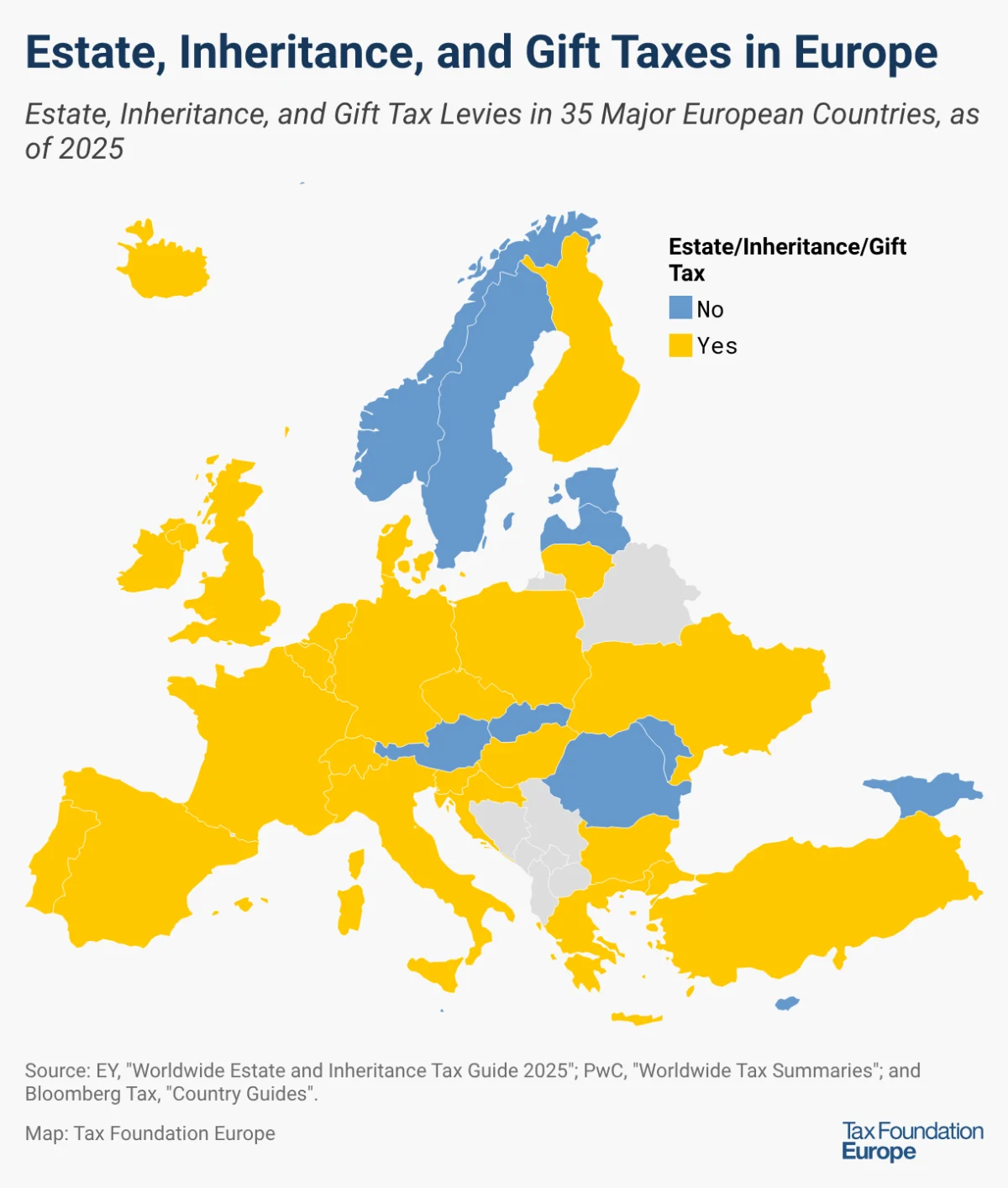
In the complex landscape of global fiscal policy, few areas are as emotionally charged or as technically intricate as the taxation of wealth transfers. Whether through estates, inheritances, or gifts, the movement of assets across generations serves as a primary vehicle for capital accumulation and, conversely, a significant source of government revenue. However, the mechanisms by which these transfers are taxed are far from uniform. From the progressive scales of Western Europe to the regional variations defining fiscal sovereignty in decentralized nations, the tax burden on a legacy is rarely a simple calculation.
Main Facts: The Anatomy of Wealth Transfer Taxation
At its core, wealth transfer taxation is bifurcated into three distinct categories: estate taxes, inheritance taxes, and gift taxes. While the terms are often used interchangeably in casual discourse, their legal and economic distinctions are profound.
An estate tax is a levy imposed on the total value of an individual’s assets at the time of their death, calculated before those assets are distributed to beneficiaries. The estate itself—the legal entity managing the decedent’s property—is responsible for paying the tax. In contrast, an inheritance tax is levied directly upon the recipient of the assets. The tax rate is frequently tied to the beneficiary’s relationship to the deceased, creating a system where a spouse or child might pay a significantly lower rate than a distant relative or an unrelated beneficiary. Finally, gift taxes function as a protective barrier, preventing individuals from bypassing estate or inheritance taxes by transferring wealth while they are still alive.
The primary determinant of the tax rate in most jurisdictions is the "degree of kinship." Governments justify this through the lens of social policy; the nuclear family is often incentivized through lower tax brackets, while "stranger" transfers are taxed at higher, punitive rates to capture revenue on windfalls that exist outside of traditional familial support structures.
Chronology: The Evolution of Fiscal Succession
The historical trajectory of wealth transfer taxation has mirrored the shifting ideologies of the 20th and 21st centuries. Throughout the post-WWII era, many developed nations utilized high estate and inheritance taxes as a tool for wealth redistribution and the prevention of dynastic plutocracy.
- The Mid-20th Century (1945–1970s): This period saw the peak of progressive inheritance taxation in Europe and North America, with top marginal rates in some jurisdictions exceeding 70% to 80%. These policies were framed as essential for funding the reconstruction of the welfare state.
- The Neoliberal Shift (1980s–2000s): During this era, many nations began to view high death taxes as a deterrent to capital investment and family business continuity. Consequently, several countries—including Sweden and Austria—abolished their inheritance taxes entirely, citing the burden on small-to-medium enterprises and the double taxation of already-taxed income.
- The Modern Era (2010–Present): Today, the conversation has returned to the issue of inequality. Organizations like the OECD and the IMF have increasingly highlighted the role of inheritance taxes in mitigating the "Great Wealth Gap." Recent policy changes have focused less on massive rate hikes and more on closing loopholes, such as the valuation of family businesses or the misuse of trusts.
Supporting Data: Regional Disparities and Structural Complexity
The tax burden on a legacy is rarely a national constant; it is often a patchwork of local, state, and regional regulations.
France: The Progressive Model
France stands as the quintessential example of a highly structured, kinship-based tax system. The French droits de succession are explicitly tiered based on the relationship between the benefactor and the beneficiary. Transfers between ascendants (parents/grandparents) and descendants (children/grandchildren) enjoy significant tax-free allowances and lower progressive rates. However, as the degree of separation increases—moving from siblings to blood relatives up to the fourth degree, and finally to "everyone else"—the rates escalate sharply. For larger sums of money transferred between siblings, the French government imposes significantly higher marginal rates, reflecting a policy choice to prioritize direct lineal inheritance over collateral transfers.
Decentralized Sovereignty: Belgium, Spain, and Switzerland
In countries like Belgium, Spain, and Switzerland, the taxation of wealth is not exclusively a federal concern. These nations grant significant autonomy to their regional or cantonal governments to set their own inheritance and gift tax rates.
- Spain: The Impuesto de Sucesiones y Donaciones varies wildly depending on the autonomous community. An individual inheriting in Madrid might face a significantly lower tax burden than an individual in Andalusia or Catalonia, as regional governments use tax competition to attract residents.
- Switzerland: Inheritance taxes are primarily a cantonal prerogative. In many cantons, direct descendants are entirely exempt from inheritance tax, while other cantons impose moderate levies. This creates a "tax landscape" where geographic mobility directly influences the preservation of intergenerational wealth.
- Belgium: The regional divide between Flanders, Wallonia, and Brussels has led to distinct fiscal regimes, particularly regarding the taxation of family businesses and real estate holdings.
The Threshold Principle
A commonality across most European jurisdictions is the use of "tax-free thresholds." By setting a floor for the value of an estate, governments ensure that the administrative cost of collecting the tax does not exceed the revenue generated, while also shielding middle-class families from the burden of taxation on their primary residence or modest savings.
Official Responses and Policy Rationales
The debate surrounding these taxes remains polarized. Proponents of robust inheritance taxation argue that it is the most equitable way to address the "birth lottery." By taxing large transfers, governments can fund public services and education, thereby promoting social mobility. As noted by tax policy experts at institutions like the Tax Foundation, the goal is often to balance revenue collection with economic efficiency.
Conversely, critics—including many business advocacy groups—argue that these taxes are "double taxation" on capital that was already subject to income and corporate taxes during the benefactor’s lifetime. They argue that these levies force the liquidation of family-owned businesses, often leading to job losses or the acquisition of local firms by larger, multinational corporations.
In response, many governments have introduced "relief measures." These include deferment options, where the tax is paid in installments over several years, or exemptions for "productive assets" (such as farms or active family businesses), provided the heirs continue to operate the enterprise for a set period.
Implications: The Future of Wealth Transfer
As we look toward the mid-2020s, the implications of these tax policies are becoming increasingly clear.
- The Great Wealth Transfer: We are currently entering a period of unprecedented intergenerational wealth transition. The "Baby Boomer" generation is set to pass on trillions of dollars in assets. This event will test the durability of existing tax systems and likely force governments to reassess their revenue strategies.
- Tax Competition and Mobility: In a globalized economy, high inheritance taxes may drive high-net-worth individuals to relocate to jurisdictions with more favorable fiscal regimes. This creates a "race to the bottom" in some regions, while others double down on wealth taxation to fund social programs.
- Digital Assets and Global Complexity: The rise of cryptocurrencies and decentralized finance adds a new layer of complexity. Governments are currently struggling to define how digital assets should be valued and taxed upon the death of the owner, necessitating new international standards for tax transparency and cooperation.
- Social Cohesion: Ultimately, the taxation of estates and inheritances is a reflection of a society’s values. A nation that relies heavily on these taxes is signaling a commitment to leveling the playing field, while one that minimizes them is often prioritizing capital formation and personal property rights.
Conclusion
The landscape of estate, inheritance, and gift taxation is not merely a collection of rules, but a complex map of social and economic priorities. Whether through the tiered kinship models of France or the regionally autonomous systems of Spain and Switzerland, these policies fundamentally shape the distribution of wealth. As global wealth becomes more concentrated and mobile, the challenge for policymakers will be to craft systems that are simple, equitable, and capable of funding the modern state without stifling the economic vitality of the next generation. For taxpayers, the imperative is clear: understanding the nuanced intersection of geography, relationship, and value is the first step in navigating the future of one’s legacy.
