



It is 7:40 a.m. For most digital marketers, this is the time for the ritualistic, caffeine-fueled login to the Google Ads dashboard—a repetitive dance of filtering, segmenting, and clicking. But for a growing cohort of PPC practitioners, the dashboard has become a legacy relic.
Instead of navigating the complex, multi-tabbed interface, they open a chat window and type: "Across all my accounts, what did we spend yesterday? Flag anything more than 20% off-pace and tell me what changed."
Ninety seconds later, the AI assistant—Claude—returns a concise report detailing the performance of the three most critical accounts, pinpointing the exact driver for each variance. A follow-up prompt—“Pause the two ad groups driving the overspend on the Henderson account and draft a note to the client explaining why”—is executed instantly. The laptop closes. The work is done.

This is not a hypothetical future; it is the current reality enabled by a technology called the Model Context Protocol (MCP). As this standard gains traction, it is effectively ending the "Interface Era" of PPC, replacing manual UI navigation with agentic workflows.
The Architecture of Change: What is MCP?
To understand why the landscape of search engine marketing is shifting, one must understand the Model Context Protocol. Think of MCP as an "API for AI agents."
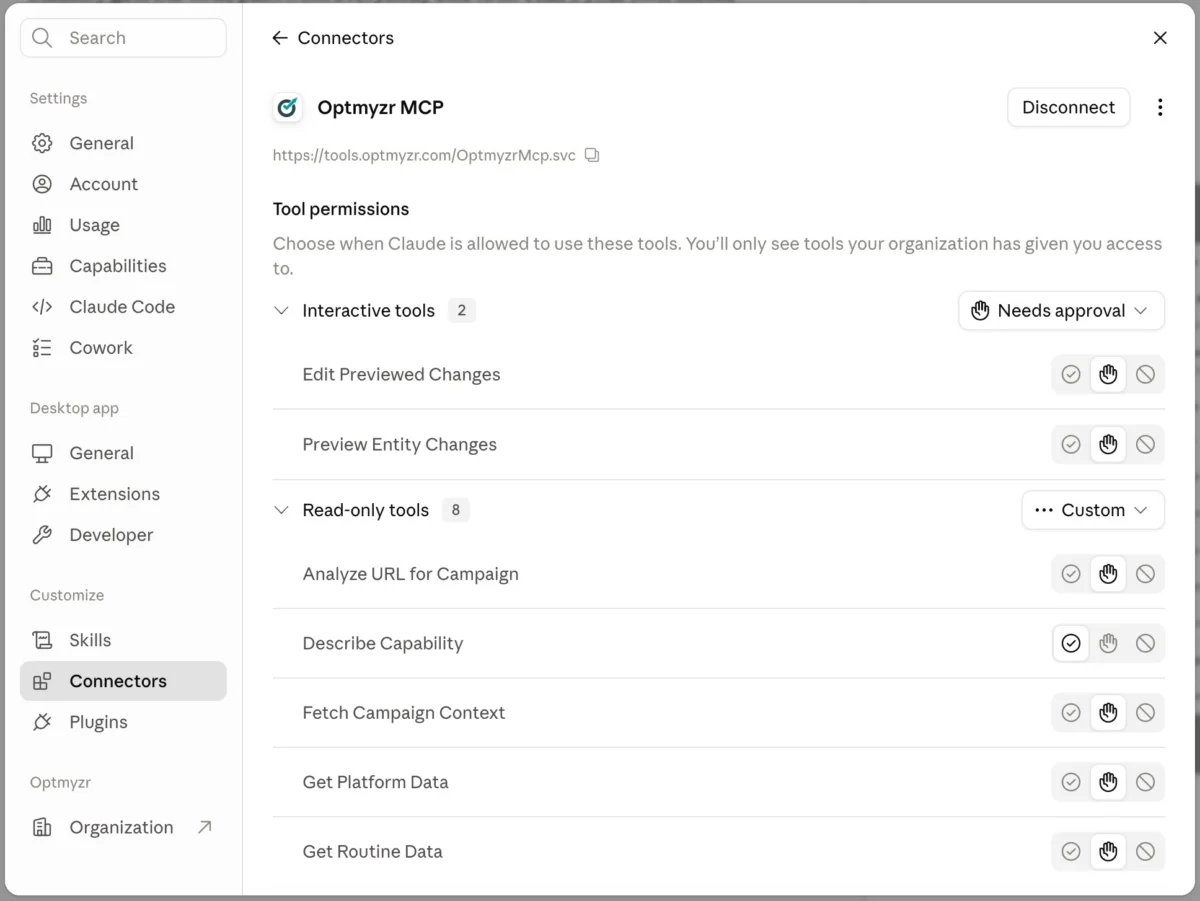
Just as a standard API allows two software programs to communicate, MCP provides a secure, standardized way for an AI model to interface with external systems, such as Google Ads, CRM software, or internal databases. It is not a "magic bridge" that grants an AI autonomous, unrestricted power. Rather, it is a curated set of capabilities defined by the underlying tool. The agent only interacts with data and performs actions for which it has been explicitly granted permission.

By utilizing these connectors, agents move beyond mere strategy consultants; they become operators capable of implementing the changes that marketers agree upon. This shift is redefining expectations for software: users are moving away from learning complex interfaces toward stating desired outcomes and allowing competent agents to execute the technical heavy lifting.
Chronology: From Manual Scripts to Agentic Autonomy
The evolution of PPC management has occurred in three distinct stages, each reflecting our changing relationship with data:
- The Manual UI Era: For years, the Google Ads interface was the only source of truth. It offered visibility and granular control, but at the cost of speed and scale. Every optimization required a manual click, making it difficult to manage a large book of business efficiently.
- The Interface-Bound AI Era: Google introduced tools like Ads Advisor, while third-party platforms like Optmyzr launched features like Sidekick. These tools operated within the existing UI. They were "safe by construction"—because they were limited by the buttons already present in the interface, they couldn’t "hallucinate" new, unauthorized actions.
- The Agentic Shift: We have now entered the third era, where AI operates outside the interface entirely. By leveraging MCPs, agents can pull data from disparate sources—margins, competitor data, GA4 behavior, and even email correspondence—to make holistic decisions. While Google has released an official MCP server for its Ads API, it is currently "read-only," meaning the industry is currently seeing third-party connectors lead the charge in both reading and writing data.
Supporting Data and Technical Risks
The transition to agentic workflows is not without peril. Moving PPC management outside the UI introduces four distinct categories of failure that marketers must navigate:

- Structural Hallucination: Unlike traditional text-based hallucinations, MCP-driven errors involve the "shape" of data. APIs require strict syntax; if an agent confuses a campaign for an ad group, it might attempt to create dozens of unnecessary campaigns. When reading, this is a minor annoyance; when writing, it is an expensive disaster.
- Loss of Visible State: In a UI, a new keyword appears in a table—a permanent record. In a chat-based agentic workflow, state is often buried in a scrolling transcript. If a marketer cannot find the transcript, they lose the context of what was changed and why.
- Silent Automation Failures: Scheduled agents and background routines can fail without warning. If an email-sending connector breaks, an automation might stop running entirely without triggering an alert, leading to "silent failure" that can go unnoticed for weeks.
- The "Script Era" Lesson: In 2012, Google Ads scripts were introduced, leading to a decade of "orphaned" automations. Agencies saw scripts proliferate, only to have them left behind when the employee who wrote them departed. The industry eventually learned that governance—version control, registries, and failure alerting—is non-negotiable. We are currently repeating this cycle with AI, but at a much faster, more creative pace.
Industry Responses and Governance
The consensus among industry leaders is that while the potential for efficiency is massive, the risk of "creative" errors is high. The primary issue is the lack of a "Decision Log."
Google’s native change history is capped at 30 days and lacks context regarding the why behind a change. When an agent adjusts a bid, the log records the action but not the rationale. Experts like Julie Friedman Bacchini have noted that this lack of oversight is a significant barrier to widespread adoption. Consequently, practitioners are moving toward a framework of "Supervised Autonomy."
Implications: Moving Outside the UI Safely
To thrive in this new environment, marketers must move from "trial and error" to a disciplined, governance-first approach. The following strategies are now considered the gold standard for safe agentic management:

1. The "Read-Only" Graduation
Begin by connecting agents in read-only mode for at least a few weeks. This allows the user to identify where the agent struggles—such as misinterpreting data queries—without any financial risk.
2. Radical Transparency in Connectors
Not all connectors are built equally. Before trusting a connector, practitioners should demand that the agent list its own capabilities. If a connector cannot define its boundaries or explain its "write" functions, it should not be utilized for account management.
3. Guardrails at the Connector Layer
System prompts like "don’t spend more than $500" are merely suggestions. True control must be enforced at the connector or platform level. By scoping permissions to specific accounts and utilizing restrictive user roles, marketers can physically prevent an agent from touching unauthorized assets.

4. Durable Memory
If an agent has to be re-explained the rules of an account every morning, the setup is inefficient. Implementing files like CLAUDE.md or dedicated memory instructions ensures that critical logic, such as client preferences and historical decisions, persists across conversations.
5. The "Preview" Mandate
Never allow an agent to execute a change without a preview. A mandatory prompt structure—"Show me what you would change and why, including the data that justifies it; do not apply anything yet"—creates a vital human-in-the-loop checkpoint.
6. The Decision Log
Since the platform’s change history records only the what, the marketer must maintain a separate Decision Log that records the why. This documentation should live in a central, durable location that survives beyond the lifespan of a single chat transcript.

Conclusion: The Era of Supervision
The era of manual button-pushing in Google Ads is rapidly closing. The next 18 months will be the most critical period for the PPC industry, as agencies decide whether this agentic shift becomes a catalyst for growth or a source of systemic operational risk.
The interface is disappearing, but accountability remains absolute. The most successful marketers will not be those who simply hand the keys to an AI, but those who build a robust layer of governance that remembers the "why" when the human is no longer there to watch the "what." In this new age, the most important skill for a PPC professional is no longer knowing where to click—it is knowing how to govern the machine that clicks for you.
