





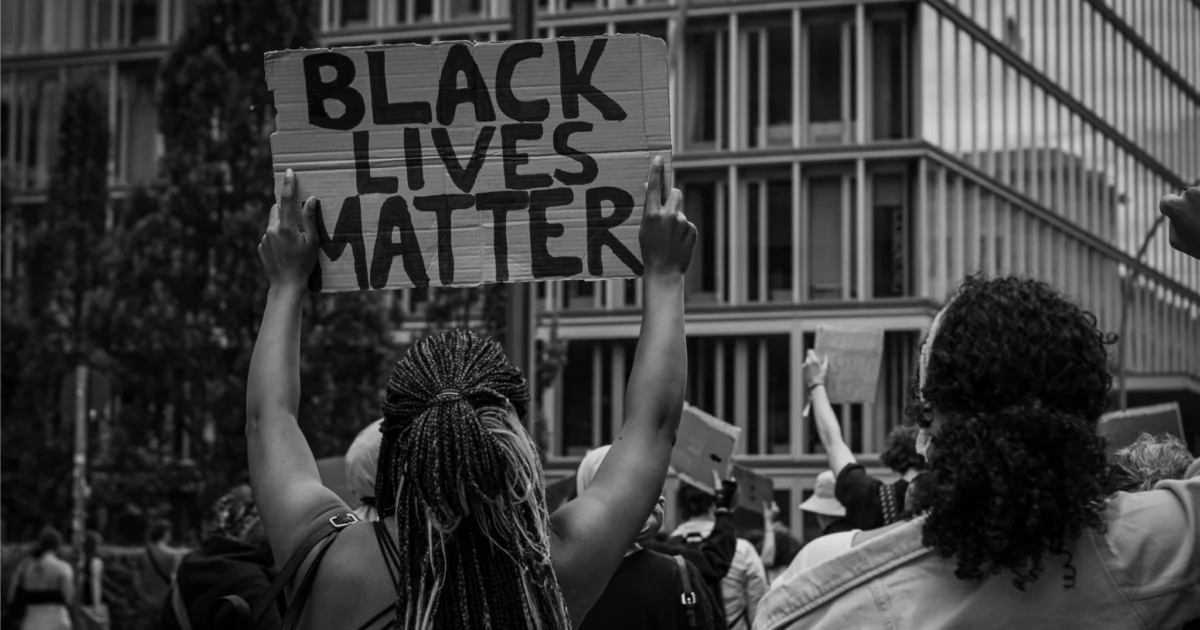
As the United States commemorates Juneteenth—the landmark anniversary marking the end of legal slavery in 1865—the holiday serves as more than a historical reflection. It acts as a powerful lens through which to view the ongoing struggle for economic, social, and racial justice. While the Emancipation Proclamation and the subsequent abolition of slavery represented a foundational victory for human rights, the promise of freedom was immediately met with the grim reality of systemic exploitation.
Today, as the nation stands at the precipice of an Artificial Intelligence (AI) revolution, we are reminded that the fight for equitable labor is far from over. Modern technological advancements, while touted for their efficiency, threaten to replicate the historical patterns of devalued and extracted Black labor. For Black Americans, and particularly Black women, the digital age risks cementing the very inequalities that post-Reconstruction policies sought to institutionalize.
The Historical Echo: From Reconstruction to the AI Era
To understand the current labor crisis, one must recognize that freedom from chattel slavery did not translate into freedom from economic disenfranchisement. Following 1865, the era of Reconstruction was systematically dismantled by policies that forced Black workers into cycles of debt and labor exploitation. Sharecropping, Jim Crow laws, and the exclusion of Black workers from major social safety nets established in the 20th century created a legacy of racial wealth gaps that persist into the 21st century.
History shows that when systems of power evolve, they often adopt new guises. In the 21st century, that "new guise" is the algorithm. Just as industrialization and specific tax or labor policies were used to marginalize Black workers in the past, current AI-driven workplace transformations are proving to be racially disparate in their application and outcomes.
Chronology of Disparity: The Rise of AI and the Marginalization of Black Women
The impact of AI on the workforce is not distributed equally. A clear chronology of labor trends reveals that the most vulnerable populations are bearing the brunt of the "automation transition."
- 2020–2022: The Acceleration of Automation. During and immediately following the pandemic, companies aggressively shifted toward automated customer service, remote processing, and AI-driven human resources management to trim operational costs.
- 2023–2024: The Algorithmic Displacement Phase. Employers began integrating generative AI into administrative and professional support roles. This phase saw a noticeable cooling in hiring for entry-to-mid-level office positions, disproportionately affecting sectors where Black workers—and Black women in particular—are heavily concentrated.
- 2025: The Crisis Point. By the end of 2025, the unemployment rate for Black women reached 7.3 percent—nearly double the rate for white women. This statistic is not an anomaly; it is the culmination of years of occupational segregation and the rapid adoption of labor-replacing technologies.
Supporting Data: Why Black Women Are at the Center of the AI Risk
The National Employment Law Project (NELP) and other labor advocates have documented that the "AI-vulnerable" jobs—those most susceptible to automation—are heavily gendered and racialized. More than 30 percent of workers in these high-risk roles are women of color.
The "Undervalued" Occupations
Black women are significantly overrepresented in administrative support, human resources, customer service, and training roles. Historically, these sectors have been essential to the American economy, yet they have been systematically undervalued and underpaid. Because these roles rely on predictable, process-driven tasks, they are the "low-hanging fruit" for AI developers.
When a company replaces a human administrative assistant with an AI agent, it isn’t just a loss of a job; it is a loss of a career ladder. These roles have traditionally served as entry points into white-collar professions. With those doors closing, the trajectory for upward mobility for Black women is effectively being severed.
The Quality Gap
The issue is not just total job loss; it is the degradation of job quality. As AI takes over core tasks, the remaining human roles often become more precarious. Workers are increasingly subjected to:
- Algorithmic Management: Increased surveillance and the use of software to track keystrokes, pace, and breaks.
- Reduced Predictability: AI-driven scheduling tools that favor employer flexibility over worker stability, leading to erratic hours and inconsistent income.
- Stalled Advancement: With AI handling the "learning" aspects of entry-level jobs, junior staff are given fewer opportunities to develop the skills necessary for promotion.
Official Responses and the Call for Policy Reform
The National Employment Law Project (NELP), led by President and CEO Rebecca Dixon, has become a leading voice in articulating the need for a "good-jobs" economy. Dixon, a preeminent authority on federal labor rights, argues that technological change must be guided by human-centric values rather than purely profit-driven motives.
The Policy Agenda
To prevent the AI revolution from exacerbating the racial wealth gap, NELP and its allies are advocating for a comprehensive policy framework:
- Strengthening Labor Standards: Policymakers must establish strict protections against algorithmic discrimination in hiring, promotion, and termination. If an AI tool is biased, the employer—and the developer—must be held accountable.
- Modernizing Unemployment Insurance: The current unemployment system is a relic of the mid-20th century, ill-equipped to handle the rapid, large-scale displacements that AI may cause. Modernizing the system to include training stipends, extended coverage, and portable benefits is essential.
- Investing in Worker Power: As technology changes, the collective bargaining power of workers becomes the most effective check against the misuse of AI. Strengthening the rights of workers to organize ensures that they have a seat at the table when companies decide how to implement new technologies.
- Economic Security as a Baseline: A "good-jobs" economy is defined by a living wage, predictable hours, and basic benefits. These protections must be non-negotiable, regardless of whether a company uses AI or human labor to perform tasks.
Implications: The Future of Work and Social Justice
The implications of failing to act are profound. If we allow the integration of AI to proceed without guardrails, we risk creating a permanent, tech-stratified underclass. We are effectively deciding now whether the 21st century will see a narrowing or a widening of the racial economic divide.
Reframing the Narrative
Technological change should not be treated as a force of nature that we must simply endure. It is a human creation, and as such, it can be steered toward the common good. The historical lessons of Juneteenth teach us that liberation is a process of constant vigilance. Just as the generations before us fought the legal and systemic barriers to their economic freedom, the current generation of labor advocates must fight the "digital Jim Crow"—the subtle, automated biases that threaten to exclude Black workers from the modern economy.
A Recommitment to Dignity
This Juneteenth, the commitment to "advancing freedom" must be interpreted through the lens of modern labor. It means demanding that corporations disclose how AI impacts their workforce. It means ensuring that productivity gains from AI are shared with the workers, not just the shareholders. And most importantly, it means recognizing that the dignity of work is a fundamental right.
As Rebecca Dixon and NELP have consistently highlighted, the vision of a "good-jobs" economy is not a radical dream—it is the bedrock of a stable democracy. By investing in worker power and ensuring that emerging technologies are used to augment human potential rather than replace human dignity, we can ensure that the promise of the 1865 Emancipation finally reaches its full economic potential.
The future of work is not written in code; it is written by the policies we choose to enact today. We must ensure that those policies reflect the values of equity, justice, and opportunity for all. Only then will we truly be honoring the spirit of Juneteenth and the generations of Black workers whose labor built the foundations of this country.
