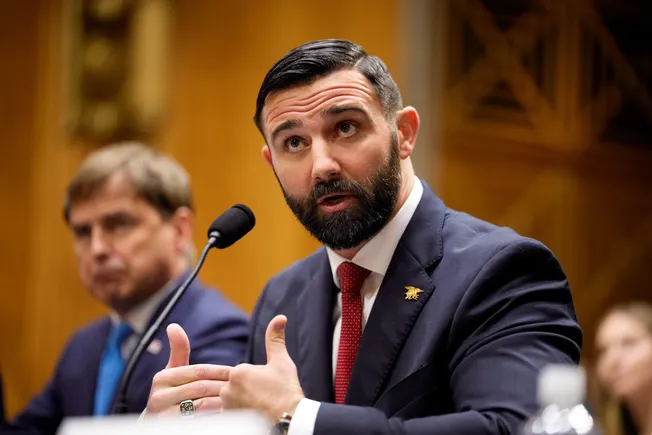





In a pivotal shift in the American approach to disaster management, the Federal Emergency Management Agency (FEMA) is signaling a radical departure from the long-standing federal-first model. FEMA Administrator Cameron Hamilton recently informed emergency management professionals that states must prepare to manage disasters independently—without federal intervention—within as little as six months. This policy pivot, which aligns with the Trump administration’s "America First Resilience Strategy," aims to reduce federal dependency and incentivize local preparedness. However, the directive has triggered alarm among state officials and policy experts who warn that the current landscape of local emergency management is woefully under-resourced, underfunded, and ill-equipped to shoulder the burden of catastrophic recovery.
The Mandate for Autonomy
The directive emerged during the National Emergency Management Association’s annual conference in Little Rock, Arkansas. According to reports, Administrator Hamilton urged state leaders to cultivate "the appropriate financial reserves" and operational capabilities to ensure that recovery efforts can commence immediately. The objective, he argued, is to bypass the bureaucratic bottlenecks inherent in the federal disaster declaration process.
For the administration, this represents a return to a philosophy of decentralized governance. By shifting the primary burden of disaster response to the states, the federal government aims to reduce its fiscal footprint and foster localized resilience. Yet, the rapid timeline—a six-month transition period—has left many state emergency managers scrambling to assess whether their current legal and financial infrastructures can support such a seismic shift.
Chronology of a Policy Pivot
The move toward reduced federal involvement did not occur in a vacuum. It is the culmination of a series of strategic reviews and legislative efforts spanning the last two years:
- May 2026: The FEMA Review Council releases a comprehensive set of recommendations that explicitly suggest states take on broader responsibilities regarding disaster preparedness and recovery.
- September 2026: The Congressional Research Service (CRS) publishes a report assessing the feasibility of this transition, highlighting the vast disparities in state capacity.
- October 16, 2026: A FEMA-funded study is released, confirming that local emergency management agencies are suffering from critical staffing and funding shortages.
- October 20, 2026: During the annual NEMA conference, Administrator Cameron Hamilton outlines the six-month timeline for the transition to state-led disaster management.
- October 21, 2026: California Governor Gavin Newsom publicly denounces the policy shift, signaling the beginning of a likely legal and political confrontation between the federal government and state capitals.
Supporting Data: The Capability Gap
The core of the criticism surrounding the new directive lies in the data. Multiple reports indicate that the local emergency management ecosystem is fractured, with resources distributed unevenly across the country.
The Financial Reality
The Urban Institute’s analysis of 2019 disaster data provides a sobering look at fiscal readiness. Out of 31 states that required federal aid that year, only five possessed sufficient rainy-day funds to cover the costs of recovery without federal assistance. The financial disparity is stark: while some states maintain reserves in the tens of billions, others operate with significantly less.
Furthermore, the CRS report highlights the sheer variance in state budgets. For the 2026 fiscal year, state emergency management operating budgets ranged from a meager $390,000 in New Mexico to a robust $700 million in Illinois. This massive gulf suggests that states are not starting from an equal playing field. When federal funding currently constitutes anywhere from 0% to 99.4% of a state’s emergency management budget, the removal of the federal safety net threatens to leave the most vulnerable states entirely defenseless.
The Human Capital Crisis
Financials are only half the story. The FEMA-funded study released in mid-October paints a grim picture of the workforce. Over half of local emergency management agencies operate with one or fewer full-time employees. In many rural districts, the director is a volunteer.
State managers interviewed for the study cited "insufficient staff" and "competing community priorities" as the primary barriers to efficacy. When a local agency is barely keeping its head above water on day-to-day administrative tasks, the expectation that they should also manage complex, multi-year disaster recovery projects without state or federal oversight appears, to many observers, disconnected from reality.
Meteorologist Alan Gerard, CEO of Balanced Weather, articulated this concern in a recent commentary, noting that while the theory of local resilience is sound, the practical application is stifled by the reality that cities and counties possess "uneven levels of resources, hazard vulnerabilities, and experience."
Official Responses: A Growing Divide
The reaction to the administration’s plan has been polarized, reflecting the broader national debate on federalism.
The Federal Perspective
FEMA maintains that this shift is necessary to ensure the longevity and efficiency of the disaster response system. By emphasizing the "America First Resilience Strategy," the agency argues that it is empowering local leaders to take ownership of their communities. The administration contends that by forcing states to build their own capacity, they will be better prepared to handle smaller-scale incidents that do not currently qualify for federal support, thereby making the entire nation more resilient.
The State Perspective
Opposition has been sharp, particularly from states frequently impacted by large-scale climate events. California Governor Gavin Newsom has become the most prominent critic, characterizing the move as an "abandonment of FEMA’s mission."
Newsom’s response underscores a growing trend of states attempting to fill the gap independently. California is currently accelerating the inspection of levees and water infrastructure and procuring flood-fighting supplies in anticipation of El Niño storms. However, Newsom’s rhetoric suggests that not every state will have the political will or the fiscal tax base to replicate California’s aggressive preemptive stance.
Implications for the Future
The implications of this policy shift are vast, touching on legal, economic, and social spheres.
Legal and Constitutional Challenges
Because nearly every state government is constitutionally required to balance its operating budget, the sudden need to absorb disaster costs will force state legislatures into a corner. To pay for disaster recovery, states may have to divert funds from other essential services—such as education, infrastructure, or public health—or seek significant tax increases. This, in turn, will likely trigger state-level constitutional challenges, as taxpayers may contest the use of funds for purposes traditionally supported by the federal government.
The Risk of Increased Vulnerability
The most concerning implication is the potential for a "resilience divide." Wealthier states with large tax bases and established bureaucratic machinery may be able to pivot successfully. However, smaller or economically struggling states may find themselves unable to recover from even moderate disasters. This could lead to a scenario where the quality of life and safety of an American citizen becomes entirely dependent on the zip code in which they live.
The Path Forward
The Congressional Research Service concluded its assessment with a warning: "Some states and territories may be better positioned to perform more emergency management responsibilities… while other states and territories may struggle." The report explicitly recommended that the federal government provide states with significant lead time—measured in years, not months—to adjust their statutes, policies, and fiscal frameworks.
As the six-month countdown begins, the nation enters a period of intense uncertainty. The success or failure of this policy will likely depend on whether the federal government provides the necessary transition support or whether it continues to move forward with a deadline that many experts believe is fundamentally untenable. For now, the emergency management community remains in a state of high alert, balancing the need to prepare for an uncertain winter with the reality of a diminishing federal safety net.
