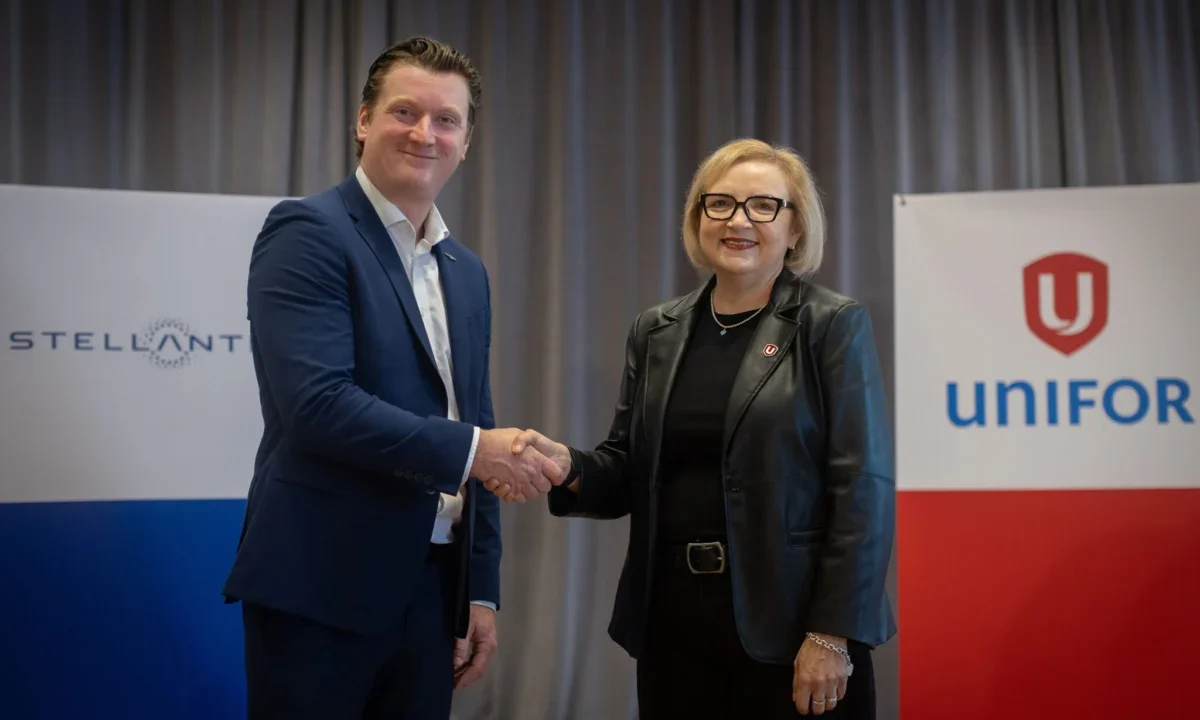




WINDSOR, ON — In a resounding display of solidarity, Unifor members employed at Stellantis facilities across Canada have delivered a powerful message to the automaker’s leadership. With a staggering 97.3 per cent vote in favour of strike action, the rank-and-file membership has granted their bargaining committee a clear mandate to escalate labour pressure as negotiations for a new collective agreement continue to stall.
The vote, conducted over October 17 and 18, signals a pivotal moment in the ongoing contract talks. As the automotive industry faces a complex transition toward electrification, the tension between labour stability and corporate investment strategies has reached a boiling point.
The Core Conflict: Securing the Future of Canadian Operations
At the heart of the impasse lies a fundamental disagreement regarding the long-term commitments Stellantis has made—or failed to make—to its Canadian workforce. Unifor, which represents thousands of Stellantis workers, has made it clear that the union is not merely bargaining for wage increases or benefit adjustments. Instead, the focus is on holding the multinational corporation accountable for its promises concerning future production, facility investments, and the preservation of domestic jobs.
The "Big Three" automakers—Ford, General Motors, and Stellantis—have been navigating a volatile economic landscape marked by supply chain disruptions, the high costs of EV retooling, and shifting consumer demand. For Unifor, the current round of bargaining is viewed as a "line in the sand." Union leadership contends that if Stellantis expects a stable workforce to navigate this industrial transition, it must first guarantee that the Canadian footprint will remain central to its global manufacturing strategy.
A Chronology of Negotiations: From Impasse to Mobilization
To understand how the situation arrived at this high-stakes juncture, one must look at the timeline of the recent weeks:
- Early September: Contract talks officially reached a stalemate. Despite weeks of preliminary discussions, the parties remained significantly apart on key issues, including economic terms and, most crucially, operational security.
- Late September – Early October: Behind-the-scenes discussions intensified. However, the lack of progress prompted Unifor leadership to pivot toward a formal strike authorization process to leverage the bargaining committee’s position.
- October 17–18: Unifor held nationwide strike authorization votes. The near-unanimous result of 97.3 per cent sent an immediate shockwave through the company’s management.
- October 22: Unifor issued a formal status update. The union revealed that Stellantis is currently engaged in high-level discussions with federal government officials, a development that has temporarily paused formal bargaining at the table.
- Looking Ahead: Both parties have indicated that communication channels remain open. The union expects a formal update from Stellantis by late next week, which will determine if and when full-scale negotiations resume.
Supporting Data and The "Big Three" Context
The 97.3 per cent vote is one of the highest strike authorization percentages in recent Canadian automotive history. It serves as a stark metric of worker anxiety and resolve.
Industry Dynamics
The automotive sector in Canada is currently navigating a period of unprecedented investment, with billions of dollars being poured into battery plants and electric vehicle assembly lines. However, the transition has not been seamless. Workers fear that the shift away from internal combustion engines will lead to job losses if the company does not provide ironclad guarantees regarding the retraining of staff and the allocation of new vehicle platforms to Canadian plants.
The Role of Government
The involvement of federal officials is a critical component of this dispute. Stellantis has been seeking government subsidies and support packages to ensure the viability of its Canadian facilities, particularly as it expands its footprint in the battery manufacturing sector. Unifor has taken the stance that taxpayer-funded support must be tethered to strict job-creation and job-retention metrics. The union’s refusal to finalize a contract without these assurances reflects a broader movement in the labour sector to demand "community benefit" clauses in corporate deals.
Official Responses: Navigating the Impasse
The rhetoric from both sides of the table reflects the gravity of the situation.
Lana Payne, National President of Unifor, did not mince words following the vote. “Unifor members at Stellantis understand how difficult negotiations with the company have been and gave an overwhelming mandate to support their bargaining committee,” Payne stated. Her remarks underscore the union’s commitment to ensuring that the rank-and-file, not just the bargaining team, are driving the agenda.
James Stewart, Unifor’s Stellantis Master Bargaining Chairperson, emphasized that the door to a settlement remains unlocked, provided the company meets its obligations. “We believe there is a path to a fair collective agreement with Stellantis so long as the company honours its commitments and does right by its workers,” Stewart said. This framing positions the union as a willing partner in the company’s success, provided that success is shared equitably with the workforce.
While Stellantis has remained relatively quiet in the public sphere during this phase, their ongoing discussions with the federal government suggest that the company is keenly aware that a strike would be economically catastrophic. With the recent experiences of strikes in the U.S. automotive sector, Stellantis is undoubtedly evaluating the costs of a work stoppage against the costs of conceding to union demands.
Implications: What a Strike Would Mean for the Industry
The threat of a strike at Stellantis carries massive economic implications, not just for the automaker, but for the entire Canadian economy.
1. Supply Chain Disruption
The automotive sector is built on "just-in-time" manufacturing. A work stoppage at any major facility ripples instantly through the supply chain, impacting parts manufacturers, logistics providers, and independent service centres. A prolonged strike could cost the Canadian economy millions of dollars in daily production value.
2. The Legal Reality
It is important to note, as the union has repeatedly emphasized, that the membership is not currently in a legal strike position. The collective bargaining process in Canada is governed by strict labour-relations laws. Before a strike can legally commence, the parties must exhaust the conciliation process. By securing the vote now, Unifor is preparing its "legal trigger" so that it can move immediately if the upcoming federal discussions do not result in a satisfactory proposal from the company.
3. Labour Relations and Corporate Reputation
For Stellantis, the primary risk is long-term damage to its relationship with its workforce. The current climate of labour activism across North America—evidenced by successful strikes in the U.S. and the broader "Summer of Strikes" in 2023—suggests that workers are more willing than ever to hold corporations accountable for profitability. If Stellantis is perceived as reneging on its commitments, it could face a disgruntled workforce for years to come, impacting productivity and quality control.
4. Strategic Uncertainty
The uncertainty surrounding the future of Canadian manufacturing is perhaps the most significant long-term implication. If the current impasse leads to a shift in production away from Canada, the impact on communities like Windsor and Brampton would be generational. Conversely, a successful agreement could serve as a template for how the industry handles the transition to a green economy while protecting the interests of the workers who build the vehicles of the future.
Conclusion: A Delicate Balance
As the clock ticks toward the next update from Stellantis, all eyes remain on the intersection of government policy, corporate strategy, and worker resolve. The 97.3 per cent strike mandate is a definitive statement that the status quo is no longer acceptable to those on the factory floor.
Unifor’s strategy is clear: keep the lines of communication open, leverage the pressure of a potential shutdown, and ensure that the transition to an electric future does not come at the expense of the Canadian automotive worker. Whether this leads to a landmark agreement or a historic standoff remains to be seen. However, one thing is certain: the workers at Stellantis have signaled that they are ready to act, and the industry is watching closely.
