


The geopolitical tremors emanating from the Middle East since October 7, 2023, have not remained confined to the battlefields of Gaza or the regional escalations involving Iran. Instead, they have migrated into the fabric of American civic life, triggering a profound and dangerous surge in domestic hate speech, targeted violence, and social fragmentation. As the violence abroad continues to evolve, the impact on Jewish and Muslim communities in the United States has reached a critical inflection point, forcing local governments to rethink their roles in maintaining public safety and community cohesion.
A Chronology of Escalation: From October 7 to Present
The ripple effects of the Hamas-led attack on Israel and the subsequent military offensive in Gaza have been both immediate and persistent.
- October 2023: The initial attack and subsequent military response served as a catalyst for a spike in online rhetoric. Within weeks, the Anti-Defamation League (ADL) reported a staggering 200% increase in antisemitic incidents across the United States. Simultaneously, the Council on American-Islamic Relations (CAIR) documented a 178% surge in anti-Muslim bias incidents in the three months following the October 7 onset.
- Late 2023: Acts of violence moved from rhetoric to physical assault. In November 2023, a shooting in Burlington, Vermont, left three Palestinian-American college students injured, with one survivor suffering permanent paralysis. This period saw local city councils, such as Burlington’s, grapple with the political fallout as they attempted—and often failed—to pass resolutions addressing the conflict and its local victims.
- March 2024: The escalation of regional hostilities, specifically the onset of conflict involving Iran, marked a new phase of hostility. According to data shared by Sameer Hossain, managing director of the Muslim Public Affairs Council, attacks against Muslims and Muslim-centric institutions surged 11-fold during this month compared to the preceding months of the conflict.
- 2024–2025: Research by the Institute for Strategic Dialogue (ISD) indicates that the radicalization landscape has shifted. More than one-third of Islamic State-linked plots and attacks disrupted during this period have specifically targeted Jewish or Israeli communities and institutions outside of the Middle East and Africa, suggesting that domestic communities are increasingly becoming the secondary front for global extremist groups.
Data-Driven Realities: The Burden of Fear
The statistics surrounding the current climate are not merely numbers; they represent a fundamental shift in how minority communities navigate their daily existence.
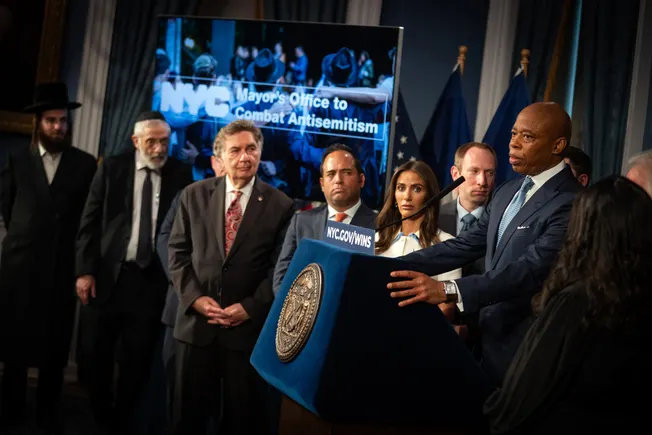
Phylisa Wisdom, executive director of New York City’s Mayor’s Office to Combat Antisemitism, notes that the city—which houses the largest Jewish population outside of Israel—has seen Jewish communities targeted in over 50% of all confirmed hate crimes. "They’re feeling increased fear," Wisdom stated during a recent Strong Cities Network event. "They’re seeing and noticing increased incidents, and that’s changing the way that they move through the city."
This anxiety is mirrored in the Muslim community, where the psychological toll of high-profile tragedies, such as the murder of 6-year-old Wadea Al-Fayoume in Plainfield Township, Illinois, has left deep scars. The perpetrator, the family’s landlord, was reportedly fueled by anti-Muslim animus directly linked to the conflict. The introduction of the "Wadee Resolution" by Sen. Richard Durbin served as a rare federal acknowledgement of this specific strain of violence, yet the frequency of such hate crimes continues to outpace the speed of legislative response.
Official Responses and the Limits of Local Power
The crisis has forced local governments into an uncomfortable position: they are tasked with maintaining safety in a climate where residents are deeply polarized by a foreign war over which they have no jurisdiction.
In New York City, the administration has taken a proactive, albeit focused, approach. Mayor Zohran Mamdani recently unveiled a $26 million strategy for the Office for the Prevention of Hate Crimes, with $7.4 million specifically earmarked for security enhancements at synagogues and other houses of worship. This represents a model for "first-of-its-kind" municipal intervention.
However, critics and community advocates point to a glaring imbalance in the official response. While significant resources have been mobilized to protect Jewish institutions, the public discourse surrounding protections for Muslim and Palestinian-American communities remains fragmented.
The struggle to pass municipal resolutions—such as cease-fire motions in New York City and Burlington—highlights the tension between symbolic politics and material safety. While local governments have no formal role in U.S. foreign policy, these resolutions have become lightning rods for debate. As noted in a Strong Cities Network policy brief, these symbolic actions are tools for cities to represent constituents or express values. Yet, when they fail or lead to contentious public meetings, they can inadvertently deepen the social fissures they were meant to address.
Implications for Future Governance
The challenge for American cities moving forward is how to manage the "local-global" paradox. When global events become local flashpoints, the responsibility for maintaining "social cohesion" falls squarely on mayors, city councils, and local law enforcement.
The Need for a "Social Cohesion Lens"
Experts like the Institute for Strategic Dialogue’s Milo Comerford and policy analysts like those at the Strong Cities Network argue that cities must develop formal protocols for these scenarios. The "local social cohesion lens" involves:
- Assessing Impact: Before taking symbolic actions, city leaders must evaluate who will be affected and whether the action will bridge divides or widen them.
- Developing Alternatives: If a resolution risks inflaming tensions, can an anti-hate statement or a community-wide coalition be more effective in protecting vulnerable groups?
- Precedent-Setting: As policy advisor Manzer noted during a webinar, "Today’s response becomes tomorrow’s precedent." This necessitates a move away from reactive, ad-hoc decision-making toward long-term strategies that prioritize the safety of all marginalized groups equally.
Conclusion: The Path Toward Stability
The surge in hate crimes and the pervasive climate of fear represent a challenge to the pluralistic ideal of American urban life. As the conflict in the Middle East persists, the danger is that the domestic home front will become increasingly radicalized.
The path forward requires more than just increased security funding for individual houses of worship; it requires a systemic commitment to addressing the root causes of bigotry. City governments must reconcile their role as both symbols of democratic values and providers of essential safety. If they fail to provide a balanced, comprehensive response that protects both Jewish and Muslim residents, the precedent they set today will likely serve as the blueprint for the next generation of social unrest.
Ultimately, the security of American cities will depend on their ability to protect the most vulnerable residents from the repercussions of distant wars, ensuring that "how they move through the city" is a matter of personal freedom rather than a calculation of risk and fear. As the landscape of global extremism continues to shift, the resilience of the American civic fabric will be tested by how well its leaders can balance the weight of global tragedy with the duty of local care.
