




As state governments across the United States continue to view cigarette excise taxes as a reliable "cash cow" for balancing budgets and funding public health initiatives, a darker reality is taking hold in the shadows. New data for 2024, compiled in partnership with the Mackinac Center for Public Policy, reveals a persistent and widening chasm between legislative intent and market reality. When taxes reach prohibitive levels, they do not simply decrease consumption—they incentivize the creation of lucrative, dangerous, and often criminal black and gray markets.
The findings are stark: The higher the tax burden on legal tobacco products, the more consumers and illicit suppliers pivot toward tax avoidance. This creates a multi-billion-dollar subterranean economy that undermines state revenue, threatens public safety, and sustains organized crime syndicates.
The Economics of Avoidance: Why Smuggling Flourishes
The fundamental economic principle at play is simple: high taxes create a price disparity that is too large for the market to ignore. When a consumer in a high-tax state like New York can save significant money by purchasing cigarettes in a neighboring jurisdiction or through illicit channels, the motivation to bypass legal retail pathways becomes irresistible.
This behavior manifests in two primary ways: cross-border shopping and organized smuggling. Cross-border shopping involves individual consumers traveling to states with lower tax rates to stock up on personal supplies. While this is often viewed as a legal gray area, it is the second phenomenon—organized smuggling—that poses a profound threat to law enforcement and public safety. Criminal enterprises have capitalized on the vast tax differentials between states, creating sophisticated supply chains that move millions of untaxed packs of cigarettes into high-tax jurisdictions, where they are sold on the street with little to no tax oversight.
A Chronology of Escalation: From Taxes to Black Markets
The history of cigarette taxation in the U.S. is a timeline of unintended consequences. Decades of incremental tax hikes were initially justified by the dual goals of generating revenue and discouraging smoking. However, the 2024 data suggests that the "tipping point" has been passed in many states.
- Pre-2020: Cigarette smuggling existed as a localized issue, primarily confined to states with immediate geographic proximity to low-tax neighbors.
- 2020–2022: As states aggressively increased excise taxes to cover rising fiscal deficits, the smuggling data began to show a sharp upward trajectory. The emergence of flavored tobacco bans in states like Massachusetts and California further complicated the landscape, creating "prohibition-style" markets where the demand for banned products was met by illicit suppliers.
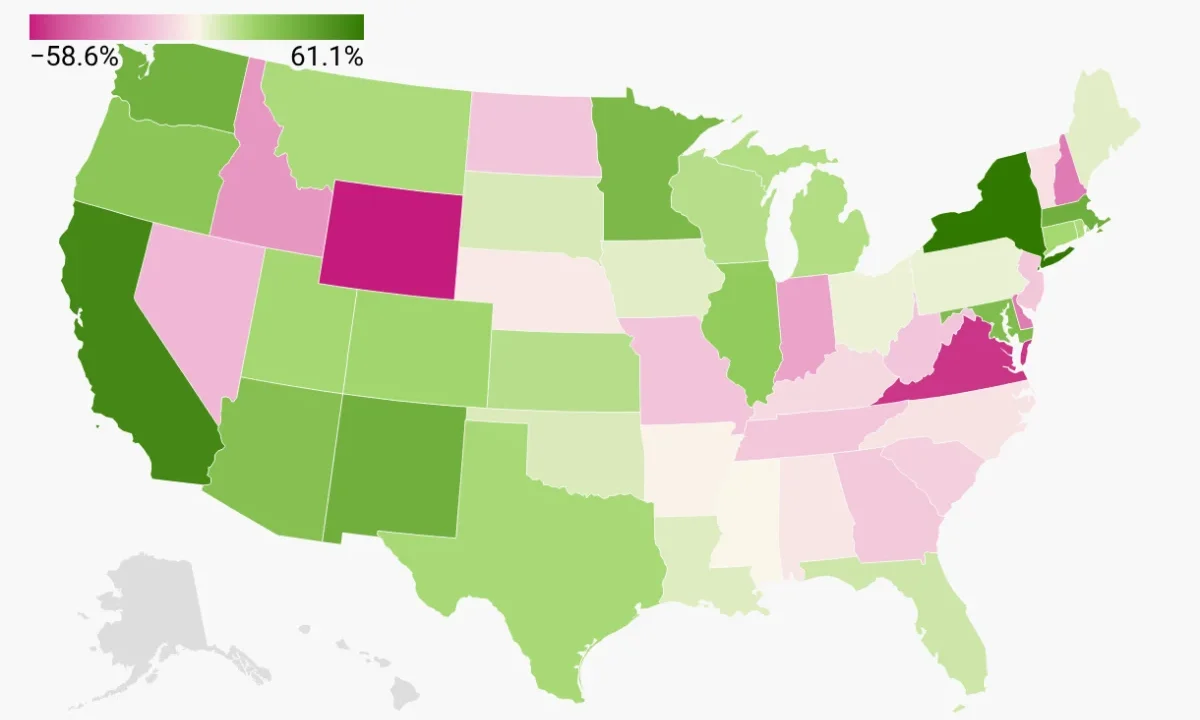
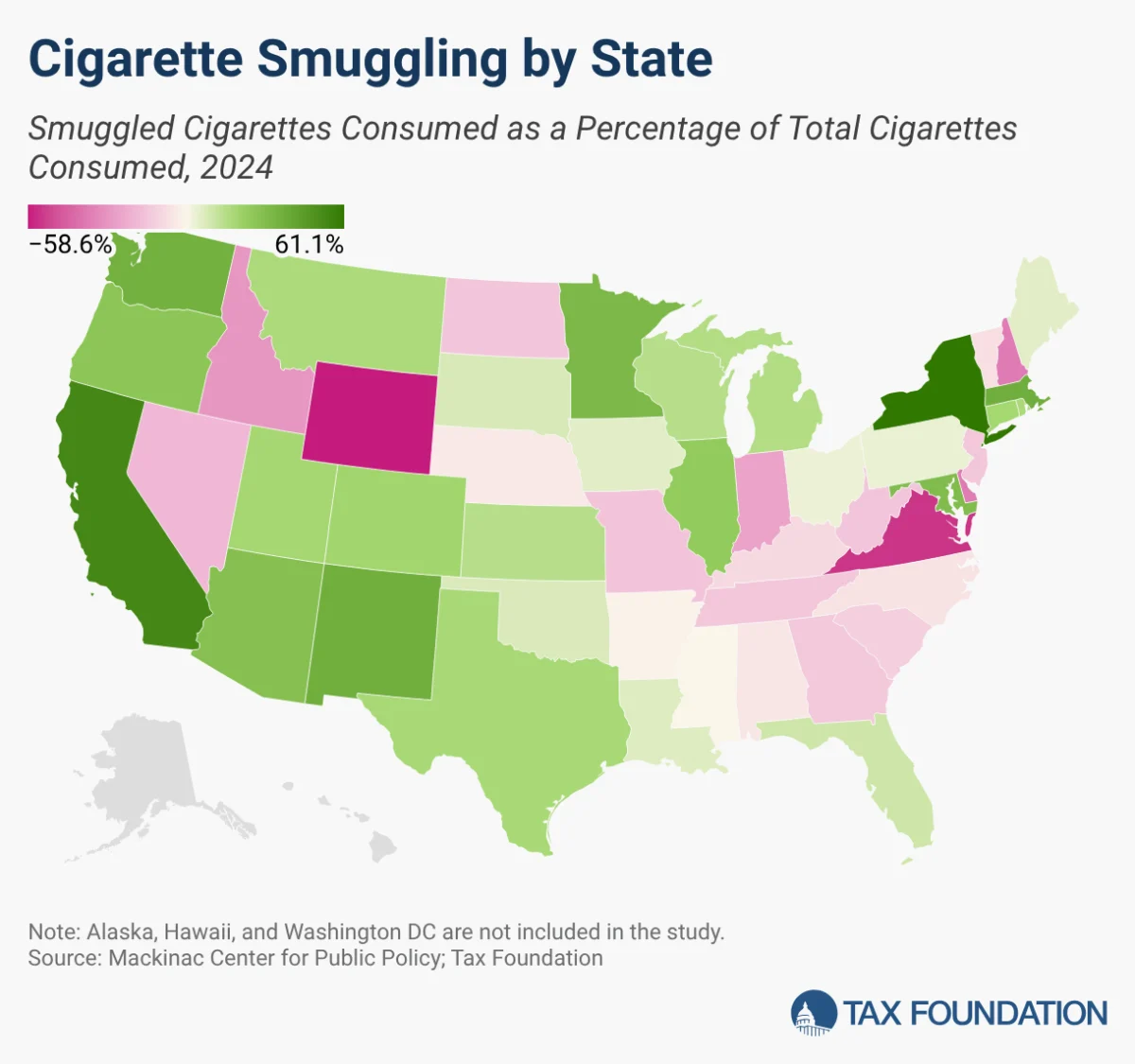
- 2024 Status Quo: The current landscape is characterized by a "smuggling hierarchy." New York, with its punishing tax rate of $5.35 per pack, has reclaimed its position as the nation’s leader in cigarette smuggling, with an estimated 61.1 percent of cigarettes consumed in the state being purchased through illicit or out-of-state channels. California follows closely at 54.4 percent.
Supporting Data: The Cost of Policy Failure
The financial implications for states are staggering. According to the 2024 report, the total foregone tax revenue due to smuggling exceeds $4.6 billion nationwide.
The data highlights a clear inverse relationship: states with the lowest tax rates, such as Virginia and Wyoming, function as "hubs" for legitimate, tax-paying commerce that unintentionally fuels the smuggling ecosystem of their neighbors. Virginia, for instance, nets over $61 million in revenue from these dynamics, effectively acting as a reservoir for consumers fleeing the high-cost environments of the Northeast.
| State | State Tax (cents) | Smuggling Rate | Foregone Revenue |
|---|---|---|---|
| New York | 535.0 | 61.09% | $1,234,101,398 |
| California | 287.0 | 54.38% | $1,363,055,406 |
| Massachusetts | 351.0 | 37.86% | $190,571,364 |
| Washington | 302.5 | 36.74% | $140,537,512 |
| Virginia | 60.0 | -54.38% | ($61,354,555) |
(Note: Negative numbers indicate net inbound smuggling and positive revenue gains.)
The sheer scale of these numbers demonstrates that anti-smuggling task forces are essentially fighting a forest fire with a garden hose. A recent high-profile seizure of 43,700 packs in New York, while significant in terms of police work, represented less than 0.02 percent of the state’s total annual smuggling volume. The overwhelming majority of illicit product flows through undetected.
The Regulatory Mirage: Menthol and Flavor Bans
Perhaps the most concerning trend in recent years is the shift from high taxation to outright product bans. By implementing menthol and flavored tobacco prohibitions, states like California and Massachusetts have not succeeded in ending consumption. Instead, they have created a vacuum that is rapidly being filled by illicit, unregulated products.
History provides a cautionary tale: the Prohibition era of the 1920s did not stop the consumption of alcohol; it merely pushed it into the hands of organized crime and introduced a dangerous, unregulated product into the market. Today’s tobacco bans are repeating this cycle. When consumers are denied their preferred products, they do not quit; they turn to the black market. These illicit products are often counterfeit, manufactured in facilities in countries like China, where oversight is non-existent. These cigarettes have been found to contain toxic heavy metals, pesticides, and other contaminants far more dangerous than those found in legal, regulated tobacco.
Broader Implications: Crime, Safety, and the Vaping Future
The smuggling crisis is not merely a tax collection issue; it is a public safety and national security concern. International criminal organizations have long used cigarette smuggling as a low-risk, high-reward method to launder money and fund other illicit activities, including terrorism. The global trade in counterfeit cigarettes, estimated at 400 billion units annually, is a massive engine for transnational crime.
Furthermore, state law enforcement agencies are increasingly stretched thin. The burden of policing these illicit networks falls on state troopers and local sheriff’s departments, which are often ill-equipped to combat globalized, tech-savvy smuggling operations.
Looking ahead, the policy "pitfalls" identified in the tobacco market are now appearing in the burgeoning vaping industry. As states look to impose heavy taxes and restrictive regulations on vaping products, they risk repeating the same mistakes that have crippled the legal tobacco market. By forcing consumers into the arms of the illicit market, policymakers are undermining the legal businesses that comply with health and safety standards while simultaneously eroding their own tax base.
Conclusion: A Call for Evidence-Based Policy
The 2024 smuggling data serves as a sobering reminder that policy, no matter how well-intentioned, cannot ignore the laws of economics. When the cost of compliance exceeds the threshold of consumer tolerance, the market will inevitably find an alternative.
For policymakers, the path forward requires a more nuanced approach. Rather than relying on aggressive tax hikes or sweeping prohibitions, which have proven to be catalysts for criminal enterprise, states should consider:
- Tax Harmonization: Reducing extreme tax disparities between neighboring states to minimize the arbitrage opportunities that drive smuggling.
- Focus on Enforcement: Strengthening legitimate retail compliance rather than relying on prohibition, which forces the market underground.
- Risk Assessment: Recognizing that banning products (like menthol) transfers market share from regulated, domestic businesses to unregulated, international criminal actors.
Ultimately, the goal of public health and fiscal stability is best served by a regulated market that is accessible and transparent. As this report demonstrates, high taxes and bans do not just fail to curb demand—they fund the very criminal organizations that governments aim to defeat. The current trajectory is unsustainable; it is time for policymakers to look at the data and pivot toward strategies that prioritize market integrity and consumer safety over the short-term gains of punitive taxation.
