


In a move designed to decouple the American agricultural sector from volatile global supply chains, the Trump administration has launched an aggressive initiative to expand domestic fertilizer manufacturing capacity. By injecting hundreds of millions of dollars into infrastructure projects across the United States, federal officials aim to mitigate the nation’s heavy reliance on foreign imports and break the monopolistic concentration that currently defines the domestic market.
This policy shift, anchored by the Fertilizer Production Expansion Program (FIELDS), represents a foundational change in how the U.S. approaches food security. By prioritizing domestic autonomy, the administration seeks to insulate American farmers from geopolitical shocks, price spikes, and the influence of foreign state actors in the essential supply of nitrogen, phosphorus, and potassium.
The Strategic Imperative: Breaking Market Concentration
The current landscape of the U.S. fertilizer industry is characterized by significant market consolidation. According to data provided by the U.S. Department of Agriculture (USDA), the concentration of production power is striking: four companies control 77% of North America’s nitrogen fertilizer capacity. The situation is even more pronounced in other segments, with just two companies accounting for 90% of phosphate production and another two controlling 90% of potash production.
This lack of competition creates a vulnerable market prone to price gouging and supply chain disruptions. When major players control the vast majority of production, the ability of independent farmers to navigate volatile cost fluctuations is severely hampered. The administration’s recent investment strategy is explicitly designed to inject new, independent capacity into the market. By fostering competition, the USDA estimates that these projects, once fully operational, could reduce nitrogen prices by approximately 4.4% and potash prices by roughly 5.3%, offering much-needed relief to the American agricultural bottom line.
Chronology: A Multi-Year Push for Autonomy
The path to this initiative was paved by a series of global events that exposed the fragility of the status quo.
- Early 2022: Global supply chain disruptions—exacerbated by regional conflicts and lingering pandemic-era logistics issues—sent fertilizer prices to historic highs. Farmers across the Midwest began reporting significant difficulties in sourcing essential nutrients for the planting season.
- Late 2022 – 2023: The USDA initiated a comprehensive review of the fertilizer market, identifying key vulnerabilities in the import-dependent model. During this period, reports from organizations like Investigate Midwest began highlighting the heavy reliance on foreign suppliers, particularly for potash and nitrogen.
- 2024: The Trump administration formalized the FIELDS program, establishing a grant and investment framework to incentivize private sector expansion. Political momentum grew as figures such as Vice President J.D. Vance voiced strong opposition to the nation’s dependence on foreign food and input security.
- October 2025: Updated USDA data revealed that over 25 million tons of fertilizer had entered the country within the year, reinforcing the necessity for a shift toward domestic production.
- Late 2025 – Early 2026: The administration finalized the allocation of federal funds to eight major projects, marking the current phase of project development and construction.
Supporting Data: The Anatomy of Import Reliance
While the United States remains the fifth-largest fertilizer producer globally, it is not yet self-sufficient. The gap between domestic production and consumption necessitates the importation of millions of tons of material annually to ensure crop yields and soil health.
The dependence is particularly acute in the following areas:
- Potassium (Potash): Between April 2025 and March 2026, the U.S. imported approximately 8.7 million tons of potassium fertilizer. The vast majority—roughly 90%—originated in Canada.
- Nitrogen: During the same twelve-month period, the U.S. imported 6.1 million tons of nitrogen-based fertilizers. Of this, nearly half was supplied by Russia and Canada, highlighting a reliance on geopolitical rivals for a fundamental input of American agriculture.
The high demand for urea, a nitrogen-dense product, continues to drive import volumes. These figures underscore the administration’s claim that current reliance on international partners is a strategic risk rather than a simple economic choice.
Official Responses and Political Vision
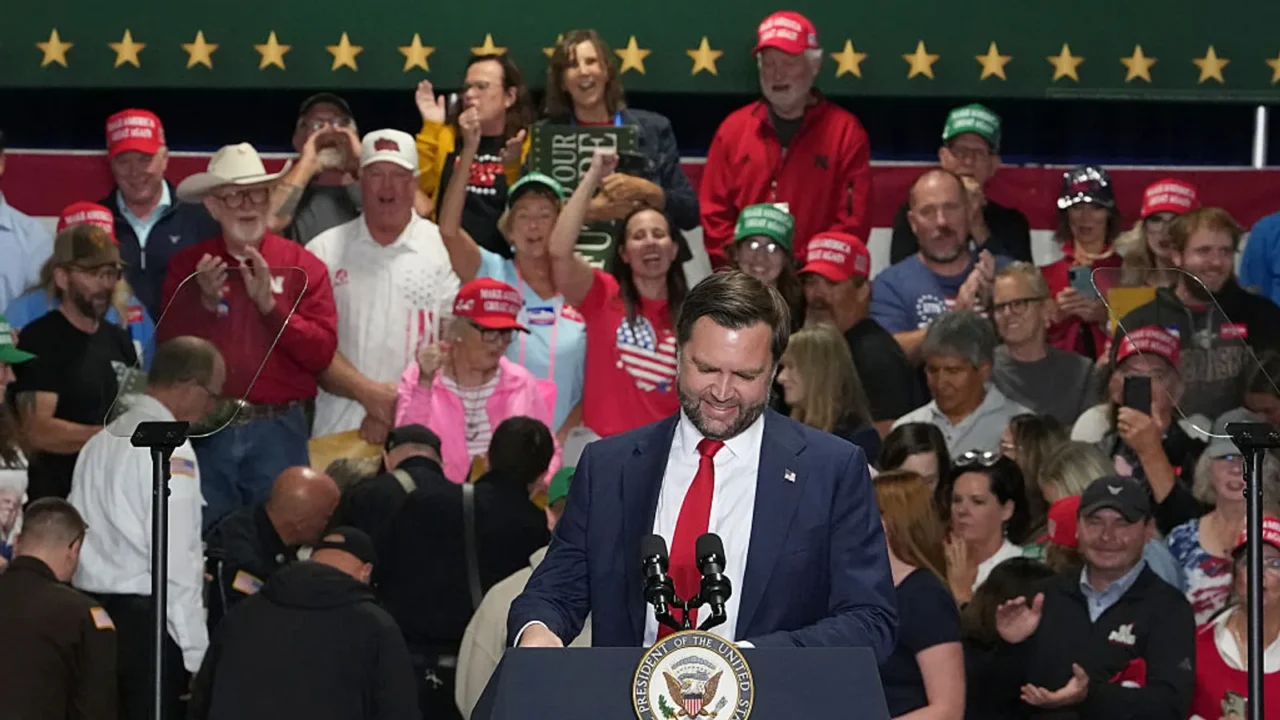
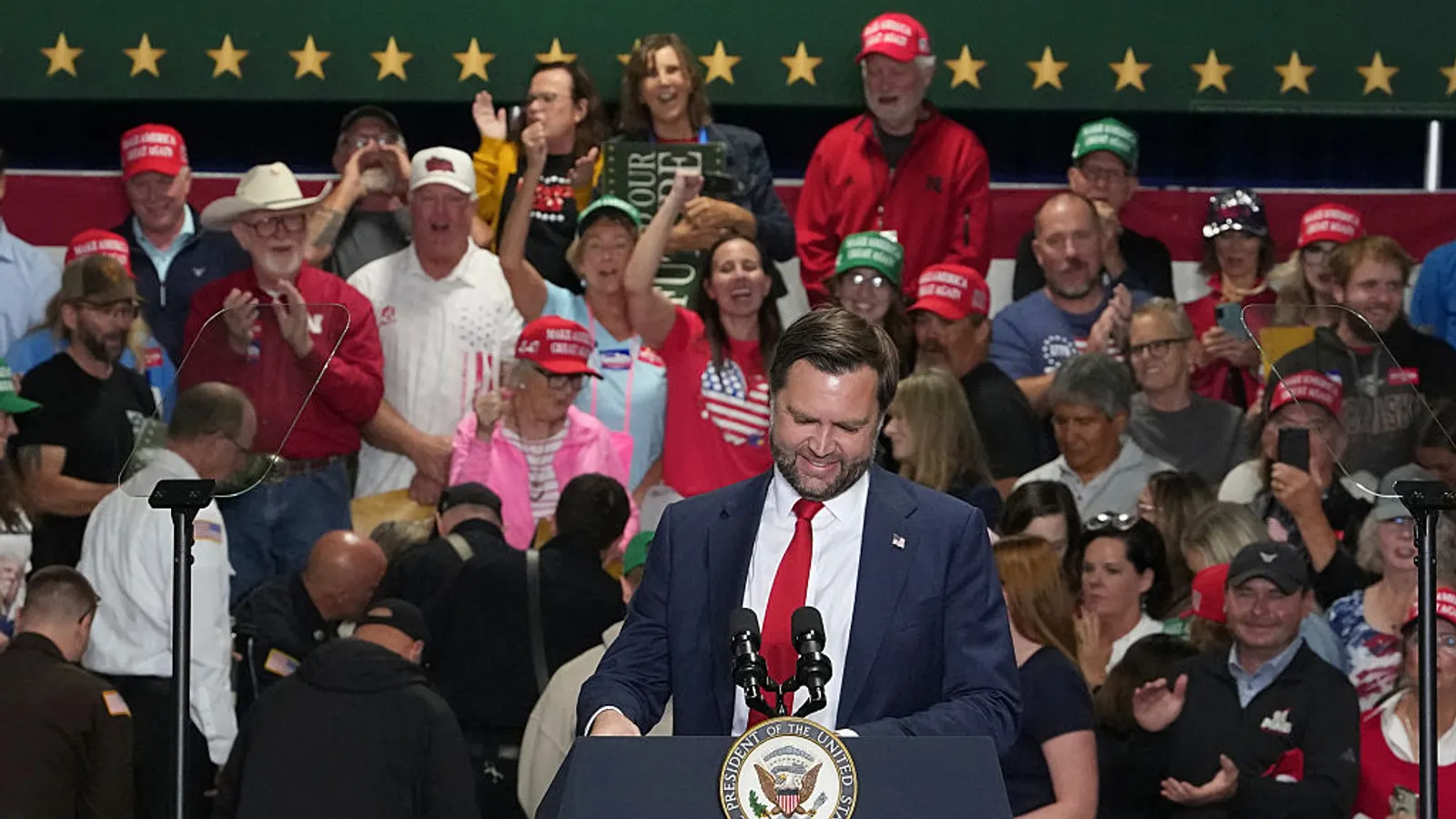
The push for domestic production is as much a political statement as it is an economic strategy. During a high-profile midterm rally in North Platte, Nebraska, Vice President J.D. Vance articulated the administration’s sentiment with blunt clarity: "I am sick of relying on everybody else to make our stuff and grow our food. We got to do it right here at home."
This populist appeal to economic sovereignty resonates deeply within the agricultural heartland. By framing fertilizer production as an issue of national security, the administration has successfully navigated bipartisan support for the FIELDS program. The USDA, in its official capacity, emphasizes that these investments are not merely about increasing output but about building a resilient, decentralized system that can withstand future global shocks.
The FIELDS Portfolio: A New Domestic Footprint
The administration has selected eight diverse projects to receive funding, targeting different types of fertilizer and geographic regions to ensure a robust supply chain:
1. TalusAG (Texas/Midwest)
Focusing on modular innovation, TalusAG will deploy 20 ammonia manufacturing units across seven states (Iowa, Kentucky, Minnesota, Tennessee, Nebraska, Illinois, and South Dakota). This project, supported by $99.8 million in federal funding, is a blueprint for decentralized production, aiming to yield 130,000 tons of anhydrous ammonia annually.
2. Peace Valley (Florida)
Targeting capacity expansion at an existing plant in Bartow, Florida, this $50.6 million project—supported by $19.9 million in federal aid—will raise annual output to 250,000 tons, strengthening the phosphorus-based fertilizer supply.
3. PCI Nitrogen (Texas/Oregon)
PCI Nitrogen is set to expand facilities in Pasadena, Texas, and St. Helens, Oregon. With $100 million in federal support, the $200 million project will focus on ammonium sulfate and urea, adding 148,280 tons of capacity.
4. Intrepid Potash (New Mexico)
A critical project for potash supply, the construction of a new manufacturing facility near Carlsbad, New Mexico, will receive $139 million from the USDA to produce 220,000 tons of potassium-based fertilizer per year.
5. AdvanSix (Virginia)
Located in Hopewell, Virginia, this project will modernize anhydrous ammonia production, with $47.4 million in federal support contributing to an expansion of 84,000 tons of annual capacity.
6. Sul4r-Plus Illinois (Illinois)
Focusing on sulfur, this $69.7 million project in Marissa, Illinois, will receive $34.9 million to add production lines and infrastructure, supporting 100,000 tons of capacity.
7. True Organic Products (California/Oregon/Arizona)
In a nod to sustainable and alternative inputs, this project utilizes agricultural byproducts to produce 142,805 tons of fertilizer. The USDA provided $15.3 million for this $30.6 million multi-state expansion.
8. Agriculture Project Holdco (Kansas/Indiana)
This ambitious $360 million project aims to turn dairy waste into liquid ammonium nitrate. The USDA’s $116.9 million investment will facilitate the development of facilities in Lewis, Kansas, and Fair Oaks, Indiana, signaling a move toward circular agricultural economies.
Implications: The Long-Term Outlook
The systemic shift toward domestic fertilizer production carries profound implications for the U.S. economy and global trade. By facilitating nearly 1.1 million tons of new annual capacity, the administration is effectively "de-risking" the American food supply.
However, challenges remain. Critics of the program argue that the massive scale of the global fertilizer market means that even an additional million tons of domestic capacity will only provide a marginal buffer against international price swings. Furthermore, the environmental impact of scaling up ammonia production—a notoriously energy-intensive process—will likely face scrutiny from regulatory bodies and environmental advocacy groups.
Despite these hurdles, the momentum behind the FIELDS program suggests that the Trump administration views the cost of inaction as significantly higher than the cost of investment. As the projects break ground, the U.S. agricultural sector will be watching closely to see if this strategy results in the promised price stability and supply security. If successful, the initiative could serve as a template for other critical industries currently reliant on global supply chains, marking a new era of industrial policy centered on domestic autonomy and localized production.
As the 2026 planting season approaches, the focus remains on whether these facilities can come online quickly enough to impact the market, providing the tangible relief that American farmers—and the administration—are banking on.
