





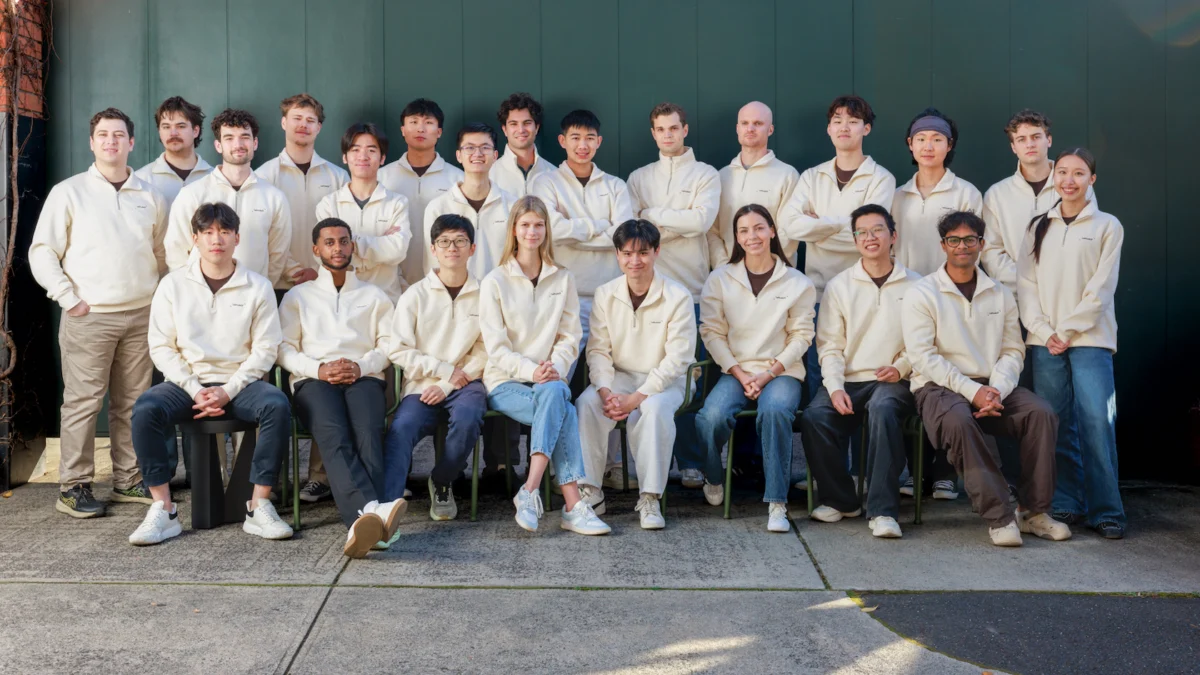
In a significant move to bolster the Australian tech ecosystem, global fintech unicorn Airwallex has officially unveiled the winners of its inaugural "Latitude 37" initiative. The program, which aims to nurture the next generation of deep-tech talent, has awarded $100,000 in equity-free capital to 10 AI-native startups.
By providing not only non-dilutive funding but also unprecedented access to its global infrastructure, mentorship, and international markets, Airwallex is setting a new benchmark for how established "soonicorns" and unicorns can cultivate the next generation of founders.
The Genesis of Latitude 37: A Commitment to Roots
Named after the geographic latitude of Melbourne—the city where Airwallex was founded—the Latitude 37 program was designed to solve a perennial problem for Australian founders: the "tyranny of distance" and the difficulty of scaling globally from a local base.
Launched in April by Airwallex co-founder and CEO Jack Zhang, the initiative sought to identify the most ambitious young founders (aged 25 and under) who were leveraging artificial intelligence to solve complex, real-world problems. The call for applications drew hundreds of entries from across the country, spanning diverse sectors from aerospace and robotics to financial infrastructure. After a rigorous selection process involving a panel of high-profile venture capitalists and senior Airwallex executives, the top 10 were chosen to receive the inaugural grant.
"Looking at the founders we selected, one thing stood out: young people across Australia are building incredibly ambitious and technically difficult things with AI," said Jack Zhang. "From robotics and aerospace to autonomous systems and financial infrastructure, there is no shortage of talent or imagination tackling some of the hardest problems in technology right here in Australia. Our job is to make sure building a globally significant company from Australia isn’t the harder path."
Chronology: From Concept to Global Deployment
The journey of Latitude 37 reflects a fast-tracked approach to startup incubation, mirroring the high-velocity nature of the AI industry.
- April 2024: Airwallex announces the launch of the Latitude 37 initiative, signaling a commitment to supporting the next wave of local tech talent.
- May–June 2024: A nationwide search begins, with hundreds of applications flowing in from various Australian tech hubs.
- July 2024: The evaluation phase. A panel of experts assesses the applications based on technical difficulty, market potential, and the founders’ vision.
- August 2024: The final 10 winners are selected.
- September 2024 and beyond: The program enters its core phase, featuring an intensive immersion tour in global technology centers including San Francisco and Singapore. During this period, the startups will gain direct exposure to Airwallex’s AI-native infrastructure and global financial network.
The Winning Class: A Snapshot of Australian AI Ambition
The 10 startups selected for the program represent a sophisticated cross-section of the Australian deep-tech landscape. Unlike many consumer-facing AI apps, these companies are building the "picks and shovels" of the future.
1. AXIOMS
Founders Manu Masson and Lochlan Hill are pioneering the development of interconnected networks of AI agents. Their goal is to move beyond simple chatbots, creating a "super-intelligent system" capable of multi-step reasoning and complex task execution.
2. Blank Robotics
Jed Hoo and Anirudhh "Arnie" Ramesh are addressing the labor-intensive nature of the grocery retail sector. By deploying modular, general-purpose robots, they aim to automate stock management and operational logistics at the store level.
3. Dreamscale Labs
Eric Ren, Chris Yoo, Antoine Nguyen, and Kevin Lin are tackling the latency and hardware constraints of robotics by putting "robot brains" in the cloud, allowing for smarter, more efficient machine learning models to operate in real-time.
4. Forward
Founders Daniel Yoon, Riley Janjis, and Darryl Luo are digitizing the private credit market. Their platform uses advanced automation to convert complex, unstructured borrower information into structured, actionable credit deals.
5. Geospan
Co-founded by Julia Tan and Beau Hobba, Geospan is building real-time road hazard detection for the autonomous vehicle industry. Their technology aims to make driverless transport safer by identifying environmental risks before they become accidents.
6. Kronus
Patrick Bellamy and Jack Ulbrich-Baker focus on "mission-critical" software. They are developing high-reliability systems for environments where failure is not an option, such as satellite arrays, aircraft, and large-scale industrial factories.
7. Polarbear AI
Haobo Zhang and Percy Ding are looking toward the future of education. They are building "AI-native schools" tailored to Generation Beta, integrating personalized learning models that adapt to the unique needs of the next generation of students.
8. SeatFinder
Yaroslava Kiseleva and Nicolas Van Hoorick are optimizing the travel experience. By navigating the complexities of flight schedules and loyalty programs, they help travelers maximize their benefits and make better-informed travel decisions.
9. Superstat
Kai Bloomfield, Cordelia King, and Sam Hung are transforming the sports analytics industry. Using computer vision, they turn raw game footage into professional-level statistical analysis and highlight reels, democratizing data for athletes at all levels.
10. SyncPay
Founder Ezana Yohala is tackling the friction in financial transactions. SyncPay ensures that every payment carries its full, immutable transaction record, providing greater transparency and compliance for cross-border financial operations.
Supporting Data and Strategic Implications
The Latitude 37 program is funded through Airwallex Impact, the company’s dedicated Pledge 1% initiative. This model is gaining traction among global tech giants, where a percentage of equity, profit, or time is ring-fenced for social and industry good.
For the startups involved, the $100,000 cash injection is only the beginning. As Julia Tan of Geospan noted, the capital is immediately earmarked for high-impact growth activities: "The cash enables us to make a key hire and expand our roadside deployment trials. Just as importantly, Latitude 37 gives us access to insights and mentorship from people who have been on this journey themselves."
The implication of this program is clear: the gap between "having an idea" and "scaling globally" is being bridged by the very companies that successfully navigated that path. By providing the winners with access to its global financial network and AI infrastructure, Airwallex is effectively reducing the "cost of entry" for the Australian tech sector.
The Broader Ecosystem: Why Australia?
For years, critics have argued that Australia suffers from a "brain drain," where the best talent migrates to Silicon Valley or London to find the capital and infrastructure necessary to scale. The Latitude 37 initiative is a direct rebuttal to this narrative.
By investing in local startups, Airwallex is fostering a virtuous cycle. The success of these 10 startups could lead to increased interest from international venture capitalists, a more robust local talent pool, and the eventual maturation of the Australian AI sector. The program’s focus on diverse sectors—ranging from aerospace to education—suggests that the next big Australian tech success story is unlikely to be just another fintech platform; it is just as likely to be a robotics or satellite company.
Looking Ahead: The Future of Latitude 37
As the first cohort begins its journey, the industry will be watching closely. The success of the program will likely be measured by the ability of these startups to achieve "global significance," as Jack Zhang put it.
If these companies can leverage the Airwallex network to land their first international clients or secure Series A funding from top-tier global investors, Latitude 37 will likely become a permanent fixture in the Australian startup calendar.
In a world where artificial intelligence is rapidly redefining every sector of the economy, programs like Latitude 37 provide the necessary infrastructure to ensure that Australian founders aren’t just participants in the AI revolution—they are leading it. For the 10 startups selected, the road ahead is challenging, but they are now equipped with the capital, the network, and the mentorship to turn their ambitious visions into reality.
As the program concludes its first year, the message from Airwallex is definitive: the "harder path" of building in Australia is getting significantly easier, and the next generation of global tech leaders is already here.
