




By Editorial Staff
Against the backdrop of a high-stakes week in Washington, D.C.—a city currently vibrating with the intersection of the Congressional Black and Hispanic Caucuses’ annual conventions and urgent bipartisan dialogues regarding the existential risks of artificial intelligence—the National Employment Law Project (NELP) drew a line in the sand. In a landmark gathering of labor policy architects, activists, and organizational leaders, NELP hosted its first major in-person policy summit since the onset of the COVID-19 pandemic.
The objective was clear: to move beyond the reactive defense of past gains and toward a proactive, systemic reimagining of the American social contract. As technological disruption, shifting labor models, and economic instability converge, the leaders in attendance sought to define what a "winning" policy perspective looks like in an era of unprecedented volatility.
The Legacy of Struggle: Setting the Stage
The event was anchored by testimonials from long-term partners whose work has defined the modern workers’ rights movement. Leaders such as Alan Barber of the Roosevelt Institute, Jaribu Hill of the Mississippi Workers’ Center for Human Rights, Angela Hanks of The Century Foundation, MB Maxwell of Workshop, and Kevin Reilly of the Laborers’ International Union provided a sobering reminder of the movement’s lineage. Their remarks served as a bridge between the foundational battles for labor rights and the modern-day challenges of a digital, fragmented workforce.
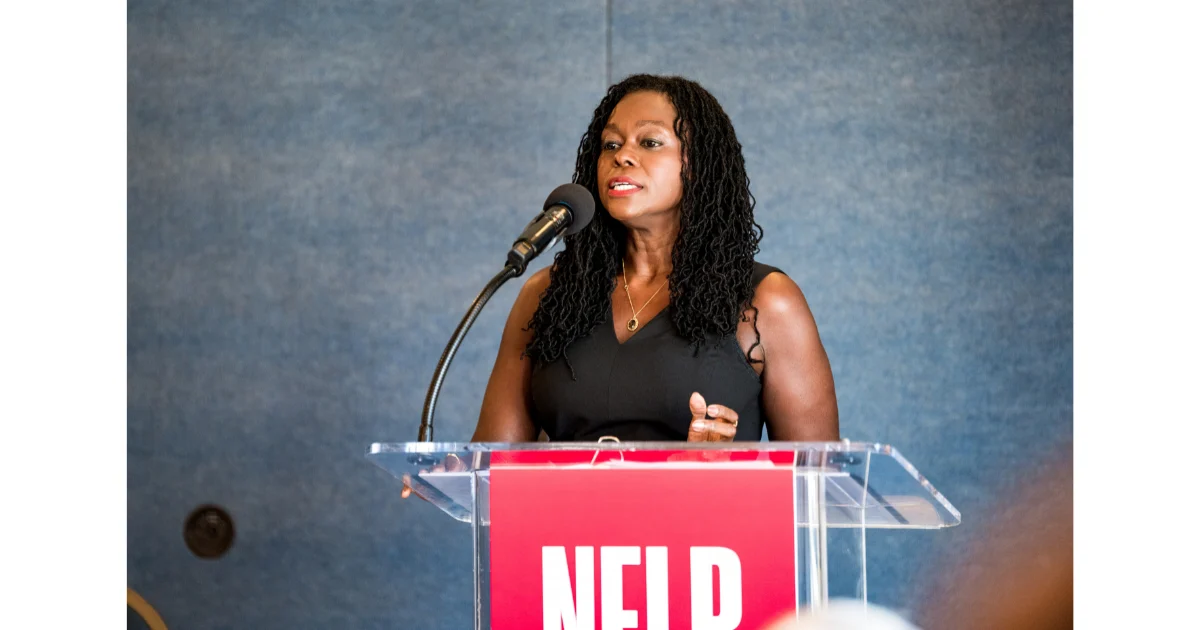
NELP President and CEO Rebecca Dixon opened the proceedings with a poignant reflection on the organization’s history. Recounting her own early career as a civil service worker in Mississippi, Dixon noted how NELP’s groundbreaking litigation on employment discrimination in the 1970s directly shaped the landscape she entered as a young professional.
"We are once again living through a period when the rules are being rewritten," Dixon declared. Her message to the room was one of urgent defiance: "We must collectively keep organizing, building, and fighting—we must refuse to accept the world we inherited is the best we can do."
Existential Threats to Bedrock Protections
Raj Nayak, chair of the NELP Board of Directors, underscored the gravity of the moment in his opening remarks. He noted that the labor movement is currently facing "existential threats to our bedrock worker protections—some of which workers have relied upon for nearly a hundred years."
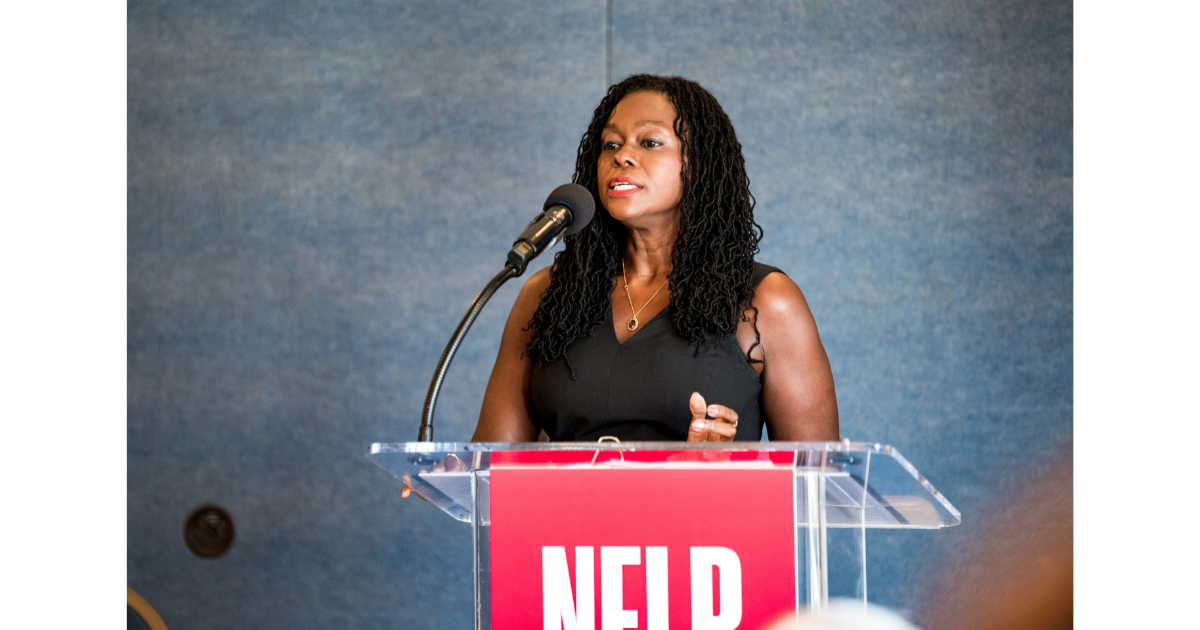
Nayak’s assessment frames the current crisis not as a series of isolated policy disputes, but as a systematic weakening of the foundations that have historically stabilized working families. "Over the course of its history, when economic crises and insecurity have threatened the stability of working families, NELP has always been the first to step up," Nayak stated. By convening this summit, NELP signaled that "stepping up" in the 21st century requires a departure from traditional lobbying toward a more agile, multi-faceted approach to labor governance.
Reimagining Work: A Panel on Policy Innovation
The core of the summit featured a high-level panel discussion moderated by Teresa Acuña, NELP’s Visiting Fellow for Good Jobs Democracy. Joined by senior policy fellows Michele Evermore, Rob Asaro-Angelo, and Paul Sonn, the conversation centered on the mismatch between current labor institutions and the realities of modern employment.
"We’re talking today about the future of worker justice at a moment when work itself is changing rapidly," Acuña noted. "AI, automation, contract work, and rising costs are creating new challenges, but they also give us an opportunity to rethink what workers need to thrive."
1. The Unemployment Insurance Crisis
Michele Evermore delivered perhaps the most scathing critique of the day, characterizing the current Unemployment Insurance (UI) system as fundamentally broken. "The system is garbage," Evermore stated, highlighting a catastrophic failure in coverage and utility.
Key issues raised included:
- Benefits Lag: Payments have failed to keep pace with inflation, often running out long before a worker can secure new employment.
- The "Fake Job" Market: Evermore pointed to the growing plague of ghost job postings—where up to a third of online listings are non-existent—which leaves workers in an exhausting, endless search loop.
- Institutional Inaccessibility: The complexity of the system deters those who need it most. Evermore advocated for a radical simplification of UI and suggested that unions and community-based organizations must step in to help workers navigate these bureaucracies, essentially crowdsourcing the safety net where the state has failed.
2. Beyond the Minimum Wage: The Affordability Equation
Paul Sonn directed the conversation toward the stagnation of wages, arguing that the national discourse has become too narrowly focused on "lowering costs" while ignoring the revenue side of the ledger.
"Working families are being squeezed between rising living costs and stagnant pay," Sonn explained. He argued that the labor movement, while incredibly successful with the "Fight for $15" campaign, has yet to coalesce around a successor. Sonn proposed a two-pronged strategy for the future:
- Ambitious Wage Targets: Moving beyond the static federal minimum wage toward a more dynamic, inflation-adjusted standard.
- Sectoral Bargaining: Implementing industry-specific wage standards that account for the unique economic conditions of sectors ranging from fast food to home healthcare, ensuring that pay increases are meaningful and sustainable.
3. Innovation in Labor Enforcement
Rob Asaro-Angelo, leveraging his eight-year tenure as New Jersey’s Labor Commissioner, focused on the "how" of labor rights. He argued that even in environments of extreme fiscal austerity, states can and must do better in enforcing existing statutes.
Drawing on recent research from Rutgers University, Asaro-Angelo argued that strong laws are useless without the infrastructure to enforce them. He proposed three major innovations:
- Enforcement Partnerships: Utilizing state and local networks to expand the reach of labor inspectors.
- User-Centric Reporting: Digitizing and streamlining the process for workers to file claims, reducing the barrier to entry for marginalized or vulnerable populations.
- Procurement as a Tool: Leveraging public procurement contracts—where the government acts as a massive purchaser of goods and services—to mandate that contractors adhere to the highest labor standards, effectively turning taxpayer money into a driver of high-road employment.
Implications for the Future of Worker Justice
The summit concluded with a clear consensus: the traditional "siloed" approach to labor policy is obsolete. To meet the challenges of AI, the gig economy, and globalized labor markets, the movement must pivot toward a strategy of integrated policy innovation.
Chronology of Action
- Morning Session: Testimonials from labor veterans grounded the summit in the historical importance of collective bargaining and legislative advocacy.
- Mid-Day Keynote: NELP leadership defined the current epoch as a period of "great promise and great peril," calling for a refusal to settle for the status quo.
- Policy Panels: Experts dissected the failures of UI, wage stagnation, and enforcement, providing a roadmap for legislative and administrative reform.
- Closing Strategy: The day ended with an emphasis on collaboration, signaling that the next wave of worker justice will be built on the synthesis of research, union organizing, and administrative innovation.
A Call to Action
The event was more than a symposium; it was an act of organizational realignment. By focusing on three principal pillars—worker transitions, worker protections, and wages and affordability—NELP is positioning itself at the center of a renewed progressive economic agenda.
The attendees—representing unions, research institutes, and grassroots worker centers—left with a mandate to develop and fight for policies that do not just mitigate the harms of the current economy, but actively reshape it. As the legislative calendar in Washington continues to churn, the ideas discussed at the NELP summit provide a blueprint for a labor movement that is not merely reacting to the future, but actively building it.
"We must refuse to accept the world we inherited is the best we can do," Rebecca Dixon’s words echoed as the summit closed. In an era of AI-driven anxiety and economic precarity, that refusal may be the most powerful tool the labor movement has. The challenge now lies in translating these policy proposals into the hard-won victories that will define the next fifty years of American labor history.
