





In an era where American municipalities are grappling with the "silver tsunami" of retiring public servants, a shrinking labor pool, and the urgent need for modernization, the traditional siloed approach to local governance is proving insufficient. As cities scramble to recruit skilled workers and implement 21st-century technologies, a potent, often underutilized resource sits at the heart of many communities: the local university.
Michael Birzer, a professor in the School of Criminal Justice and director of the Undergraduate Research and Creative Activity Hub at Wichita State University (WSU), argues that the key to future-proofing local government lies in "applied learning"—the strategic integration of academic research with the gritty realities of public sector work. Drawing from his dual background as a former law enforcement lieutenant and a veteran academic, Birzer suggests that the collaboration between Wichita State and local law enforcement serves as a national blueprint for modernizing civic institutions.
The Genesis of a Partnership: A Chronology of Collaboration
The story of the Wichita-Sedgwick County Law Enforcement Training Center did not begin with a formal committee or a multi-year master plan. It began, serendipitously, during a brief break in a meeting.
Eight years ago, representatives from WSU were gathered with Wichita city officials to deliberate on the selection of a new police chief. During a "leg-stretching" intermission, the city manager offhandedly mentioned the pressing need for a modernized police academy. For Birzer, this was a pivotal moment. He saw an opportunity to bridge the divide between theoretical criminal justice education and the practical demands of the beat.
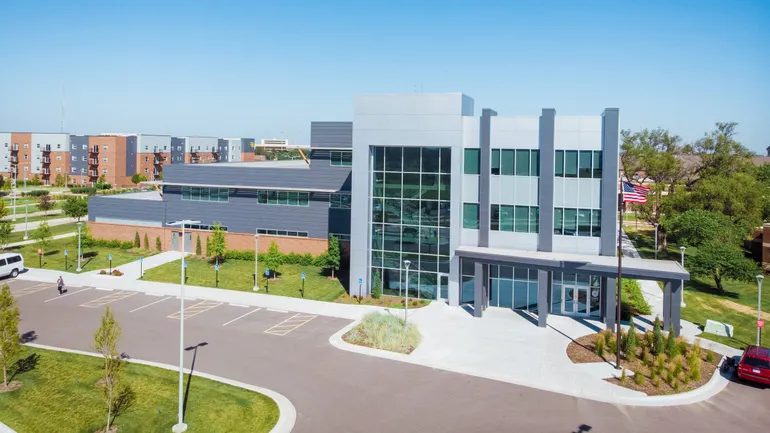
The resulting collaboration was formalized shortly thereafter. The Wichita-Sedgwick County Law Enforcement Training Center emerged as a multifaceted facility, co-located on campus, serving as both a state-of-the-art training ground for recruits and a hub for veteran officers to fulfill their mandatory annual continuing education and certification requirements.
The project grew in scope, eventually drawing in federal partners. Following the success of the training center, the Kansas Bureau of Alcohol, Tobacco, Firearms and Explosives (ATF) transitioned its operations to the WSU campus to spearhead the Crime Gun Intelligence Center (CGIC). This facility, a joint venture between local law enforcement, the ATF, and the university, leverages advanced technology to analyze shell casings and ballistic evidence, significantly expediting the resolution of gun-related crimes.
Supporting Data: The Tangible Impact of Applied Learning
The integration of academic and practical environments has yielded measurable results that go beyond anecdotal success. The most striking metric emerged shortly after the opening of the training center: a 150% increase in police department job applications.
The then-police chief attributed this surge directly to the center’s presence on campus, which bridged the visibility gap between student life and law enforcement careers. This "pipeline effect" is not merely about recruitment numbers; it is about the quality of the workforce entering the field.
The partnership also addresses a critical demand from the labor market. Modern employers, regardless of the sector, are increasingly prioritizing "work-ready" candidates over those with purely theoretical knowledge. According to industry surveys, 88% of employers believe that students should demonstrate the skills required to successfully complete an applied learning project, while 66% insist that such projects should be a prerequisite for graduation.
By embedding the School of Criminal Justice directly into the training facility, WSU has transformed its curriculum. Faculty members—many of whom are former law enforcement officers themselves—now infuse their lessons with real-time data on criminal forensics, cybercrime, and domestic violence. This ensures that the curriculum evolves alongside criminal trends rather than lagging behind them.
Official Perspectives: The Role of Research in Public Policy
For Michael Birzer, the value of the university-government partnership lies in the rigor of evidence-based practice. Academic faculty members at WSU engage in applied research that directly informs the operational procedures of the police department.
This collaboration spans several critical areas:
- Operational Assessment: Using statistical analysis to evaluate the efficacy of current law enforcement programs.
- Bias-Mitigation: Reviewing and refining training protocols to address bias-based policing through objective data analysis.
- Digital Forensics: Providing technical support and expertise in the burgeoning field of computer forensics and digital evidence.
- Human Resources: Reviewing and validating promotional tests for officers to ensure the process is objective, fair, and based on job-analysis data.
By utilizing ongoing job analysis, the police department can move away from subjective decision-making and toward data-driven personnel management. This not only improves the internal culture of the agency but also enhances public trust, as promotional and hiring practices become more transparent and defensible.
The Implications: A New Model for Local Governance
The success of the Wichita model carries profound implications for cities across the United States. As local governments struggle to modernize, they often face a "capacity crisis"—the inability to keep up with rapid technological changes and complex administrative demands.
Bridging the "Theory-Practice" Gap
The traditional university model often risks becoming an ivory tower, detached from the urgent, messy problems of local governance. Conversely, government agencies often operate in a bubble, lacking the time or resources to engage in long-term, high-level research. The "co-location" strategy used in Wichita dissolves these barriers. When students are walking through the same hallways as the people tasked with investigating violent crimes, the classroom becomes a laboratory, and the laboratory becomes a public service mission.
Workforce Development
The transition toward applied learning is not just a trend; it is a necessity for the modern economy. By providing internships at the Crime Gun Intelligence Center and the training center, WSU ensures that its graduates are not just "degree-holders," but trained professionals with a clear understanding of the challenges they will face in the field. Many of these students transition directly from interns to full-time employees, reducing the "onboarding" time and costs for the city.
Fostering Community Resilience
The presence of federal and local law enforcement on a college campus fosters a unique environment of public-private cooperation. It makes the "tangible benefits" of higher education visible to the public. Residents are no longer wondering what the local university does with its research funding; they can see it in the increased efficiency of their police force and the modernization of their city services.
Conclusion: Looking Toward the Future
The Wichita-Sedgwick County experience suggests that the future of effective local governance will be built on collaborative ecosystems. As Birzer notes, the goal is to equip students with the best possible preparation for meaningful careers while simultaneously providing cities with the "heavy lifting" research and specialized expertise they need to function in the 21st century.
This partnership model is scalable and adaptable. Whether it involves public health departments partnering with medical schools, city planning departments working with architecture and engineering colleges, or legal departments collaborating with local law schools, the "applied learning" philosophy remains the same: move the university into the community, and bring the community’s problems into the classroom.
By breaking down the walls between the campus and the municipal office, cities can create a cycle of innovation that benefits everyone—from the student seeking their first job to the citizen seeking a safer, more efficient community. The Wichita model is a reminder that the solutions to our most pressing public service challenges are often sitting right next door, waiting to be invited into the room.
