




The Pakistan-administered territories of Azad Jammu and Kashmir (AJK) are currently engulfed in one of the most volatile political crises in their recent history. What began as localized agitation over economic grievances has metastasized into a widespread movement challenging the very foundations of the region’s governance and constitutional status. Led by the Jammu Kashmir Joint Awami Action Committee (JAAC), protesters have engaged in deadly confrontations with security forces, resulting in significant loss of life, the suspension of electoral processes, and a complete breakdown of public order across major administrative hubs.
As the region teeters on the edge of instability, the disconnect between the AJK administration—which possesses limited autonomy—and the federal government in Islamabad has become starkly apparent. With the JAAC demanding substantive constitutional reforms and the state responding with heavy-handed security measures, the crisis has evolved into a high-stakes standoff that threatens the political fabric of the territory.
The Genesis of Unrest: A Chronology of Escalation
The roots of the current unrest are deep, tracing back to long-standing frustrations over economic mismanagement, electricity tariffs, and wheat subsidies. However, the situation reached a breaking point on July 27, 2026.
- Late July 2026: Protests erupted simultaneously in Rawalakot, Muzaffarabad, Mirpur, and Kotli. Initially centered on demands for lower utility costs and better economic relief, the movement quickly expanded its scope to include constitutional grievances and electoral transparency.
- Late July – Early August: As the JAAC intensified its mobilization, demonstrations escalated into violent clashes. Protesters attempted to march on government administrative buildings, prompting a massive security response.
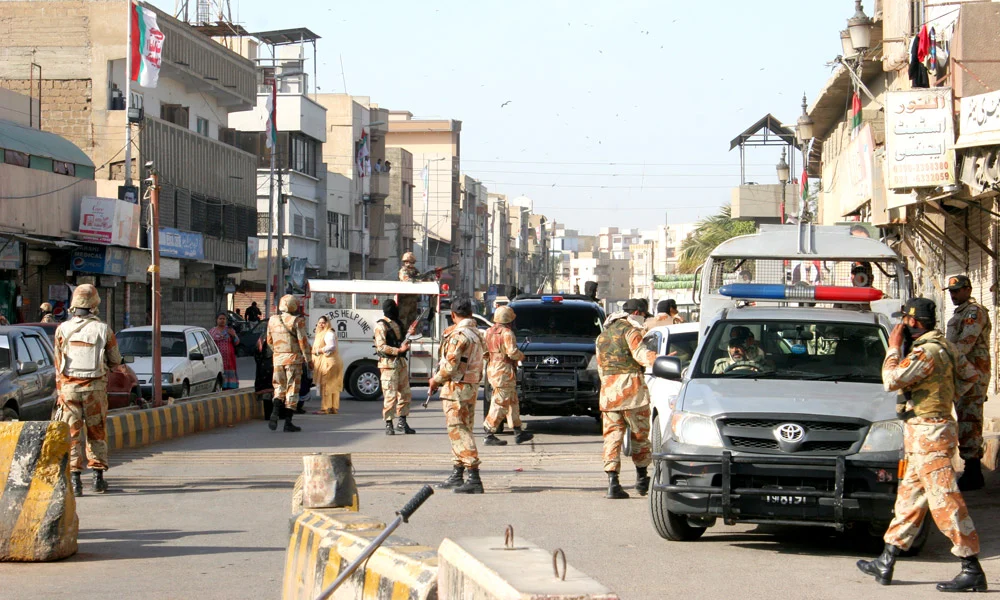
- The Bloody Clashes: In the days following the onset of the protests, violence turned lethal. According to reports from the JAAC, at least 30 civilians were killed in the Rawalakot region. Conversely, government authorities claimed the casualty count was significantly lower and asserted that security personnel, including members of the paramilitary Rangers, were targeted by demonstrators wielding automatic weapons.
- Electoral Disruption: The timing of the unrest coincided with the AJK legislative elections. The resulting insecurity forced the postponement of voting in multiple constituencies, while opposition groups, notably the Pakistan Tehreek-e-Insaf (PTI), boycotted the polls, citing widespread irregularities and state-sponsored intimidation.
The Anatomy of the Conflict: Governance vs. Sovereignty
The political crisis in AJK is inextricably linked to the region’s unique administrative status. While AJK functions with its own legislative assembly and prime minister, it lacks full state sovereignty. Ultimate decision-making authority—particularly concerning fiscal policy, constitutional interpretation, and security—resides with the federal government in Islamabad.
This structural reality has created a "blame vacuum." Local institutions, tasked with managing the daily lives of the Kashmiri populace, are held accountable for public dissatisfaction, yet they lack the executive power to rectify the systemic issues causing that dissatisfaction. The JAAC has effectively tapped into this frustration, uniting a diverse coalition of traders, transporters, lawyers, students, and civil society groups who argue that the status quo is fundamentally unsustainable.
Official Responses and Competing Narratives
The chasm between the government’s narrative and the claims made by the JAAC remains the defining feature of the conflict.
The Federal and Local Government Position
Federal Information Minister Attaullah Tarar has taken a hardline stance, characterizing the JAAC not as a legitimate protest movement, but as a vehicle for "militant elements" operating under a "foreign agenda." The government maintains that the use of force was a necessary, last-resort measure to prevent the collapse of law and order and to protect the integrity of the electoral process. Authorities have accused the protesters of using lethal, illegal weaponry, justifying the subsequent crackdown as a defense of the state against insurrection.
The JAAC Perspective
Conversely, the JAAC rejects the government’s rhetoric as a smokescreen designed to suppress peaceful dissent. Protest organizers argue that the state is utilizing anti-terrorism legislation to criminalize civil activism. They maintain that the excessive use of force against unarmed or minimally armed demonstrators has led to human rights abuses, arbitrary arrests, and a systematic campaign of fear. The committee demands an immediate shift toward inclusive governance and the withdrawal of restrictive security measures.
Human Rights Concerns and the Call for Accountability
International observers and domestic human rights watchdogs have expressed grave concern over the trajectory of the crisis. Amnesty International has been particularly vocal, condemning the government’s reliance on internet blackouts, mass arrests, and the branding of peaceful protesters as terrorists. These measures, according to the organization, are a direct violation of international human rights obligations regarding the freedom of assembly and speech.
The Human Rights Commission of Pakistan (HRCP) has formally called for an impartial and independent investigation into the fatalities reported in Rawalakot. The HRCP asserts that without transparent accountability, the cycle of violence will only intensify, further eroding public trust in the state. The demand for an independent probe is echoed by many in the international community who fear that the current trajectory could lead to a permanent state of alienation between the Kashmiri population and the administrative apparatus.
Implications for Regional Stability
The crisis has significant implications for both domestic stability and regional geopolitics:
1. The Breakdown of Political Legitimacy
The election process, already marred by boycotts and accusations of rigging, has failed to provide a mandate for peace. With the ruling Pakistan Muslim League-Nawaz (PML-N) claiming victory in a climate of suppression and protest, the perceived legitimacy of the new AJK government is in question. This political vacuum may embolden the JAAC to expand its influence.
2. Economic Stagnation
Heightened security measures, including the deployment of Rangers and the intermittent suspension of communications, have crippled the local economy. Banking, education, and transport sectors remain paralyzed, exacerbating the very economic grievances that initially sparked the protests.
3. Geopolitical Tensions
The Foreign Office of Pakistan has dismissed commentary from Indian officials regarding the unrest, labeling it an interference in internal affairs. However, the volatility in AJK remains a point of intense international scrutiny. As Pakistan navigates its internal challenges, the rhetoric surrounding the right to self-determination in Jammu and Kashmir remains a sensitive, yet central, pillar of Islamabad’s foreign policy, one that the current domestic crisis has inadvertently complicated.
Conclusion: The Path Forward
The situation in Azad Jammu and Kashmir remains precariously fluid. While authorities claim the region is gradually stabilizing, the underlying grievances—economic marginalization, constitutional ambiguity, and a lack of political representation—remain largely unaddressed.
History suggests that security-led solutions alone cannot resolve deep-seated political alienation. The current crisis presents a moment of reckoning for both the AJK leadership and the federal government. To prevent further bloodshed and the potential for long-term radicalization, analysts suggest that a shift from confrontation to dialogue is essential. This would necessitate credible investigations into the use of lethal force, the lifting of restrictive communication and protest bans, and a sincere effort to address the structural issues that have led the people of AJK to the streets.
Until such steps are taken, the region will remain a flashpoint, with the eyes of the international community fixed on whether Islamabad can balance its security priorities with the legitimate democratic aspirations of the Kashmiri people.
