





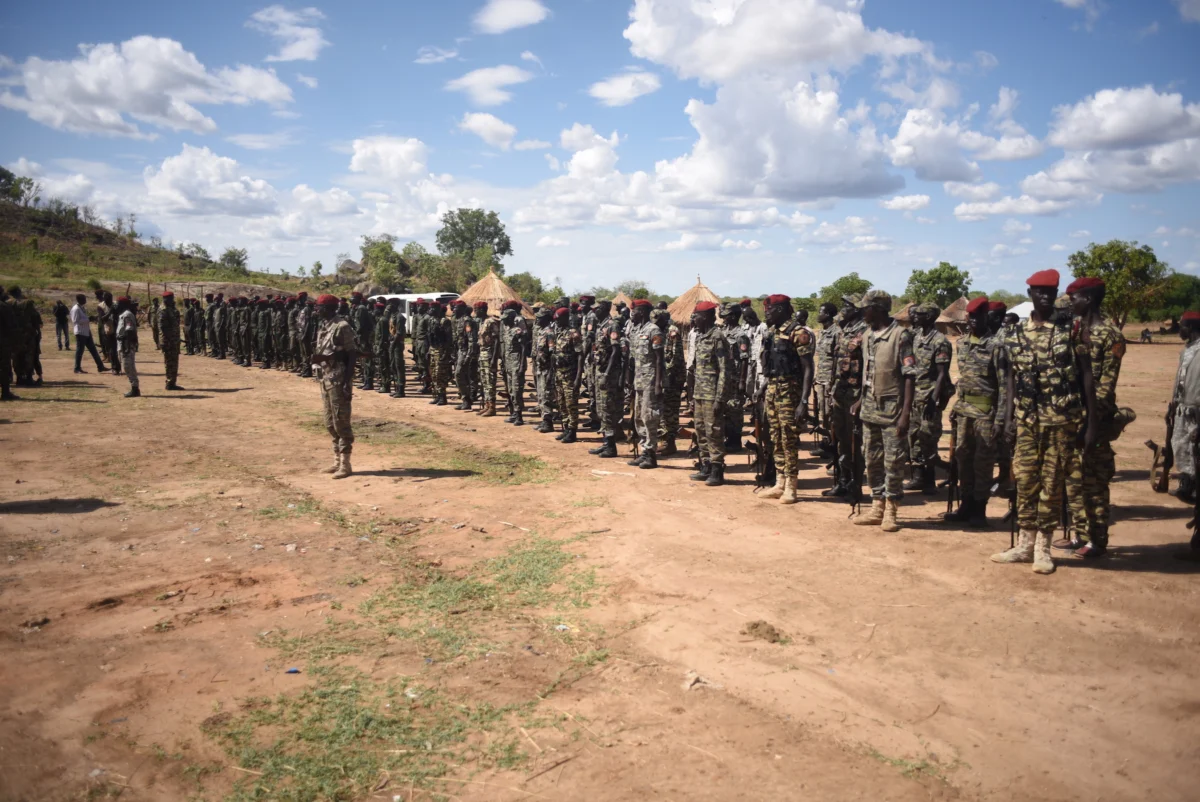
JUBA, South Sudan – The fragile peace in South Sudan suffered a devastating blow this Monday when an ambush in the eastern Jonglei state claimed the lives of two United Nations peacekeepers and left seven others wounded. The attack, which targeted a UN patrol en route to the remote area of Pajut, has been characterized by the United Nations Mission in South Sudan (UNMISS) as a potential war crime, underscoring the deteriorating security environment in a nation struggling to emerge from over a decade of civil strife.
As the international community grapples with the loss, the incident serves as a grim reminder of the extreme risks faced by those tasked with maintaining stability in one of the world’s most volatile regions. With the death toll of UN personnel in South Sudan reaching nine for the current year alone, the mission finds itself at a precarious crossroads.
Main Facts: A Lethal Assault on Neutrality
The incident occurred early Monday morning when a routine UNMISS patrol was intercepted by unidentified armed assailants. The patrol, which was navigating the rugged terrain of Jonglei state, was subjected to a coordinated ambush. The two peacekeepers killed in the encounter were members of the Ethiopian contingent, a vital component of the UN’s peacekeeping architecture in the region.
Seven other personnel sustained injuries during the exchange of fire. In response, UNMISS immediately activated its Quick Reaction Force (QRF). The deployment of the QRF was critical in securing the perimeter of the attack site, allowing for the medical evacuation of the wounded and the retrieval of the fallen soldiers. While the mission has not yet publicly identified the specific armed group responsible for the assault, regional analysts note that Jonglei has long been a flashpoint for ethnic violence, cattle-raiding disputes, and localized insurgencies that frequently intersect with the broader national political instability.
Chronology of Conflict: A Decade of Unrest
To understand the gravity of Monday’s attack, one must view it through the lens of South Sudan’s turbulent history since its independence in 2011.
- 2013–2018: The nation descended into a brutal civil war characterized by ethnic polarization and power struggles between factions loyal to President Salva Kiir and First Vice President Riek Machar.
- 2018: The Revitalized Agreement on the Resolution of the Conflict in the Republic of South Sudan (R-ARCSS) was signed, aiming to transition the country toward a permanent government.
- 2024–2026: Despite the peace deal, implementation has been plagued by delays. The government’s decision to postpone the country’s first-ever post-independence elections—initially slated for the current period—has created a power vacuum and increased political anxiety.
- August 2026: The fatal ambush in Jonglei marks a new peak in the current trend of violence. Throughout the year, UNMISS has reported a systematic increase in attacks on humanitarian convoys and international observers, signaling a diminishing respect for the neutrality of the UN presence.
This trajectory reflects a broader regional instability. Warnings from aid organizations throughout 2026 have highlighted how the "war economy" in neighboring Sudan and the general abandonment of humanitarian support by global donors have left South Sudan increasingly vulnerable to localized militarization.
The Legal Framework: Why This is a War Crime
The UN’s classification of this incident as a potential "war crime" is not mere rhetoric; it is rooted in firmly established international law. The Rome Statute of the International Criminal Court (ICC) provides the legal backbone for such a designation.
The Rome Statute and Protected Personnel
Under Article 8 of the Rome Statute, it is a war crime to intentionally direct attacks against personnel, installations, or vehicles involved in a humanitarian assistance or peacekeeping mission, provided they are entitled to the protection given to civilians under international law. Because UNMISS operates under a Chapter VII mandate of the UN Charter—which authorizes the use of force to protect civilians and maintain peace—the legal protection afforded to its personnel is absolute.
Customary International Law
Beyond the Rome Statute, Rule 33 of Customary International Law mandates that parties to an armed conflict must at all times distinguish between combatants and non-combatants. By targeting peacekeepers, the perpetrators have violated the fundamental principles of distinction and proportionality.
Under Article 77 of the Rome Statute, should the perpetrators be apprehended and brought before a court of competent jurisdiction, they could face life imprisonment if the gravity of the crime is deemed extreme. The international community, led by the UN, is currently pushing for a thorough investigation to ensure accountability, though the reality of the security situation in Jonglei makes evidence collection and forensic analysis exceptionally difficult.
Official Responses and Diplomatic Fallout
The reaction from the international community has been one of condemnation and resolve. Anita Kiki Gbeho, the head of UNMISS, issued a stern statement describing the killings as "unacceptable." She emphasized that the mission remains committed to its mandate but noted that such acts of violence hinder the delivery of life-saving aid and the protection of vulnerable civilian populations.
"We call for a thorough and prompt investigation to ensure that those responsible are brought to justice," Gbeho stated. "The peacekeepers who lost their lives were here to serve the people of South Sudan. To target them is to target the very possibility of peace."
Internally, UN headquarters in New York is reviewing the safety protocols for patrols in eastern regions. The incident has also prompted urgent calls for the South Sudanese government to cooperate more fully with UNMISS in securing travel routes. However, observers note that the state’s limited capacity to exert control over remote areas like Pajut remains a primary hurdle.
Implications: A Mission at Risk
The killing of two more peacekeepers has profound implications for the future of the UN mission in South Sudan.
1. The Erosion of Operational Capacity
As casualties mount, the mission faces the difficult task of balancing its mandate with the safety of its troops. If the security environment continues to deteriorate, UNMISS may be forced to limit its patrols, which would effectively abandon the very communities that rely on their presence for protection.
2. The Humanitarian Gap
The UN is already warning that the global withdrawal of humanitarian funding for the region is creating a "volatility trap." As aid dries up, armed groups are increasingly competing for limited resources, often by targeting the very organizations attempting to distribute those resources. The Jonglei attack is a symptom of this broader economic and social collapse.
3. The Election Shadow
With the first post-independence elections indefinitely postponed, the political climate in Juba is increasingly volatile. The presence of UNMISS is a prerequisite for any eventual transition to democratic governance. If the UN becomes a target, the prospects for a peaceful transition recede further into the horizon.
4. A Test for International Law
The investigation into this ambush will be a litmus test for the ICC and the UN’s ability to enforce accountability in regions where state authority is contested. Without a clear signal that attacks on peacekeepers carry heavy consequences, the "rule of law" will continue to be replaced by the "rule of the gun."
Conclusion
The tragedy in Jonglei is more than an isolated ambush; it is a manifestation of the structural failures within South Sudan’s peace process. As the nation teeters on the edge of renewed conflict, the international community must decide whether to reinforce its commitment to the region or risk a total collapse of the peacekeeping effort. For now, the families of the two fallen Ethiopian peacekeepers, and the seven others currently recovering in hospitals, await a justice that remains as elusive as the peace they died trying to protect.
