





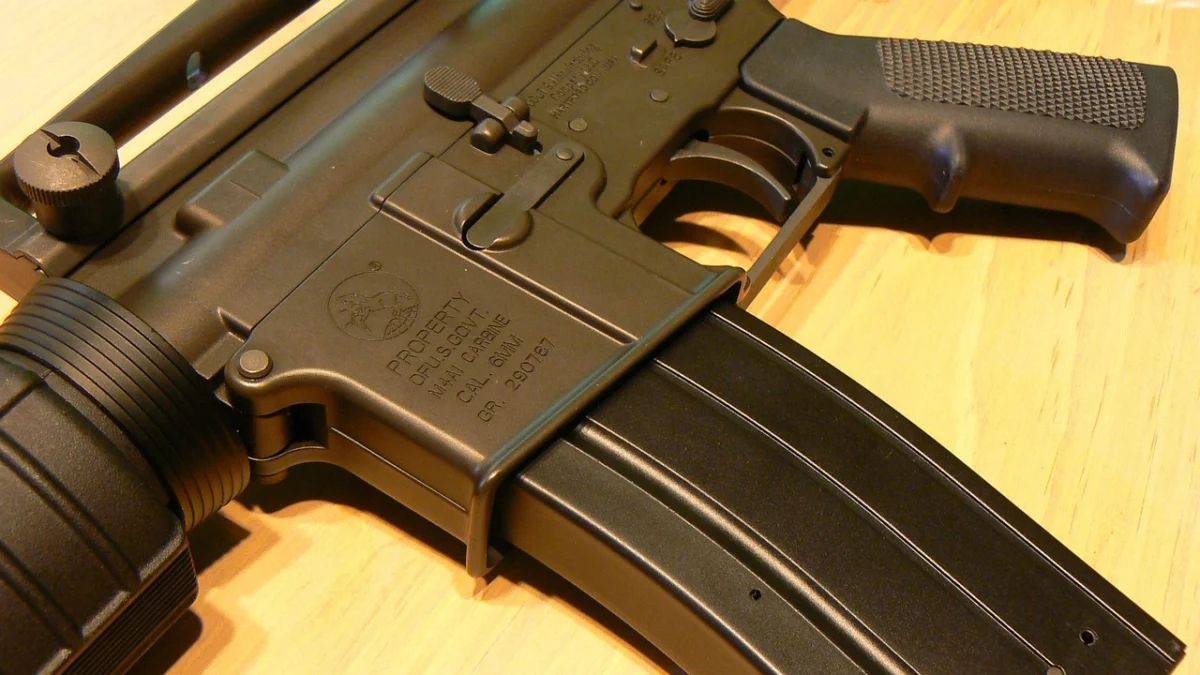
In a decision that sends shockwaves through the American legal landscape, the United States Court of Appeals for the Third Circuit ruled on Friday that New Jersey’s stringent bans on assault firearms and large-capacity magazines are unconstitutional. The 10-5 en banc decision marks a historic milestone, representing the first time a federal appellate court has struck down a state-level assault weapons ban, setting the stage for a high-stakes showdown at the Supreme Court.
The Core Ruling: Applying the Bruen Standard
The Third Circuit’s majority opinion, authored by Judge Freeman, centered its legal analysis on the framework established by the U.S. Supreme Court in the landmark 2022 case New York State Rifle & Pistol Association v. Bruen. Under the Bruen test, the government must demonstrate that any firearm regulation is consistent with the nation’s historical tradition of gun regulation.
The court explicitly rejected the lower court’s reasoning regarding the state’s ban on Colt AR-15s, expanding the scope of the ruling to encompass the entire class of semi-automatic rifles. Furthermore, the court overturned the lower court’s previous validation of New Jersey’s magazine restrictions. The majority concluded that because semi-automatic rifles and magazines capable of holding more than 10 rounds are in "common use" for lawful purposes—including self-defense, sport shooting, and hunting—they fall squarely within the protection of the Second Amendment.
"The government failed to meet its burden of proving that these restrictions align with a historical tradition of prohibiting such common, modern arms," the majority wrote. By citing data showing that approximately 24 million AR-15-style rifles are in circulation nationwide, the court determined that the state had offered insufficient evidence to categorize these firearms as anything other than "commonly owned" items protected by the Constitution.
Chronology of the Conflict
The legal battle leading to this week’s ruling spans several decades, reflecting the evolving legislative landscape of firearm control in New Jersey.
- 1990: New Jersey implements its first significant restrictions on large-capacity magazines, setting the legal threshold for magazine capacity.
- 2018: Amidst a national push for stricter gun control measures, New Jersey amends its laws, tightening the restriction on magazines. The state reduces the capacity limit from 15 rounds to 10 rounds, effectively criminalizing the possession of magazines holding more than 10 rounds.
- The Litigation Period: The Association of New Jersey Rifle and Pistol Clubs, supported by the National Rifle Association (NRA), initiates a lawsuit against the state, arguing that these restrictions infringe upon the rights of law-abiding citizens to own popular, effective firearms.
- Lower Court Proceedings: The case makes its way through the district courts, where early rulings produced mixed results, upholding certain aspects of the state’s regulatory framework while sparking intense debate over the definition of "common use."
- June 2025: The Third Circuit Court of Appeals sits en banc to deliver its 10-5 decision, effectively overturning the state’s ban and setting a national precedent.
Supporting Data and The "Common Use" Doctrine
A significant portion of the majority’s argument rested on the statistical ubiquity of the AR-15 platform. The court noted that the AR-15 has become the most popular rifle in America. The court’s reliance on the "common use" doctrine stems from the Supreme Court’s ruling in District of Columbia v. Heller, which held that the Second Amendment protects weapons "in common use" for lawful purposes.
New Jersey officials argued that these weapons were "dangerous and unusual" and therefore subject to state prohibition. However, the Third Circuit found that the state failed to produce a historical analogue—a law from the Founding Era or the 19th century that restricted weapons with similar characteristics to modern semi-automatic rifles. Without a clear historical precedent, the court reasoned, the state’s contemporary public safety concerns could not override the individual right to bear arms.
The Dissent: A Clash of Legal Philosophies
The ruling was not unanimous, and the dissent, led by Judge Patty Shwartz and joined by three other judges, highlighted a profound ideological divide regarding how the Second Amendment should be interpreted in the modern era.
Judge Shwartz argued that the majority had misinterpreted the Supreme Court’s historical requirements. "The Second Amendment has never been understood to guarantee a right to keep and carry any weapon whatsoever," Shwartz wrote in her dissent. She accused the majority of abandoning the historical inquiry in favor of a "contemporary lens."
Shwartz contended that the majority’s focus on current popularity creates a dangerous loophole: "The Majority, however, holds that states cannot regulate weapons that are currently popular. This approach adopts a contemporary lens, even though the Supreme Court tells us that we are to keep our eye on the history and tradition of banning dangerous and unusual weapons, like the semi-automatic rifles equipped with large capacity magazines that gunmen have continued to use to commit crimes and mass shootings."
The dissenters emphasized that the "history and tradition" standard should allow states the flexibility to address modern threats, such as the use of high-capacity firearms in mass casualty events, even if those weapons have become popular in the current market.
Implications for the National Landscape
The Third Circuit’s decision creates a direct conflict with other federal circuits. For instance, the First Circuit recently upheld Massachusetts’ assault weapons ban, creating a "circuit split" that almost guarantees the Supreme Court will take up the issue to provide a definitive national ruling.
The timing of this ruling is critical. The U.S. Supreme Court has already agreed to hear consolidated challenges to assault weapons bans in Illinois and Connecticut, with oral arguments scheduled for the coming fall. Legal analysts anticipate that the Third Circuit’s decision will be a primary focus during those hearings.
Impact on New Jersey Law
For the State of New Jersey, the ruling creates an immediate legislative crisis. Lawmakers must now reconcile the state’s long-standing public safety priorities with a federal court order that invalidates two of its most prominent gun control statutes. Proponents of the ban warn that this ruling could lead to an increase in the availability of weapons that have historically been used in mass shootings, while gun rights advocates celebrate the decision as a massive victory for civil liberties.
Political and Social Fallout
Beyond the courtroom, the ruling has reignited the national debate over the balance between constitutional rights and public safety. Advocacy groups on both sides of the aisle are bracing for a protracted legal and political battle.
Gun control organizations argue that the Third Circuit has effectively "deregulated" weapons of war, arguing that the Founders could not have anticipated the lethality of modern semi-automatic technology. Conversely, Second Amendment advocates argue that the decision restores the fundamental right of individuals to choose the most effective tools for self-defense, regardless of the aesthetic or mechanical features of the firearm.
As the case moves toward the Supreme Court, the legal standard established in Bruen will be tested as never before. The Court must decide whether the "historical tradition" test is a rigid barrier to modern gun control or a flexible principle that can accommodate the realities of the 21st century. Until the Supreme Court issues its final verdict, the legal status of assault weapons in the United States remains in a state of unprecedented flux, with New Jersey serving as the new frontline in the nation’s most contentious constitutional battle.
