



Executive Summary: A Dangerous Gamble
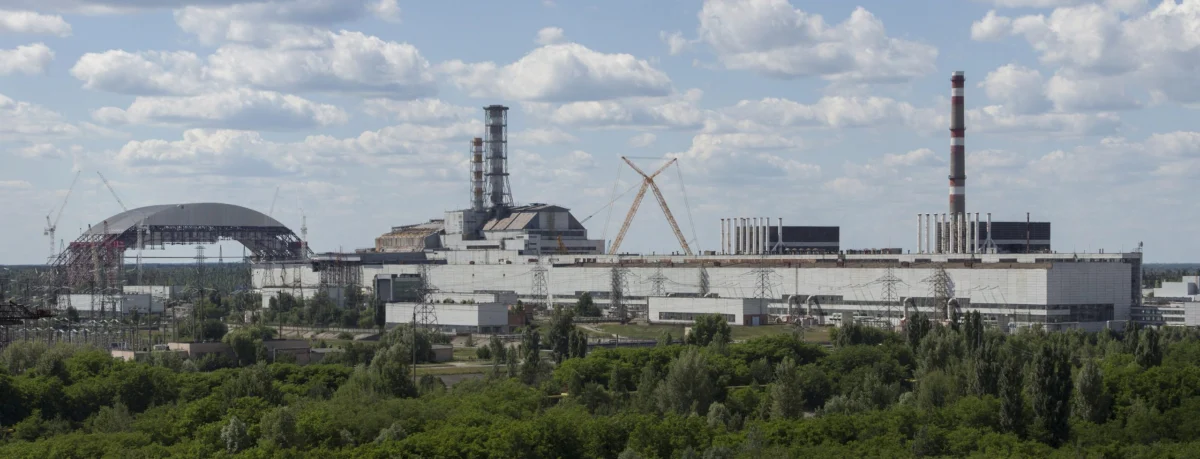
The United Nations Development Programme (UNDP) has issued a grave warning regarding the safety of the Chernobyl Nuclear Power Plant, following a series of Russian drone strikes in the vicinity of the site. UNDP Administrator Alexander De Croo, speaking after an on-site inspection, characterized these aerial incursions as a reckless "gamble with the safety of millions of people."
The proximity of combat operations to the site of the world’s most significant nuclear disaster has reignited fears of a radiological catastrophe that could transcend borders. De Croo’s visit provided a sobering assessment of the damage, prompting an urgent call for international intervention to establish a demilitarized buffer zone above the site to prevent further accidental or intentional strikes.
The Chronology of Escalation
To understand the gravity of the current situation, one must look at the timeline of the ongoing conflict and its increasing encroachment on critical nuclear infrastructure.
- 1986 – The Genesis of Risk: The Chernobyl disaster remains the baseline for nuclear terror. On April 26, 1986, a catastrophic reactor failure during a safety test caused a level 7 event, releasing massive amounts of radioactive material. The long-term health toll—thousands of cancer cases and profound environmental degradation—serves as the primary driver for current international anxiety.
- 2022–2025 – Occupation and Vulnerability: Following the full-scale invasion of Ukraine in 2022, the Chernobyl site was briefly occupied, exposing the world to the reality that nuclear facilities in war zones are not "no-go" areas for modern militaries.
- July 2026 – The Surge in Violence: Reports from the UN Human Rights Monitoring Mission indicate that July 2026 saw the highest rate of civilian casualties since the inception of the war, with 437 lives lost. This period marked a shift in tactical doctrine, with increased reliance on indiscriminate strikes.
- September 2026 – The Chernobyl Drone Incident: The recent drone strikes near the exclusion zone represent a tactical shift. The "front line" has effectively dissolved, with the UNDP noting that critical infrastructure across Ukraine is now a primary target, regardless of its proximity to radioactive materials.
Supporting Data: The Cost of War
The humanitarian and infrastructure crisis currently unfolding in Ukraine is unprecedented in modern European history. The UNDP’s efforts are currently focused on restoring electricity to 6.6 million citizens, a task that De Croo admits is currently "never enough" given the scale of destruction.
The Economic Burden
The financial toll of the conflict is staggering. UNDP estimates suggest that the cost of repairing the damage to civilian infrastructure—excluding the catastrophic potential of a nuclear incident—has reached $600 billion USD. This figure continues to climb as energy grids and residential areas remain under constant bombardment.
The Health Legacy
The historical impact of the 1986 disaster serves as a dark mirror for today’s risks. Data from the International Atomic Energy Agency (IAEA) and peer-reviewed medical studies underscore the longevity of radiation-related trauma:
- Radiation-Induced Mortality: An estimated 4,000 cancer-related deaths were directly attributed to the initial fumes and exposure from the 1986 explosion.
- Generational Health Impact: Between 1991 and 2005, researchers documented over 5,000 cases of thyroid cancer in children under 14 years of age living in the fallout path in Ukraine and Belarus, a direct consequence of radioactive iodine exposure.
Official Responses and Diplomatic Friction
The international community has struggled to find a mechanism to hold the aggressor accountable for the violation of humanitarian norms.
The UNDP Stance
Alexander De Croo’s rhetoric has shifted from humanitarian concern to direct condemnation. By stating that "even in war, there are rules to be followed," he has highlighted the blatant disregard for International Humanitarian Law (IHL). The UNDP’s position is that the protection of critical infrastructure is a non-negotiable prerequisite for any future stability.
The Human Rights Watch (HRW) Assessment
Human Rights Watch has been instrumental in documenting the shift in Russian military tactics. Their recent reports confirm that the use of cluster munitions in densely populated residential areas of Kyiv is not merely a tactical error but a potential war crime. These attacks, combined with the proximity to nuclear sites, suggest a strategy of maximum psychological and material pressure.
Implications: A New Era of Nuclear Risk
The intersection of high-intensity kinetic warfare and nuclear site management has created a paradigm shift in global security.
The "Everywhere" Frontline
De Croo’s observation that "the front line is everywhere" signifies a terrifying transition in modern warfare. The traditional concepts of "rear zones" or "protected zones" have been rendered obsolete. When a nuclear power station becomes a viable target—or a collateral casualty—for a drone swarm, the entire concept of nuclear safety is compromised.
The Winter Crisis
As Ukraine approaches a "very difficult winter," the inability to secure the power grid poses an immediate threat to the survival of millions. The destruction of infrastructure is not just a strategic military move; it is a weaponization of climate and necessity. The UNDP’s assertion that "restoring the infrastructure is not waiting for the end of the war" is a testament to the fact that humanitarian aid is now a race against time and further destruction.
The Precedent of Negligence
The core implication of the drone strikes at Chernobyl is the erosion of the "nuclear taboo." By normalizing the presence of combat drones over such a sensitive site, the threshold for future escalation is lowered. If a strike—accidental or otherwise—results in the release of radioactive particulates, the resulting regional crisis would dwarf the current economic and humanitarian losses.
Concluding Remarks: The Call to Action
The situation at Chernobyl is no longer just a Ukrainian domestic issue; it is a global security imperative. The UNDP’s call for a complete prohibition of drone flights over the Chernobyl site is a minimum requirement for preventing a second, modern-day disaster.
The international community stands at a crossroads. Either it enforces the sanctity of critical civilian and nuclear infrastructure through robust diplomatic and, if necessary, defensive measures, or it accepts the risk that the next headline concerning Chernobyl will not be a warning, but an accounting of a new, preventable catastrophe.
As the UNDP continues to struggle with the $600 billion repair bill and the immediate needs of millions, the world remains transfixed by the chilling reality: in a war without clear front lines, the most dangerous weapon may well be the one that ignores the sanctity of the past to destroy the future. The message from the UNDP is clear—the time for passive concern has passed; the time for active, protective intervention is now.
