




Executive Summary: A Breach of International Norms
In a significant development regarding the ongoing conflict in the Levant, Human Rights Watch (HRW) released a scathing report on Wednesday, September 9, 2026, documenting the alleged use of cluster munitions by Hezbollah in northern Israel. The report centers on two specific incidents occurring on March 4 and March 15, 2026, targeting the border town of Metula.
HRW, through extensive on-the-ground research, witness testimony, and digital evidence analysis, has characterized these attacks as a "flagrant violation of international law." The allegations strike at the heart of the debate surrounding the indiscriminate nature of modern warfare, highlighting the enduring danger these weapons pose to civilian populations long after a conflict has ceased. While Hezbollah has acknowledged conducting rocket attacks against Israel on the dates in question, the organization has categorically denied the possession or deployment of cluster munitions.
Chronology of the Attacks: March 2026
The investigation into the Metula incidents was conducted by HRW researchers in May 2026. The findings provide a chilling look at the tactical deployment of these prohibited weapons in civilian-dense areas.
The March 4 Incident
On March 4, 2026, a residential street in Metula was targeted by a rocket strike. Upon inspection of the impact site, HRW researchers identified at least seven distinct craters consistent with the characteristic pattern of cluster submunition impacts. The findings were corroborated by local residents, one of whom reported that military personnel on the scene had counted approximately 50 submunitions across the area. The dispersion pattern suggested a weapon designed to saturate a wide area, inherently lacking the precision required to distinguish between military targets and civilian infrastructure.
The March 15 Incident
Barely two weeks later, a second attack occurred near the entrance to the town. Video evidence obtained and verified by investigators showed roughly 30 small, simultaneous explosions—a hallmark of a cluster bomb unit (CBU) detonating in mid-air. The immediate aftermath forced a lockdown of the area, with a local witness noting that residents were ordered to remain indoors for a full 24-hour period while Israeli military teams conducted an explosive ordnance disposal (EOD) operation to clear the dangerous remnants.
The Humanitarian Implications of Cluster Munitions
The legal and humanitarian outcry against cluster munitions is rooted in their design and their long-term legacy of destruction. As Patrick Thompson, a researcher with HRW, noted, the use of these weapons in populated areas is not merely a tactical choice but a potential war crime.
The "Dud" Factor
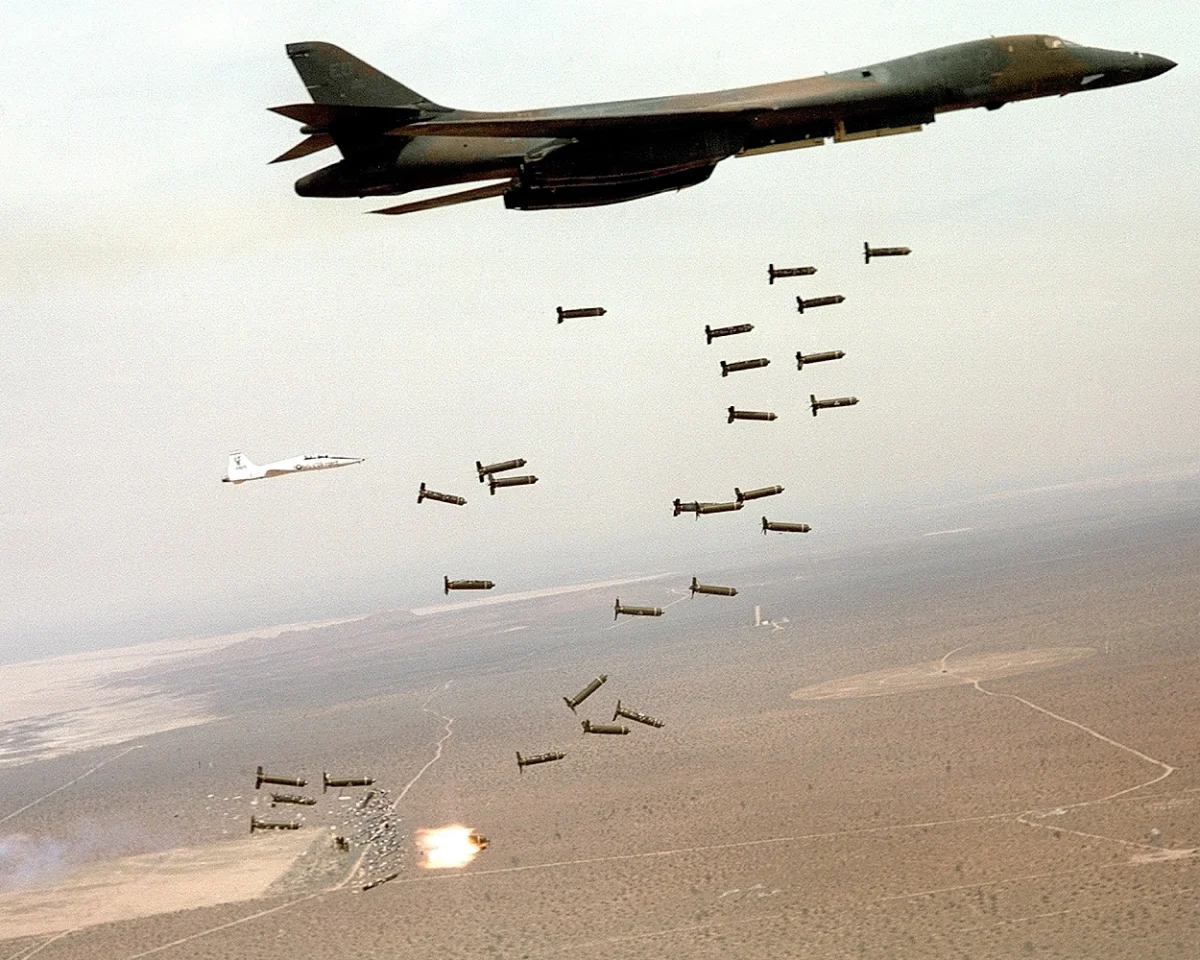
The primary danger of cluster munitions lies in their failure rate. When a cluster bomb opens in the air, it releases dozens, sometimes hundreds, of smaller submunitions. A significant percentage of these fail to detonate upon impact, effectively turning the target area into a sprawling minefield. These "duds" remain volatile for years, often resembling innocuous toys or household items, attracting curious children and unsuspecting civilians.
The ICRC’s Stance
The International Committee of the Red Cross (ICRC) has long advocated for the total global elimination of these weapons. In its recent briefings, the ICRC warned that the presence of submunition remnants creates an insurmountable barrier to post-conflict recovery. Farmers are unable to cultivate their land, families cannot safely return to rebuild homes, and the risk of accidental detonation remains a permanent shadow over the community. The 2026 Cluster Munition Monitor, released just prior to the HRW report, reinforces this, noting that 87 percent of all casualties from cluster munitions globally in 2025 were civilians.
Legal Framework and International Obligations
The use of cluster munitions is governed by a complex web of international treaties, though the application of these laws remains contested due to the varied signatory status of states and non-state actors.
The 2008 Convention on Cluster Munitions
Article 1 of the 2008 Convention on Cluster Munitions is absolute: it prohibits States Parties from using, producing, acquiring, or transferring these weapons under any circumstances. Furthermore, it mandates that signatories assist in clearing contaminated areas and supporting victims.
- Lebanon’s Status: Lebanon ratified the convention on November 5, 2010, placing it under a legal obligation to suppress the use of these weapons within its territory and by groups operating under its jurisdiction.
- The Position of Israel: Israel is not a signatory to the convention. However, international humanitarian law (IHL) regarding indiscriminate attacks applies to all parties, regardless of treaty membership.
The Principle of Distinction
Under the laws of war, all combatants are required to distinguish between military objectives and civilian property. The indiscriminate nature of cluster munitions, which by design scatter explosive force over a wide area, makes it nearly impossible to comply with these obligations in an urban setting. Even in the absence of the 2008 treaty, the use of such weapons in a civilian town like Metula constitutes a prima facie violation of customary international law.
Official Responses and Regional Context
The revelation of these attacks comes at a time of extreme volatility in the Middle East. The UN human rights office, in an April 24, 2026, briefing, painted a grim picture of the regional conflict.
A Pattern of Indiscriminate Violence
The UN documented a broader trend of violence, noting that Hezbollah’s reliance on unguided rockets has frequently targeted Israeli residential areas, leading to significant civilian distress. Simultaneously, the UN reported that Israeli strikes in Lebanon have resulted in devastating civilian loss, including the destruction of residential buildings and the loss of entire families. The cycle of retaliation has led to a total erosion of the "distinction" principle, with both sides accused of failing to take feasible precautions to prevent civilian harm.
Hezbollah’s Denials
Hezbollah’s leadership has consistently denied the claims made by HRW. By acknowledging the rocket attacks while rejecting the "cluster" designation, the group is attempting to maintain a narrative of conventional engagement. However, the evidence collected by HRW—specifically the photographic and video analysis of the impact sites—challenges the credibility of these denials, suggesting a level of technical sophistication that the organization publicly disavows.
Conclusion: The Path Toward Accountability
The release of the HRW report serves as a stark reminder of the human cost of modern warfare. With over 1,000 casualties recorded globally in 2025 alone, the normalization of cluster munitions poses an existential threat to the safety of civilians in conflict zones.
HRW has called for an independent, international investigation into the Metula attacks. They argue that without accountability, the "norm of prohibition"—the idea that certain weapons are so abhorrent that their use is universally condemned—will continue to erode. As the international community grapples with the complexities of the Israel-Lebanon border, the evidence of cluster munition usage provides a clear focal point for those demanding that the rules of war be upheld, regardless of the tactical advantages sought by combatants.
The lasting impact of these attacks will not be measured in military gains, but in the years of fear and the potential for future casualties that have been sown into the soil of northern Israel. The global community now faces the challenge of enforcing the standards set by the Convention on Cluster Munitions, ensuring that the indiscriminate nature of these weapons is met with more than just words, but with the necessary diplomatic and legal pressure to prevent further tragedy.
