



By Editorial Staff
August 28, 2026
In a significant move aimed at redefining the landscape of American labor, the National Employment Law Project (NELP) has announced the appointment of four preeminent policy experts to its leadership team. As the organization enters its seventh decade of advocacy, this strategic expansion signals a pivot toward a more aggressive, modernized approach to building what NELP President and CEO Rebecca Dixon calls a "Good Jobs Economy."
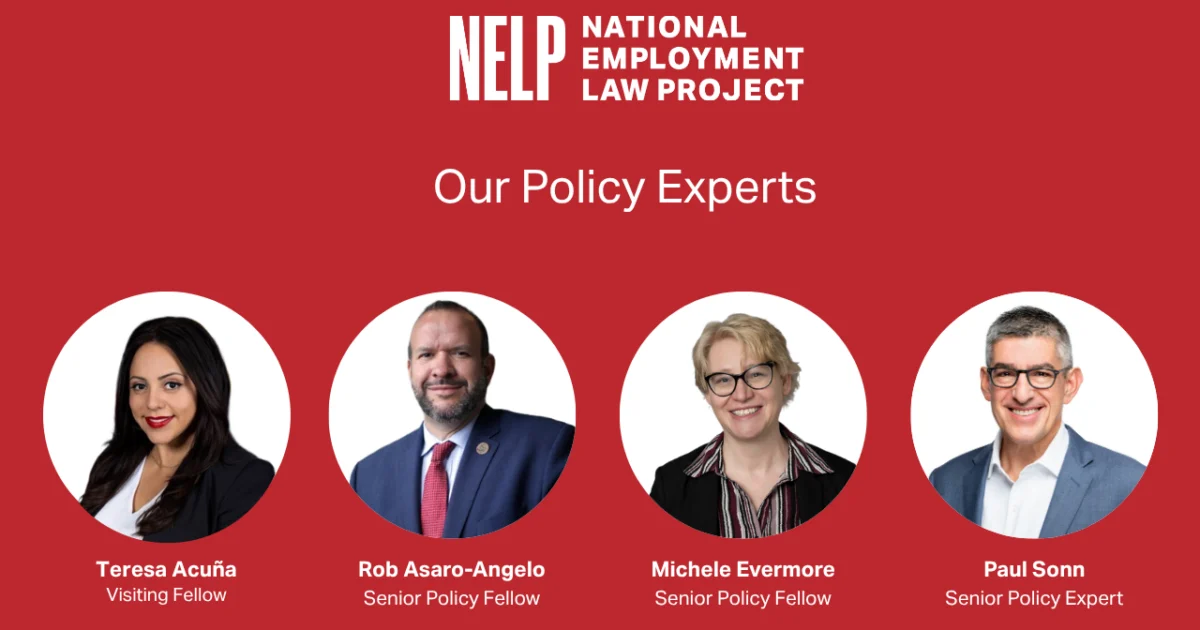
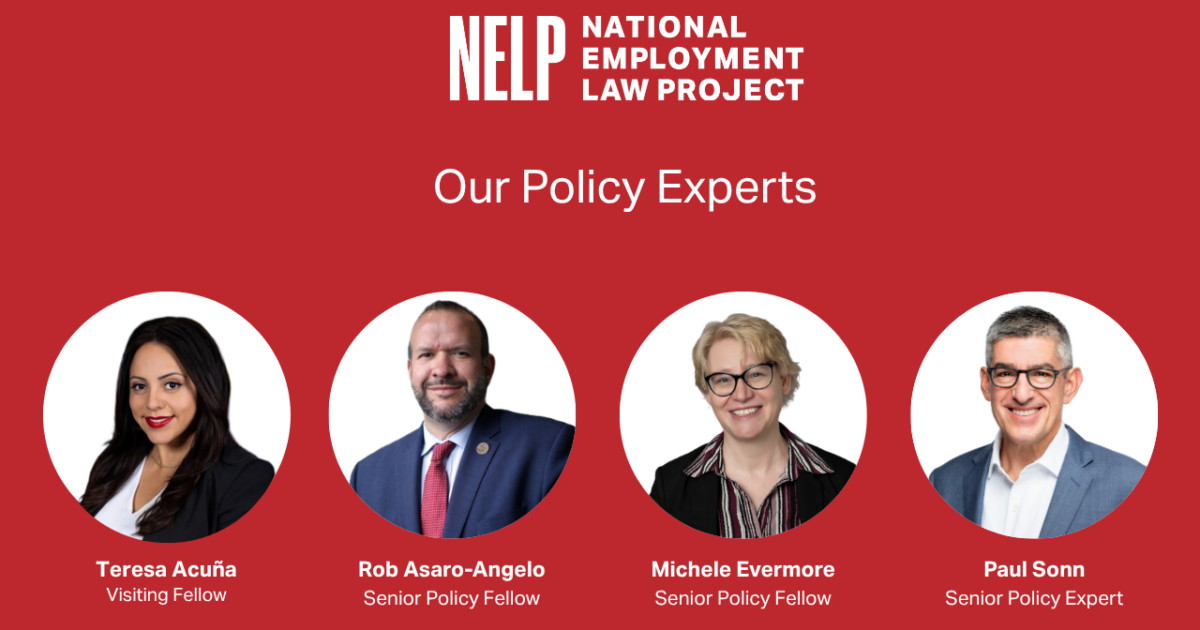
The appointments—Teresa Acuña, Rob Asaro-Angelo, Michele Evermore, and Paul Sonn—represent a concentrated effort to bridge the gap between high-level federal policy design and on-the-ground worker advocacy. By integrating these seasoned veterans into its core strategy, NELP is positioning itself to tackle the dual challenges of rapid economic transition and the erosion of worker bargaining power in the 21st century.
The Strategic Shift: Building a "Good Jobs Economy"
The concept of a "Good Jobs Economy" is no longer just a slogan; it is the cornerstone of NELP’s current mission. In an era defined by volatile labor markets, the rise of algorithmic management, and the massive federal investments in green infrastructure and manufacturing, the demand for sophisticated policy architecture has never been higher.
For seventy years, NELP has stood as a bulwark for workers’ rights. However, the current leadership team recognizes that the traditional methods of labor advocacy require a modern upgrade. The organization’s goal is to ensure that every job in the United States provides a living wage, robust protections, and a voice in the workplace. By recruiting individuals who have navigated the halls of the U.S. Department of Labor (DOL) and state-level regulatory bodies, NELP is effectively creating an in-house "think-and-do tank" capable of influencing policy from the federal executive branch down to municipal labor boards.
Profiles in Leadership: The New Nucleus
The four incoming leaders bring a wealth of experience, spanning the public sector, academic research, and grassroots movement building.
Teresa Acuña: Visiting Fellow for Good Jobs Democracy
Acuña’s appointment is particularly timely. As the former director of the Good Jobs Initiative at the U.S. Department of Labor, she played a pivotal role in the Biden-Harris administration’s efforts to ensure that taxpayer-funded infrastructure projects actually deliver quality employment. Her work has focused on the intersection of public investment and labor standards, ensuring that "green" and "modern" jobs are not merely titles, but high-road employment opportunities. Her focus at NELP will be to democratize these processes, ensuring that the benefits of federal investment reach marginalized communities.
Rob Asaro-Angelo: Senior Policy Fellow for Worker-First Protections
Bringing a wealth of state-level administrative experience, Asaro-Angelo joins NELP following an eight-year tenure as Commissioner of the New Jersey Department of Labor and Workforce Development. Under Governor Phil Murphy, Asaro-Angelo was tasked with modernizing a state bureaucracy to meet the needs of a diverse workforce. His expertise in regulatory enforcement and public-sector management will be crucial for NELP as it pushes for stronger state-level protections in an era where federal gridlock often shifts the burden of labor reform to state legislatures.
Michele Evermore: Senior Policy Fellow for Economic Security and Worker Transitions
Evermore’s return to NELP is seen as a major "get" for the organization. During the COVID-19 pandemic, her work was instrumental in the historic expansion of Unemployment Insurance (UI). Her subsequent role as Deputy Director for Policy in the Office of Unemployment Insurance Modernization at the DOL gave her a unique vantage point on the systemic weaknesses of the nation’s social safety net. Her work will now focus on "worker transitions," helping the American labor force navigate the inevitable displacements caused by automation and the transition to a carbon-neutral economy.
Paul Sonn: Senior Policy Expert for Wages and Affordability
A long-time stalwart of the NELP team, Sonn moves into a specialized role focused on the future of wage policy. Having served as the architect behind the "Fight for $15" and the designer of some of the nation’s earliest municipal minimum wage ordinances, Sonn is an institution in labor economics. His new mandate involves looking beyond static minimum wage figures to address the broader issue of "affordability"—how to ensure wages keep pace with the hyper-inflationary costs of housing, childcare, and healthcare.
A Chronology of Advocacy: From Minimum Wage to Modernization
The appointment of these leaders is not an isolated event but the latest milestone in a long trajectory of labor history.
- 1960s–1980s: NELP establishes itself as a key legal defender for marginalized workers, focusing on litigation and securing basic protections for low-wage earners.
- 1990s–2010s: The organization shifts toward policy design, becoming a primary architect of municipal living wage laws and state-level wage theft prevention programs.
- 2015–2020: The "Fight for $15" movement, supported by NELP’s research and legal expertise, changes the national conversation on what constitutes a fair wage.
- 2020–2022: The pandemic forces a crisis in UI systems; NELP’s policy experts (including Michele Evermore) become the primary consultants for federal efforts to modernize the nation’s unemployment infrastructure.
- 2023–2025: The shift toward "Industrial Policy"—the focus on infrastructure and green energy—leads to the creation of the Good Jobs Initiative, now championed at NELP by Teresa Acuña.
- August 2026: The consolidation of these leaders under the NELP banner marks the transition into a new phase of proactive, rather than reactive, labor advocacy.
Supporting Data: Why This Strategy Matters
The need for this leadership team is underscored by stark economic data. While the U.S. labor market has seen historic low unemployment rates in the mid-2020s, the "quality" of those jobs remains a point of contention.
According to recent labor reports, while job numbers are up, the percentage of workers in "precarious" or "non-standard" employment—including gig work and independent contracting—has reached an all-time high. Furthermore, the "wage-cost gap"—the divergence between hourly pay and the rising cost of essential goods—has created a situation where even employed workers are experiencing housing insecurity.
NELP’s internal research suggests that by targeting three specific levers—regulatory enforcement (Asaro-Angelo), social safety net modernization (Evermore), public investment standards (Acuña), and wage floors (Sonn)—the organization can significantly alter the bargaining power of the American worker.
Official Responses and Internal Vision
In announcing the new team, Rebecca Dixon emphasized that this is a response to the "velocity of change" in the modern workplace.
"We are at a crossroads," Dixon said in her announcement. "The old models of labor advocacy worked for the industrial age, but we are currently navigating the transition to a post-industrial, digitally integrated, and climate-conscious economy. By bringing together leaders who have actually written the regulations and built the campaigns, we are ensuring that NELP remains not just a witness to history, but an architect of it."
The incoming fellows have echoed this sentiment. Michele Evermore noted, "The goal isn’t just to return to the way things were before the pandemic. The goal is to build a UI system and a labor policy framework that is robust enough to handle the next crisis before it happens."
Implications: The Road Ahead
The implications for the broader labor movement are significant. By centralizing this expertise, NELP is effectively offering a "turnkey" policy solution for progressive lawmakers at both the state and federal levels.
1. Influence on Legislation
Legislators who are often overwhelmed by the technical complexity of labor laws can now turn to a singular, authoritative source for language and strategy. This is expected to accelerate the passage of "Good Jobs" legislation in blue and purple states.
2. A Shift in Regulatory Enforcement
With Rob Asaro-Angelo’s involvement, we can expect a greater emphasis on the enforcement of labor laws. For years, the movement focused on passing laws; the new focus will be on ensuring that these laws are not undermined by underfunded or indifferent enforcement agencies.
3. Strengthening the Social Contract
The focus on "Economic Security and Worker Transitions" indicates that NELP is preparing for the labor market volatility expected in the late 2020s. As AI and automation continue to displace traditional roles, NELP’s push for modernized UI and transition support will likely become the blueprint for future national debates on the social safety net.
As NELP moves into this next chapter, the organization is clearly betting that the future of work will be defined by those who can master both the technical details of policy and the emotional resonance of the worker-rights movement. With these four appointments, they have arguably assembled the most capable team in the country to do exactly that. The "Good Jobs Economy" is no longer an aspiration—it is now a target.
