





By Robyn Griggs Lawrence
Published August 31, 2026
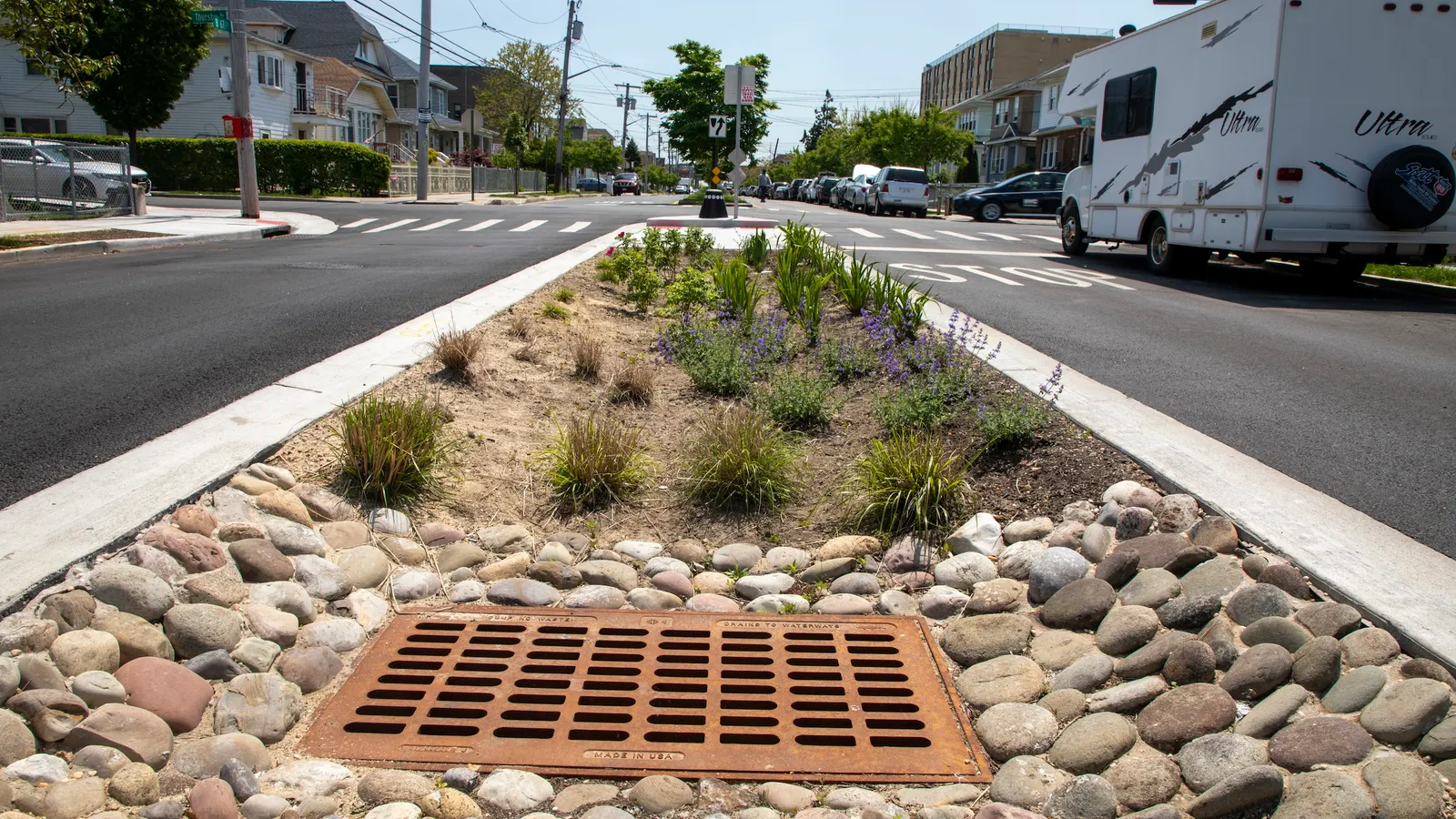
New York City is undergoing a profound structural evolution. In a move to combat the growing threats posed by climate change, the city is systematically repurposing its existing hardscape—specifically massive, underutilized concrete medians—to function as vital defense mechanisms against catastrophic stormwater flooding. This initiative, a cornerstone of a broader, multi-decade green infrastructure program, aims to capture millions of gallons of rainfall before it can overwhelm the city’s aging, overburdened sewer network.
The Impetus: A City Built on Combined Sewers
The urgency of this endeavor stems from the fundamental design of New York’s sanitation system. Approximately 60% of the city’s sewers are "combined," meaning they carry both sanitary sewage and stormwater runoff through the same pipes to treatment plants.
Under normal weather conditions, this system functions adequately. However, during heavy rainfall, the volume of water quickly exceeds the capacity of the pipes and the treatment plants. The result is the discharge of raw, untreated sewage directly into the city’s surrounding waterways—the East River, Flushing Bay, and Jamaica Bay—a practice known as a Combined Sewer Overflow (CSO).
Since 2010, when then-Mayor Michael Bloomberg initiated a $2.4 billion plan to mitigate these overflows, the city has been engaged in a long-term strategy to capture and retain stormwater at its source. By slowing, absorbing, and filtering runoff where it falls, the city aims to reduce overflows by 1.67 billion gallons per year by December 2040.
A Chronology of Resilience: From Bloomberg to Ida
The trajectory of New York City’s water management has been defined by a transition from reactive maintenance to proactive, climate-resilient engineering.
- 2010: The City launches its comprehensive green infrastructure program, focusing on permeable pavements, bioswales, and rain gardens to intercept runoff.
- 2021: The remnants of Hurricane Ida strike New York, shattering records for single-hour rainfall. The storm serves as a grim turning point, causing widespread devastation, hundreds of millions of dollars in infrastructure damage, and the tragic deaths of 13 people trapped in basement apartments.
- 2022: In the wake of Ida, the city accelerates its "cloudburst" management initiative. These projects utilize parks, playgrounds, and plazas as temporary reservoirs to hold excess water until the drainage system can safely manage it.
- 2022: The city initiates its first conversion of roadway medians into green infrastructure in the Arverne neighborhood of Queens.
- 2023: The Arverne median project is completed, providing a successful proof-of-concept for the integration of subsurface storage and bioretention zones within existing thoroughfares.
- 2026: The city announces a new phase of re-engineering for medians in Whitestone, Forest Hills, and Queens Village, marking a shift toward standardized, distributed infrastructure interventions.
Supporting Data: The Rising Tide of Climate Risk
The physical reality of New York’s climate outlook necessitates this radical infrastructure pivot. According to the Mayor’s Office of Climate and Environmental Justice, the city is projected to experience up to 30% more annual rainfall by the end of the century. More alarmingly, the frequency of "extreme rain events"—days with over an inch of precipitation—is expected to increase by 150%.
As sea levels rise, the surrounding water table is pushed upward. This creates a "backwater" effect, where rainfall cannot drain into the ocean or local bays because the groundwater levels are already too high. This phenomenon makes every inch of soil absorption capacity critical.
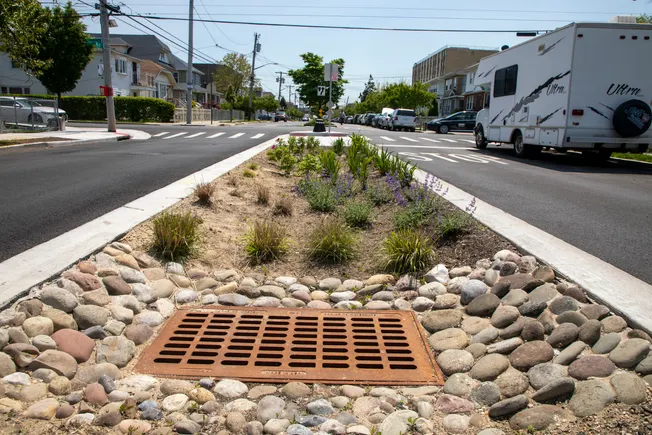
The current median projects are engineered specifically to mitigate these threats. By removing impermeable concrete and replacing it with engineered soil and native vegetation, these sites act as high-capacity sponges. The latest round of projects is estimated to capture 5 million gallons of stormwater annually—a figure that, while seemingly modest compared to total city runoff, is significant when scaled across hundreds of similar roadway intersections.
Official Responses and Engineering Philosophy
The strategy represents a marriage of traffic engineering and environmental stewardship. By re-engineering medians, the city is not only solving a drainage problem but also enhancing pedestrian safety.

"Concrete medians help improve safety by making it easier for pedestrians to cross the street and by better organizing traffic—but they can also play an important role in protecting our city from the dangers of extreme weather and flooding," said NYC Department of Transportation Commissioner Mike Flynn in an August 27 statement. "As New York City sees more and more intense rainstorms due to climate change, now more than ever it’s crucial to improve and rethink our infrastructure to protect New Yorkers against growing environmental threats."
The engineering philosophy here is "distributed management." Rather than building massive, centralized underground tanks—which are prohibitively expensive and disruptive to construct in a dense city—the city is opting for a decentralized network of smaller, neighborhood-scale interventions. This approach ensures that if one component of the system reaches capacity, others continue to function, providing a "fail-safe" resilience that large-scale, singular infrastructure lacks.
Implications for Urban Planning
The implications of this strategy extend far beyond simple water management. This shift signifies a departure from the mid-20th-century urban planning model, which prioritized the rapid movement of automobiles at the expense of ecological functionality.
1. The Multi-Purpose Public Space
The move toward green medians challenges the traditional view of streets as purely transportation corridors. By incorporating native flora, these medians also mitigate the "urban heat island" effect, where dark asphalt and concrete absorb solar radiation, leading to significantly higher neighborhood temperatures. The vegetation provides cooling, improves air quality, and contributes to the local urban ecology.
2. Economic Considerations
While the initial capital expenditure for retrofitting medians is higher than standard maintenance, the long-term economic benefits are substantial. Preventing a single major flooding event can save the city and its residents millions of dollars in property damage, emergency response costs, and economic downtime. Furthermore, the use of green infrastructure often reduces the burden on high-cost, high-maintenance mechanical pumps at sewage treatment plants.

3. Community Engagement and Equity
The neighborhoods selected for the newest projects—Whitestone, Forest Hills, and Queens Village—highlight the city’s intent to address vulnerability across its diverse geography. However, critics and urban planners alike note that the success of these projects depends on community buy-in. Maintenance of these bioswales requires consistent, long-term care to prevent them from becoming eyesores or collection points for urban debris. The city’s ability to maintain these systems will be the ultimate test of its commitment to the program.
Conclusion: A New Blueprint for the Future
New York City’s endeavor to convert its hardscape into a green shield is a recognition that the "gray" infrastructure of the past is insufficient for the climate realities of the future. By weaving climate resilience into the very fabric of the roadway, the city is demonstrating a pragmatic approach to survival in a warming world.
As the city moves toward its 2040 goals, these green medians will likely become a ubiquitous sight in the outer boroughs. They serve as a physical reminder that for a city surrounded by water, the path to a sustainable future is not just about keeping the water out, but about creating the space to let it in, manage it, and return it safely to the earth. The transformation of the Queens medians is, therefore, more than just a public works project; it is a fundamental redesign of how the city exists in harmony with its changing environment.
