





By Alejandra Carranza
Published September 17, 2026
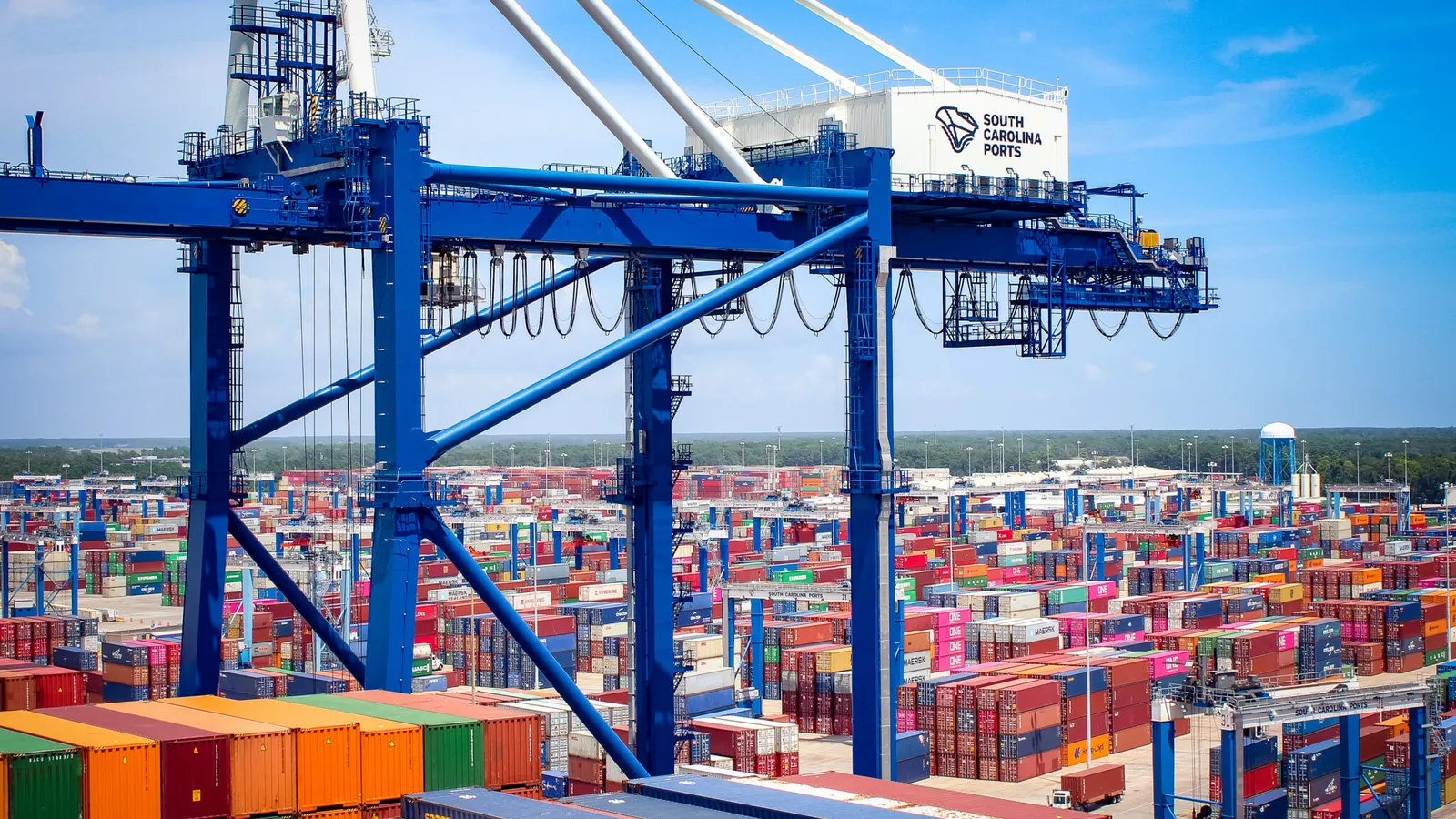
In a move designed to reshape logistics corridors across the Southeastern United States, the South Carolina Ports Authority (SC Ports) and Norfolk Southern have officially inaugurated a new daily, direct rail service connecting the Port of Charleston to Huntsville, Alabama. This development marks a significant milestone in the ongoing effort to decentralize supply chain bottlenecks and provide shippers with more efficient access to the high-growth industrial hubs of North Alabama and Middle Tennessee.
The strategic partnership, announced on September 11, 2026, serves as a cornerstone of SC Ports’ broader infrastructure strategy. By leveraging the existing intermodal network and extending its reach into Huntsville, the port is positioning itself as a primary gateway for the automotive, aerospace, and advanced manufacturing sectors that dominate the regional economy.
Main Facts: The New Logistics Corridor
The new service is not merely a logistical adjustment; it is a structural integration of the Port of Charleston’s deep-water capabilities with the inland rail network of Norfolk Southern. The service provides daily, reliable transit for containerized freight, effectively bridging the gap between global shipping routes and the interior markets of the American Southeast.
Key components of the service include:
- Direct Connectivity: A dedicated daily rail link between the Port of Charleston’s terminals and Huntsville.
- Market Reach: Improved access for cargo moving into the North Alabama manufacturing cluster and the growing logistical nodes of Middle Tennessee.
- Intermodal Synergy: This service complements SC Ports’ existing robust network, which already includes intermodal hubs in Atlanta, Birmingham, Memphis, Nashville, Charlotte, and Louisville.
- Efficiency Metrics: Approximately 25% of all container volume moving through SC Ports is currently handled via rail, a figure expected to rise as this new service gains traction.
For shippers, the primary advantage is the reduction of "drayage" reliance—the short-distance hauling of containers by truck—which is often the most expensive and volatile part of the supply chain. By pushing cargo deeper into the interior by rail, companies can lower their carbon footprint, reduce transit times, and mitigate the risks associated with highway congestion.
Chronology of Infrastructure Investment
The launch of the Huntsville rail service is the culmination of a decade-long capital expenditure program aimed at modernizing South Carolina’s maritime infrastructure. To understand the significance of this move, one must view it within the context of recent logistical milestones.
2023: The Inland Port Greer Expansion
A pivotal precursor to the current expansion was the $55 million project at Inland Port Greer. Completed in 2025, this project significantly bolstered the port’s capacity to handle longer, more frequent trains. By increasing cargo capacity by 50% and adding 9,000 feet of track, SC Ports demonstrated its ability to accommodate the growing "mega-ship" era, where larger vessels require faster, high-volume throughput to the interior.
2026 (August): Deepening the North Charleston Channel
Just one month prior to the Huntsville announcement, SC Ports took a decisive step toward future-proofing its maritime operations. The authority signed an agreement with the U.S. Army Corps of Engineers to initiate a feasibility study for deepening the channel at the North Charleston terminal. This move is designed to ensure that the largest container vessels currently navigating the Atlantic can reach the terminal fully loaded, regardless of tide conditions.
2026 (September): The Huntsville Integration
The official launch of the Norfolk Southern service to Huntsville represents the successful bridge between these maritime investments and the end-user market. By aligning the channel deepening and terminal expansion with rail connectivity, SC Ports has created a seamless "sea-to-inland" ecosystem.
Supporting Data: Why Huntsville?
The decision to target Huntsville is supported by compelling macroeconomic data. The Huntsville-Decatur Combined Statistical Area has become one of the fastest-growing industrial corridors in the nation.
- Manufacturing Density: Huntsville is home to a high concentration of aerospace and defense contractors, as well as an expanding automotive manufacturing sector. These industries rely on "just-in-time" supply chains, where the predictability of rail transit is a competitive necessity.
- Intermodal Volume Trends: As highway costs and driver shortages continue to plague the trucking industry, data from the Bureau of Transportation Statistics shows a steady migration of medium-to-long-haul freight toward rail intermodal services.
- Operational Capacity: With Norfolk Southern’s existing overnight service to Inland Port Greer already operating at high efficiency, the infrastructure to support additional volume exists along the I-85 corridor. The addition of the Huntsville route allows the railroad to optimize equipment utilization by balancing inbound and outbound loads more effectively.
Official Responses and Strategic Vision
The leadership at SC Ports has framed the new service as a direct response to customer demand for more resilient supply chains.

"Our goal is to provide our customers with options that allow them to move goods faster and more reliably," said Micah Mallace, President and CEO of SC Ports. "By partnering with Norfolk Southern to reach Huntsville, we are not just connecting two points on a map; we are creating a seamless logistical path for the most critical sectors of the Southern economy."
From the perspective of Norfolk Southern, the expansion reflects a broader strategy to densify their footprint in the South. By integrating Huntsville into their intermodal network, they are providing a strategic alternative for shippers who might otherwise rely on congested ports further north or west.
Industry analysts note that this partnership serves as a classic example of "co-opetition" in the logistics space, where ports and rail operators must align their investments to remain relevant in a global trade environment that increasingly favors integrated, "end-to-end" supply chain solutions.
Implications: The Future of Southeast Logistics
The inauguration of this rail service carries several long-term implications for the regional and national supply chain:
1. Supply Chain Diversification
As retailers and manufacturers seek to diversify their entry points to the U.S. market, the Port of Charleston is emerging as a premier alternative to the traditional dominant hubs. The ability to guarantee inland rail connectivity to Huntsville makes Charleston an attractive option for companies looking to mitigate the risk of port congestion.
2. Economic Development in Middle Tennessee
The inclusion of Middle Tennessee in the service scope is particularly noteworthy. As Nashville continues its rapid expansion as a logistics and distribution hub, the ability to pull cargo directly from a deep-water port in the Southeast—bypassing the traditional logistics bottlenecks of the Northeast—provides a distinct economic advantage for businesses located in the Tennessee Valley.

3. Sustainability and ESG Goals
Rail remains one of the most fuel-efficient ways to move freight, emitting significantly less CO2 per ton-mile than heavy-duty trucking. For multinational corporations with strict Environmental, Social, and Governance (ESG) targets, the shift to a direct rail-based intermodal service is a measurable way to reduce the "Scope 3" emissions associated with their logistics operations.
4. Competitive Pressure on Regional Rivals
The successful implementation of this service will likely force other regional ports to re-evaluate their inland connectivity. The race to capture market share in the Southeast is no longer about which port has the longest berths, but which port offers the most robust and reliable connection to the interior manufacturing base.
Conclusion: A New Era of Connectivity
The launch of the Norfolk Southern rail service to Huntsville is a testament to the maturation of the Southeast as a global logistics powerhouse. By integrating the maritime capacity of the Port of Charleston with the industrial heartbeat of Alabama and Tennessee, stakeholders have laid the groundwork for a more efficient, resilient, and sustainable future.
As the industry moves toward 2027 and beyond, the success of this route will likely serve as a blueprint for future infrastructure projects. For the shippers, the message is clear: the Southeast is becoming a self-contained, high-speed logistical corridor, and the Port of Charleston is firmly at its center.
For further analysis on the impact of this rail expansion, industry stakeholders are encouraged to review the quarterly performance reports from SC Ports and the latest intermodal freight indices from the Association of American Railroads.
