





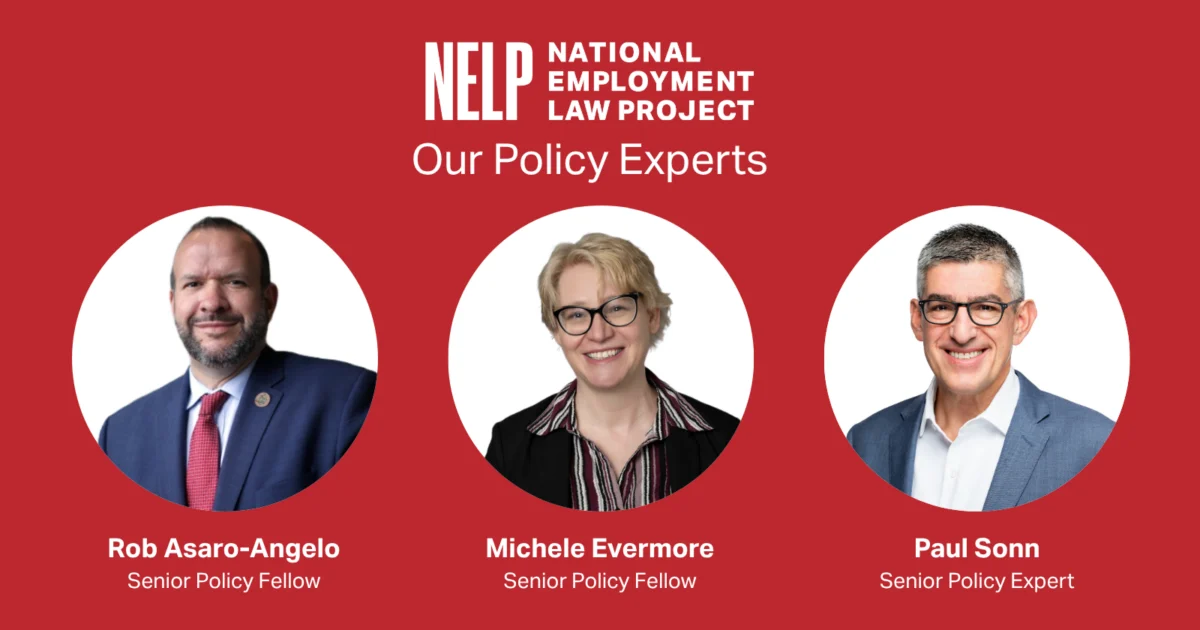
WASHINGTON, D.C. — July 30, 2026 — The National Employment Law Project (NELP), a preeminent force in the American labor movement for over half a century, has announced a significant expansion of its leadership team. In a strategic move to address the rapidly evolving landscape of the modern workplace—marked by the integration of artificial intelligence, shifting gig-economy dynamics, and persistent wage inequality—NELP has appointed three nationally recognized policy experts to senior roles.
The appointments of Rob Asaro-Angelo, Michele Evermore, and Paul Sonn signal a sharpened strategic focus for the organization. As workers navigate unprecedented job transitions and technological disruption, NELP is positioning itself to be at the forefront of policy innovation, aiming to build a more inclusive, resilient, and equitable economy.
The Strategic Shift: Building the Next Generation of Labor Policy
The labor market of 2026 is vastly different from the one that existed even five years ago. With AI-driven workplace surveillance, the proliferation of temporary staffing models, and the ongoing struggle to align wages with the rising cost of living, NELP’s leadership recognizes that traditional advocacy is no longer sufficient.
“We are thrilled to have such extraordinary leaders as Rob, Michele, and Paul taking on these significant new roles for NELP,” said Rebecca Dixon, President & CEO of NELP. “Among the nation’s most renowned worker advocates, each is an accomplished architect of both visionary policies and winning campaigns. Together, they will be the nucleus of a team that advances transformative policies for workers across the country.”
The organization’s renewed mandate focuses on three core pillars: strengthening state-level enforcement of labor standards, modernizing social insurance systems like Unemployment Insurance (UI), and crafting "wage-plus" affordability models that ensure workers do not just survive, but thrive.
Profiles in Leadership: A Trio of Veteran Advocates
The three appointees bring a combined century of experience in public policy, legal advocacy, and government administration. Their backgrounds reflect a deliberate mix of executive experience and grassroots strategy.
Rob Asaro-Angelo: Championing Worker-First Protections
As the new Senior Policy Fellow for Worker-First Protections, Rob Asaro-Angelo brings the rigor of a former state executive to the organization. Serving as Commissioner of the New Jersey Department of Labor and Workforce Development (NJDOL) from 2018 to 2026, Asaro-Angelo oversaw one of the most progressive labor departments in the country.
His tenure in New Jersey was marked by the successful implementation of the $15 minimum wage, the establishment of the Temporary Workers’ Bill of Rights, and pioneering advancements in pay and benefit transparency. At NELP, his focus will be on the "enforcement gap"—the disparity between the laws on the books and the reality of wage theft and labor standards violations on the ground. He will lead efforts to assist state agencies in maximizing their limited enforcement capacity, ensuring that labor rights are not merely suggestions but enforceable realities.
Michele Evermore: Modernizing Social Insurance
The return of Michele Evermore to NELP as Senior Policy Fellow for Economic Security and Worker Transitions is a major win for the organization’s social safety net advocacy. Evermore, a leading authority on Unemployment Insurance (UI), served as Deputy Director for Policy in the U.S. Department of Labor’s Office of Unemployment Insurance Modernization during the Biden administration.
Her work is critical as the U.S. labor market faces a period of structural volatility. Evermore’s portfolio will focus on redesigning the UI system to better serve the needs of a 21st-century workforce, including gig workers and those displaced by AI-driven automation. By connecting job transitions with robust economic security, she aims to reduce the "cliff effect" that many workers face when moving between jobs or sectors.
Paul Sonn: The Architect of Wage Affordability
Paul Sonn, long-time director of NELP’s state policy program and the NELP Action Fund, takes on the role of Senior Policy Expert for Wages and Affordability. Sonn is a veteran of the "Fight for $15" and has been instrumental in the design of the nation’s first municipal minimum wage laws.
In this new capacity, Sonn will push beyond traditional minimum wage advocacy to address the broader concept of affordability. His work will include strategies to link wage growth to regional cost-of-living indices and the development of "just cause" job protections, which safeguard workers from arbitrary termination. Furthermore, Sonn is spearheading NELP’s efforts to establish "guardrails" for AI in the workplace—ensuring that the next wave of corporate technology serves to enhance, rather than replace or dehumanize, the worker.
Chronology of Influence: From 1969 to 2026
NELP’s history is a reflection of the evolving struggle for economic justice in the United States. Since its founding in 1969, the organization has shifted from litigation-heavy advocacy to a multifaceted approach involving research, policy drafting, and capacity building for grassroots coalitions.
- 1969: NELP is founded to provide legal assistance to the poor, focusing on employment rights and discrimination.
- 2000s: The organization begins shifting toward state and local policy innovation, helping to spark the national living wage movement.
- 2012: NELP provides critical research and messaging support for the "Fight for $15," a movement that successfully raised wages for millions of low-income workers.
- 2020–2022: During the COVID-19 pandemic, NELP plays a central role in advising on the expansion of unemployment insurance, preventing millions from falling into poverty.
- 2026: With the new senior appointments, NELP formalizes its focus on the intersection of AI, labor rights, and modern social insurance, signaling a pivot toward the challenges of the late 2020s.
Supporting Data: The Scale of the Challenge
The necessity of these appointments is underscored by current labor market data. According to recent reports from the Bureau of Labor Statistics and NELP’s own research, the "enforcement gap" remains a significant drain on the American economy.
- Wage Theft: Estimates suggest that wage theft costs American workers billions of dollars annually, particularly in the retail, construction, and hospitality sectors.
- Automation Exposure: A 2025 study cited by NELP indicates that over 30% of current tasks in the service sector are "highly susceptible" to AI automation by 2030, necessitating a robust policy framework for worker transitions.
- Social Safety Net: Despite the lessons of the 2020 pandemic, the nation’s UI infrastructure remains antiquated, with antiquated IT systems in many states preventing timely disbursement of benefits.
By focusing on these specific data points, the new senior leadership team intends to move from reactive advocacy to proactive, systemic reform.
Implications: A New Era for American Workers?
The implications of these appointments extend well beyond the halls of NELP. By strengthening the organization’s capacity to support state-level policy, these leaders are effectively creating a "laboratory for democracy" in labor rights.
- State-Level Innovation: As federal gridlock remains a constant hurdle, NELP’s focus on state agencies—led by the expertise of Asaro-Angelo—suggests a strategy of building momentum from the ground up. If states like New Jersey, California, and New York can successfully implement new worker protections, these models are likely to be adopted nationally.
- The AI-Labor Nexus: By bringing in Paul Sonn to focus on AI guardrails, NELP is acknowledging that labor rights are now inextricably linked to technology policy. Their advocacy may soon set the standard for how corporations are allowed to use algorithmic management in warehouses, retail, and corporate offices.
- Resilience in Transition: Michele Evermore’s focus on UI modernization is crucial for the "gig-ification" of the economy. As more workers move toward freelance or contract-based roles, the need for a portable, modern social safety net will become the defining labor issue of the decade.
Conclusion
The National Employment Law Project’s decision to elevate these three leaders represents a strategic consolidation of talent at a critical juncture for the American worker. As the U.S. economy faces the twin pressures of technological disruption and persistent inequality, the need for rigorous, evidence-based policy has never been higher.
With a legacy of impacting the lives of an estimated 100 million workers and their families, NELP is now retooling for the future. By bridging the gap between high-level policy innovation and the practical, daily needs of the workforce, Asaro-Angelo, Evermore, and Sonn are tasked with ensuring that the promise of a "just and inclusive economy" remains an achievable goal for the next generation of American workers.
For more information on NELP’s ongoing campaigns, research initiatives, and policy briefs, please visit their official website at www.nelp.org.
