




In the opening pages of Kim Stanley Robinson’s seminal work, The Ministry for the Future, a lethal heat wave combined with a total collapse of the electrical grid in India claims 20 million lives in a matter of days. While the book is a work of fiction, the catalyst for its narrative—a world finally jolted into radical climate action by a singular, apocalyptic event—is increasingly debated by scientists as a harrowing possibility, or perhaps an inevitability.
For decades, the global scientific community has issued measured warnings regarding the trajectory of our warming planet. Today, however, those warnings have shifted from the abstract to the immediate. We are no longer discussing "future climate change"; we are living in the age of extremes. As the planetary ingredients for a massive, systemic disturbance coalesce, the question is no longer whether we will face a "Big One," but how we will survive it.
The Foundation of a Crisis: 150 Years in the Making
The modern climate crisis is not a sudden emergence, but the culmination of a process initiated in the mid-19th century. In the 1850s, amateur scientist Eunice Newton Foote, working from her home in Seneca Falls, New York, conducted a series of experiments that would eventually unlock the mechanics of our current predicament. By placing various gases into glass cylinders and exposing them to solar radiation, Foote discovered that carbon dioxide—a byproduct of burning fossil fuels—trapped heat far more effectively than atmospheric air.
Her findings were the canary in the coal mine, yet they went largely unheeded for over a century. Today, the Earth is 1.44 degrees Celsius (2.59 degrees Fahrenheit) warmer than it was in the early 1800s. This rise in average global temperature is not merely a number on a graph; it is the engine driving more frequent and more intense weather events, from hyper-charged hurricanes to multi-year droughts.
Despite being the largest historical emitter of greenhouse gases, the United States remains deeply polarized on the issue. As the nation celebrates its 250th anniversary in 2026, climate policy remains a lightning rod for political division. Rhetoric from high-level political figures, including President Donald Trump, has frequently dismissed the scientific consensus as a "con job" or a "scam," effectively stalling the federal-level, systemic shifts required to mitigate the damage.
Chronology of Escalation: From Anomalies to the New Normal
To understand the current urgency, one must look at the recent historical record. The world has moved past the era where extreme weather was a periodic nuisance; it is now a constant, global phenomenon.
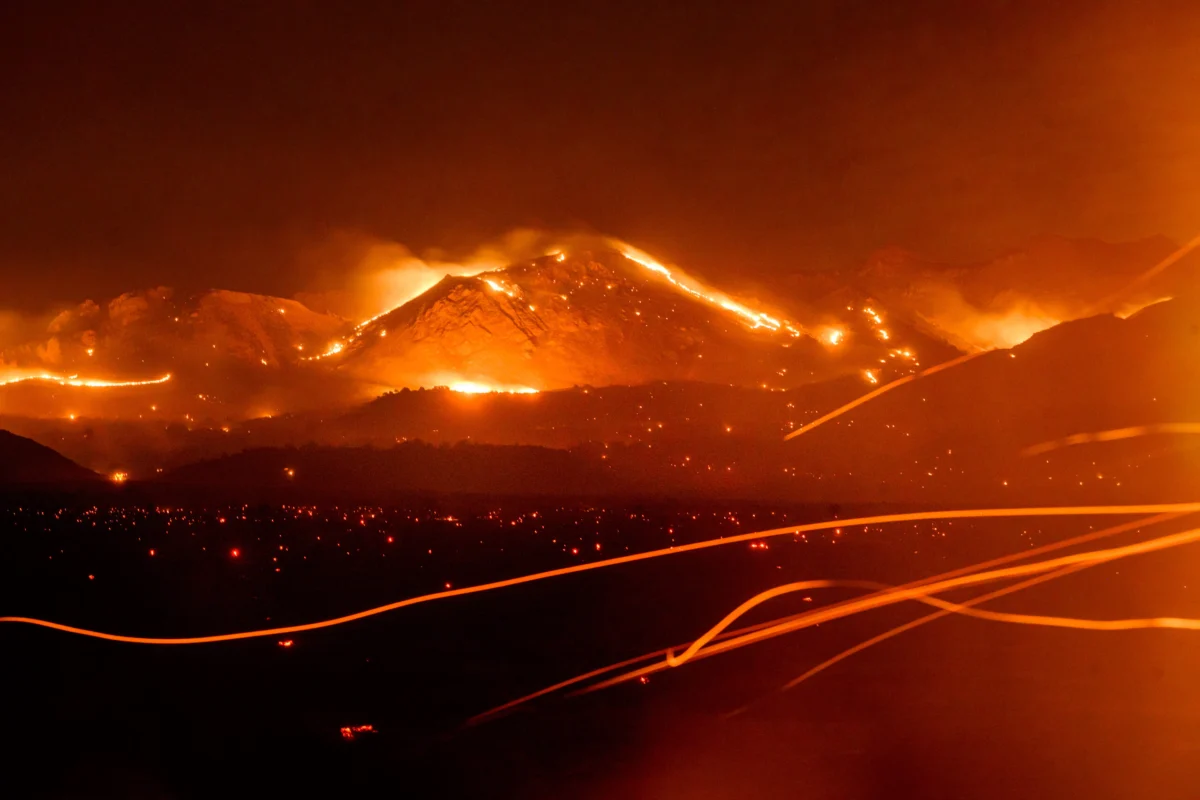
- 2019–2020: The Black Summer. Australia experienced one of the most catastrophic wildfire seasons in recorded history, with 19 million hectares scorched, illustrating the lethal potential of drought-stricken landscapes.
- 2022: The Deluge in Pakistan. A monsoon season of unprecedented intensity left one-third of the country under water, displacing millions and causing billions in infrastructure damage.
- 2024: The Hurricanes of the American South. The back-to-back devastation of Hurricanes Milton and Helene provided a grim demonstration of how warmer ocean temperatures can intensify storms, turning them into engines of destruction that ravage previously resilient regions.
These are not isolated incidents. They are markers of a shifting climate state. Sarah Perkins-Kirkpatrick, a climate scientist at Australian National University, describes a "come to Jesus moment" in her own research: the realization that even if the world were to hit net-zero emissions tomorrow, the extreme weather patterns are locked in. Because carbon dioxide persists in the atmosphere for centuries, the "warming commitment" we have already generated means that the planet will continue to experience extreme instability for generations to come.
The Psychological Barrier: Why We Ignore the Wolf
The reluctance to confront these risks is rooted in basic human psychology. "It’s the frog in the boiling water," says Perkins-Kirkpatrick. "If we get used to bracing ourselves, are we going to notice when the temperature becomes fatal?"
Daniel Swain, a climate scientist with the California Institute for Water Resources, draws a parallel to the "Boy Who Cried Wolf" dilemma. "The risk is that people just think you are exaggerating," Swain notes. "But sometimes wolves are real. If it’s outside the door, wouldn’t you want to know?"
This aversion to worst-case scenarios is mirrored in our cultural consumption. Hollywood, for instance, has long treated climate change as a plot device. Films like The Day After Tomorrow (2004) and the 2021 satire Don’t Look Up demonstrate the two ways we process this fear: either through the lens of a heroic, last-minute salvation, or the nihilistic acceptance of total doom. Both narratives, in their own way, are unhelpful. They suggest that the resolution to climate change is either a dramatic, single-act fix or a predetermined apocalypse, neither of which reflects the nuanced, long-term reality of adaptation and mitigation.
Scientific Data: The Tipping Points
We are currently navigating a landscape defined by "tipping points"—thresholds of environmental degradation from which there is no return. These are not speculative; they are observable, empirical realities.
Consider the world’s coral reefs. According to the National Oceanic and Atmospheric Administration (NOAA), 84% of the world’s coral suffered severe bleaching between 2023 and 2025. This is not just a loss of biodiversity; it is the destruction of a critical planetary support system. Similarly, the Amazon rainforest—a vital carbon sink—is nearing a threshold where it may transition from a forest into a savanna. If the Amazon begins to release more carbon than it absorbs, the feedback loop could accelerate global warming beyond the reach of human intervention.
"If such an event happened, I could already see the criticism of people saying, ‘Climate scientists didn’t tell us,’" says Sonia Seneviratne, a Swiss climatologist and vice-chair of a major IPCC working group. "But we did." Seneviratne compares the situation to smoking: while a smoker might not die of lung cancer tomorrow, the statistical probability increases with every cigarette. Every tenth of a degree of warming increases the probability of a "Black Swan" event—a disaster so large it overwhelms regional capacity to respond.
Official Responses and the Path to Resilience
If there is a model for potential progress, it can be found in the field of seismology. Lucy Jones, a renowned seismologist and author of The Big Ones, has spent years working with municipal governments to prepare for major earthquakes. Her work in Los Angeles, which led to widespread seismic retrofitting, proves that when people believe a risk is real and, crucially, that a solution is possible, they will act.
"Climate denial is one way of coping," Jones observes. "People rationalize by thinking, ‘I won’t believe it’s true, so I’ll feel safer.’" To combat this, the strategy must pivot from fear-based messaging to solutions-based infrastructure. We must treat the climate crisis with the same level of granular, civic preparation we apply to tectonic threats.
However, preparedness is currently lagging. No nation is fully equipped for a major, multi-vector climate disaster. The infrastructure of the 20th century was designed for a stable climate; it is largely incompatible with the high-variance, extreme environment of the 21st.
Implications: The Moral Mandate of the Future
The implication of our current path is a world of permanent instability. As Tim Lenton, a professor of climate science at the University of Exeter, puts it: "We need to be talking about some of the worst things that can happen. It’s natural to think that some bigger shocks are on the way."
The "Other Big One"—the catastrophic event that forces a global reckoning—is no longer a figment of science fiction. It is a mathematical probability that grows with every ton of carbon emitted. The purpose of climate science, and the purpose of works like Robinson’s The Ministry for the Future, is to provide the map for navigating this transition.
If we continue to ignore the warnings, the "Big One" will be forced upon us, likely in a form we are unprepared to mitigate. If we choose to act, we shift the narrative from one of inevitable catastrophe to one of resilience and survival. The wolf is at the door; the question is not whether we can hear it, but whether we will finally open the door and confront the challenge before the next threshold is crossed.
