





In the complex ecosystem of search engine optimization, a quiet but seismic shift is occurring that threatens to undermine the visibility strategies of newsrooms worldwide. John Shehata, CEO of NewzDash, recently uncovered a development that many publishers have failed to notice: Google has begun aggressively folding entire "Top Stories" carousels directly into its AI Overviews.
For publishers, the danger lies not just in the change itself, but in a widespread industry misconception. Many news organizations believe that by blocking Google-Extended via their robots.txt files, they have opted out of Google’s generative AI features. Data suggests that this is a dangerous fallacy. As Google moves deeper into its AI-integrated future, the gap between what publishers think they are controlling and what is actually happening in the Search Engine Results Page (SERP) is widening, creating a precarious environment for digital journalism.
The New Reality: Top Stories as AI Infrastructure
The traditional "Top Stories" carousel—the coveted strip of news headlines that has long been a major traffic driver—is being assimilated. According to data provided by NewzDash, Google is no longer just placing these carousels alongside or below AI-generated responses; it is embedding them inside the AI Overview box.
When a user performs a search, the AI Overview now serves as the primary container, with the news carousel acting as a sub-component of that generative response. Perhaps most critical is the mutual exclusivity of this placement: when the carousel is embedded within the AI Overview, Google ceases to run a separate, standalone Top Stories module further down the page. This effectively consolidates Google’s real estate, forcing publishers to compete for placement within the AI’s domain or risk being excluded from the primary view entirely.
A Historical Echo: The "Vertical Creep" of 2007
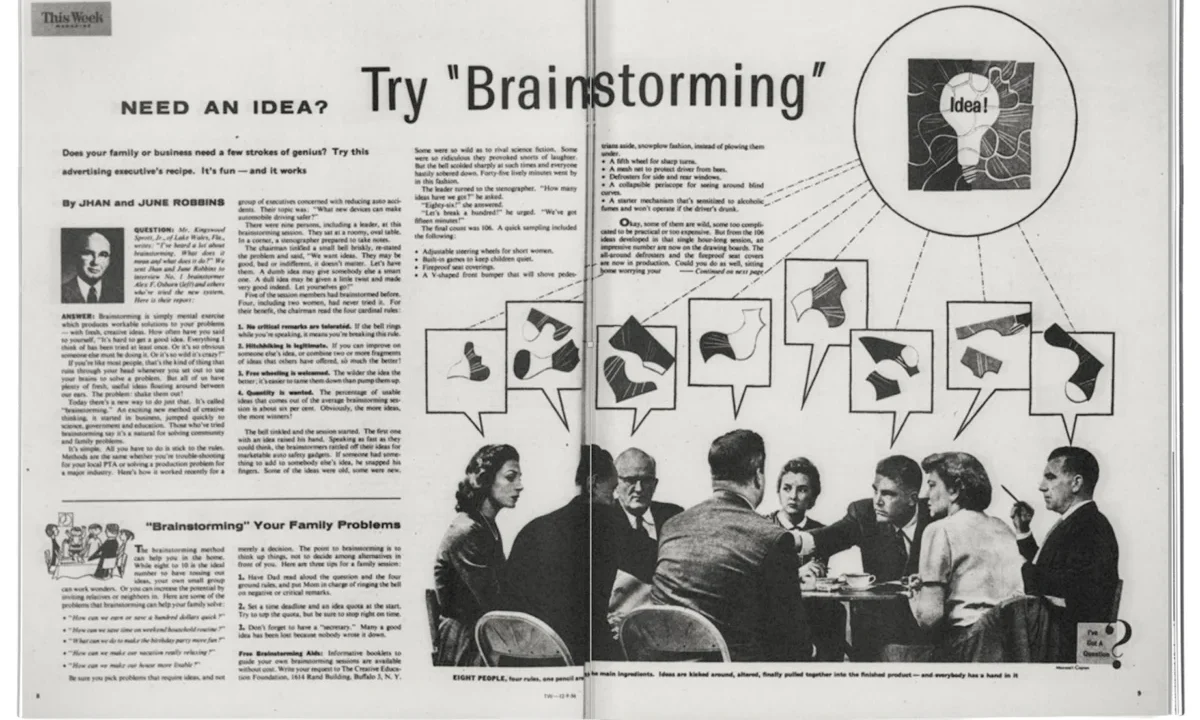
To understand the gravity of this change, one must look back nearly two decades. In 2006, the industry faced a similar anxiety regarding what was then dubbed "Vertical Creep." During the Search Engine Strategies New York conference, experts discussed how Google was beginning to pull results from Google News into the main web results, a precursor to the 2007 launch of Universal Search.
Danny Sullivan, now a public liaison for Google Search, famously characterized that 2007 transition as the most radical change in the platform’s history. It signaled the death of the "10 blue links" in favor of a blended, integrated experience that combined video, images, and news.
Nineteen years later, we are witnessing the second act of that play. The destination has shifted from a "blended page" to an "AI-generated answer," but the goal remains identical: keeping the user within the Google ecosystem by providing a synthesized, all-in-one experience. The mechanism of the 2000s was the integration of vertical silos; the mechanism of the 2020s is the integration of generative intelligence.
Data Breakdown: The Scope of the Shift
NewzDash’s tracking provides a clear picture of how pervasive this integration has become. In the United States, 15.5% of trending news queries that feature Top Stories now display them exclusively within an AI Overview. In the United Kingdom, that number is even higher, at 17.46%.
The impact is not distributed evenly across all sectors. Entertainment news is the most heavily impacted, with over 35% of U.S. entertainment queries embedding the Top Stories carousel within the AI Overview. World News follows closely at roughly 32%. Conversely, health and science queries show significantly lower rates of this integration, suggesting that Google may be exercising caution with sensitive topics or that the current generative models are less capable of synthesizing credible, breaking news in those specific niches.
The "Google-Extended" Fallacy
The most urgent takeaway from Shehata’s research is the misunderstanding surrounding Google-Extended. Many publishers have rushed to block this directive, believing it acts as a "kill switch" for AI presence. However, official Google documentation clarifies that Google-Extended is specifically designed to govern AI training and grounding—such as feeding data into future Gemini models or Vertex AI responses.
Blocking Google-Extended does not remove a site from Google Search, nor does it impact its appearance in AI Overviews or standard Top Stories carousels. It is a tool for data licensing, not a tool for visibility management. By treating it as a global opt-out, publishers are likely wasting their time while simultaneously failing to exercise the controls that actually matter.

Emerging Controls: The Search Console Shift
In June 2026, Google introduced a new generative AI exclusion feature within Search Console, currently available to a subset of site owners in the UK. This control is fundamentally different from Google-Extended. It allows publishers to specifically request that their content be excluded from AI Overviews, AI Mode, and generative Discover features, while maintaining their eligibility for traditional search rankings.
While the exact mechanics of how this will affect the embedded Top Stories carousel remain opaque, the consensus is that opting into this exclusion will likely result in the loss of that carousel spot. Because the embedded carousel is essentially a collection of publisher links, it is highly probable that opting out of the AI Overview will trigger a total removal from that specific, integrated surface.
Google has yet to clarify if the carousel would then "fall back" to a standalone position, or if those publishers would simply disappear from the top of the SERP entirely. This lack of transparency is a point of significant friction between Mountain View and the publishing industry.
The Bigger Picture: A Crisis of Trust
Beyond the technical mechanics, this shift represents a fundamental attempt by Google to address the "trust gap" in AI. AI Overviews have long been criticized for their propensity to hallucinate or provide thin, synthesized information. By integrating Top Stories—which feature verified, bylined content from established newsrooms—Google is attempting to anchor its generative responses in real-world journalism.
It is a strategy that aims to lend the AI the credibility of the press. For Google, this is a move to rebuild trust with users. For publishers, it is a double-edged sword: while it keeps their content in the most visible part of the page, it also subjects that content to the whims of an AI interface that may or may not drive meaningful traffic to their own domains.
Strategic Recommendations for Publishers
For SEO professionals and newsroom strategists, the immediate path forward requires a three-pronged approach:
1. Audit Your Current Controls
Stop treating Google-Extended and the new Search Console AI exclusion as interchangeable. Audit your site to see what is currently blocked and why. Document the specific surfaces that each control governs to avoid accidental loss of visibility.
2. Implement Gradual Testing
If you have access to the Search Console generative AI exclusion, do not apply it site-wide immediately. Use parent-child property inheritance to test the feature on a specific, non-critical vertical. Monitor the impact on traffic and visibility within Top Stories before deciding on a broader rollout.
3. Leverage Performance Data
Begin pulling and analyzing Google’s generative AI performance reports in Search Console immediately. Pair this data with specialized tools like NewzDash to track how often your content appears in traditional carousels versus embedded AI placements. You cannot make an informed business decision without a clear baseline of your current "AI footprint."
Conclusion: The New Ground Truth
The landscape of news search is undergoing a structural change that is as significant as the advent of the "10 blue links" or the introduction of Universal Search. As we navigate this era, reliance on anecdotal evidence or misunderstood directives will be costly.
The industry is currently in a transition period where the rules of engagement are being rewritten by the platforms themselves. Until Google provides full documentation on how these embedded carousels interact with opt-out settings, the data provided by independent analysts like John Shehata remains the most reliable compass for newsrooms. The "vertical creep" of 2006 has returned, and this time, the stakes—and the complexity—are significantly higher.
