





By Editorial Staff
August 31, 2026
As the rapid integration of artificial intelligence (AI) into the global economy accelerates, the specter of mass labor displacement has shifted from speculative fiction to a looming policy reality. While widespread, systemic job loss attributed directly to AI has yet to materialize in full force, labor economists and policy experts are sounding a desperate alarm: America’s current unemployment insurance (UI) infrastructure is fundamentally broken, underfunded, and ill-equipped to handle a modern economic shock.
For decades, bipartisan commissions have urged Congress to modernize the UI system. Today, those warnings have reached a fever pitch. With the labor market already showing signs of structural fatigue—characterized by record-low participation rates, a surge in "ghost" job postings, and the long-term erosion of the Employment Service—the status quo is no longer just inefficient; it is a ticking time bomb.
The State of the Safety Net: A Half-Century of Neglect
The foundational purpose of Unemployment Insurance is twofold: to serve as a vital lifeline for displaced workers seeking meaningful re-entry into the workforce and to act as a countercyclical stabilizer for the broader economy. Economists have long noted that for every dollar distributed in UI benefits, nearly two dollars are generated in local economic activity. In this sense, a robust UI system is not merely a social service; it is a macroeconomic stimulus tool.
However, since the Great Recession of 2008, the U.S. has witnessed a "race to the bottom." Across dozens of states, legislatures have systematically stripped away the protections that once made UI a reliable safety net. By tightening eligibility requirements, slashing the duration of benefits, and reducing the income replacement ratio, many states have effectively hollowed out the system.
A History of Missed Opportunities
The failure to modernize is not a result of a lack of knowledge, but a lack of political will. Chronologically, the trajectory of this failure is clear:
- 1980: A bipartisan commission issues a formal report recommending sweeping improvements to the UI system, citing the need for greater federal standardization and funding. The report is largely ignored.
- 1996: A subsequent bipartisan commission echoes these findings, emphasizing that the labor market is becoming increasingly volatile and that UI requires structural reforms to remain relevant. Again, legislative action is stalled.
- 2008–2010 (The Great Recession): States begin a trend of cutting UI benefits to balance budgets, setting the stage for long-term systemic weakness.
- 2020 (The COVID-19 Pandemic): The system reaches a breaking point. When millions of Americans lose their jobs overnight, the federal government is forced to create three emergency programs from scratch because the underlying UI infrastructure is too antiquated to adapt.
- 2022–Present: Internal reports confirm that UI agencies have been operating at a 50-year low in funding. Chronic under-investment leads to technological stagnation, leaving systems vulnerable to sophisticated, organized criminal fraud.
The "Low-Hire" Economy: A New Reality for Jobseekers
The current labor market is increasingly hostile to those seeking employment. Michele Evermore, Senior Policy Fellow for Economic Security at the National Employment Law Project (NELP), highlights a disturbing trend: the rise of the "low-hire" economy.
Current data suggests that as many as one in three job postings online are "ghost jobs"—postings that are not backed by an active intention to hire. For the average jobseeker, this creates a psychological and financial toll. Applicants are reporting the submission of hundreds of resumes with zero response, leading to a surge in discouraged workers who eventually drop out of the labor force entirely.
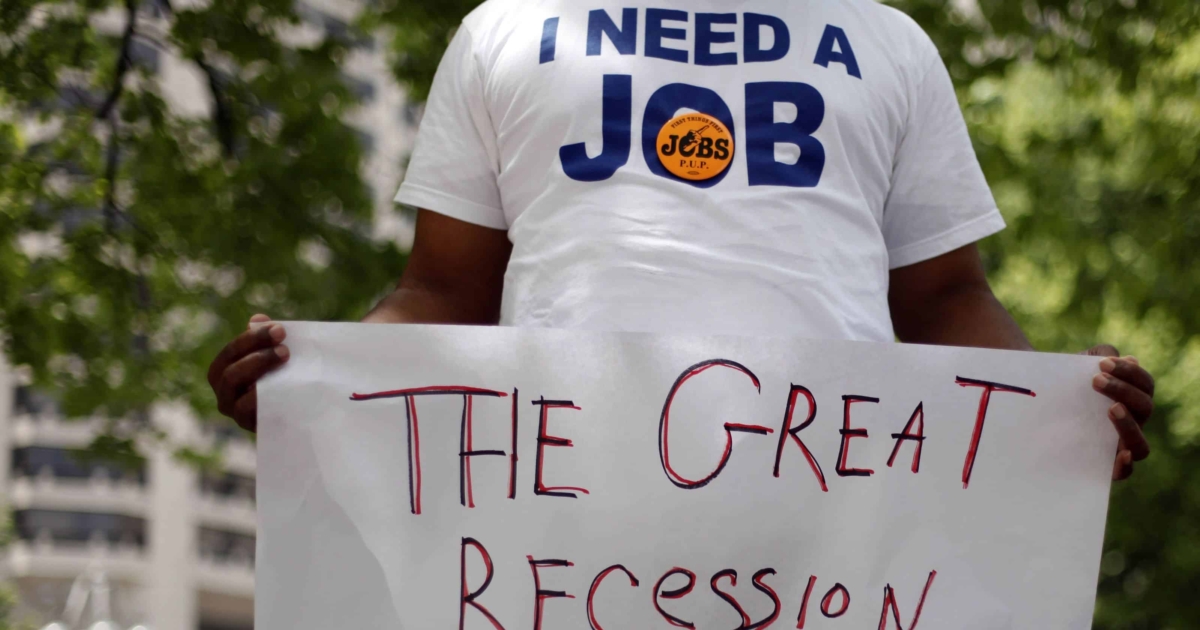
This environment is precisely when the government’s Employment Service should be at its most active. The Employment Service was designed to act as a bridge between the unemployed and potential employers, providing training, networking, and job placement assistance. Instead, it has been systematically dismantled over the last three decades. The result is a workforce that is left to navigate a digital, often opaque, and increasingly automated job market entirely on its own.
Supporting Data: Why the Current Model Fails
The failure of the current system can be categorized into three primary areas:
- Technological Obsolescence: Many state UI agencies still rely on legacy mainframe systems that predate modern cloud computing. These systems are difficult to patch, prone to crashing under load, and unable to integrate with modern fraud-detection software.
- Funding Disparity: Because UI is a federal-state partnership, federal funding for administration has been drastically reduced in real terms. When agencies are starved of resources, they cannot staff offices or upgrade digital interfaces, forcing them to rely on "skeleton staffs" even during peak demand.
- Countercyclical Inefficacy: In states where benefits are kept at poverty-level floors, the "stabilizer" effect of UI is lost. When the unemployed have no purchasing power, local businesses lose customers, exacerbating the economic downturn—the exact opposite of the system’s intended function.
Legislative Responses: The Path Forward
There is a glimmer of hope in the halls of Congress. The policy recommendations that have been ignored since 1980 are now being championed in serious, bicameral legislation.
Senator Ron Wyden, Senator Michael Bennet, and Congressman Don Beyer have re-introduced comprehensive bills that aim to overhaul the UI system. These proposals focus on:
- Standardizing Benefits: Establishing federal minimums for benefit duration and income replacement to prevent the "race to the bottom" among states.
- Modernizing Infrastructure: Providing the necessary funding to transition state systems to secure, agile, cloud-based platforms.
- Reinvigorating the Employment Service: Restoring the federal Employment Service division at the Department of Labor and providing grants to local offices to move from "benefits processing" back to "workforce development."
"We had solutions that would address AI and mass unemployment 50 years ago, but we ignored them," Evermore writes in her latest brief. "It is time to break the habit of waiting until we are deep in the throes of a crisis before we act."
Implications of Continued Inaction
If the U.S. continues to ignore the decay of its safety net, the implications of an AI-driven labor disruption could be catastrophic. The transition to an AI-integrated economy is expected to be more rapid and more widespread than the transition to the internet.
Without a modernized UI system, the economy risks:
- Social Unrest: A large, discouraged, and unemployed class, left without a safety net, creates significant political and social volatility.
- Economic Stagnation: A failure to bridge the gap between AI-displaced workers and new industries will result in a skills mismatch that drags down national productivity.
- Erosion of Public Trust: When a government fails to protect its citizens during the most predictable of technological shifts, the legitimacy of the social contract is severely undermined.
The lesson from the COVID-19 pandemic should have been clear: you cannot build a house while the fire is already burning. If the government waits for AI to trigger mass layoffs, it will be forced to rush, creating vulnerable programs that are susceptible to fraud and error. By acting now—strengthening UI, investing in the Employment Service, and establishing a baseline of dignity for the unemployed—Congress has the opportunity to transform a potential crisis into a manageable economic evolution. The tools are ready; the history is written. Now, it is simply a matter of political will.
