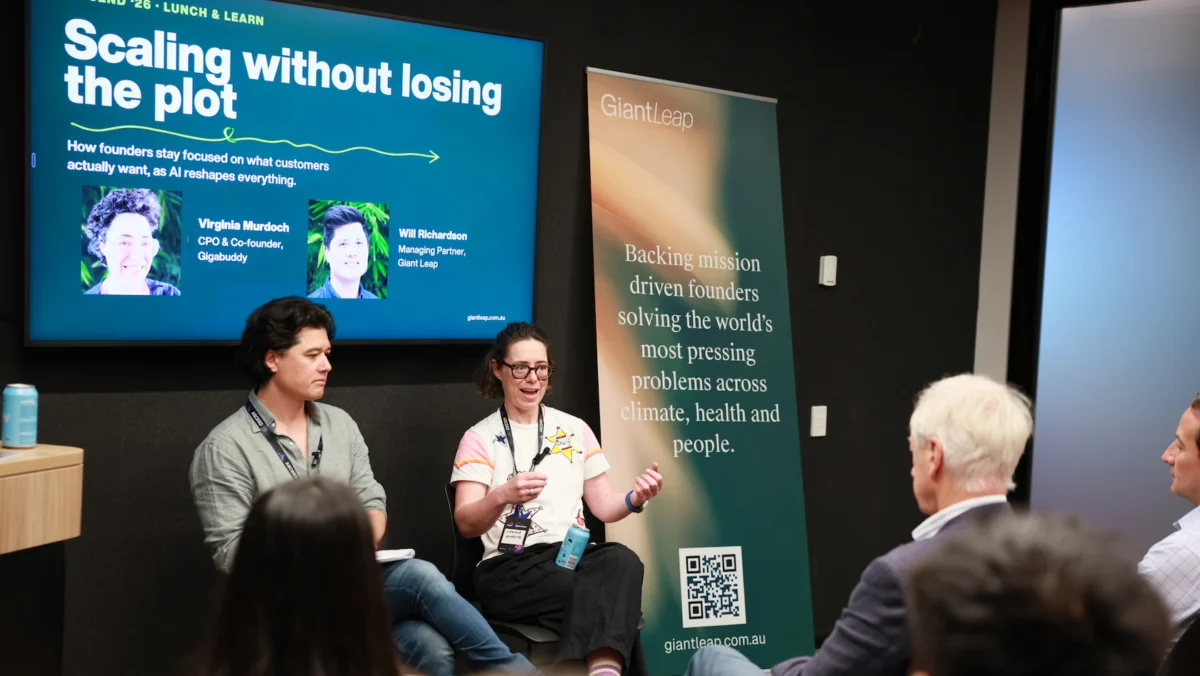





In the hyper-accelerated landscape of modern technology, the barrier to entry for software development has effectively collapsed. Where once a founder required months of development time, a team of engineers, and significant capital to bring a Minimum Viable Product (MVP) to market, today’s landscape is defined by "vibe coding"—a paradigm shift where generative AI translates natural language into functional applications in a matter of hours.
Virginia Murdoch, a veteran of the tech industry who was architecting web-native solutions long before they became the industry standard, recently addressed a cohort of founders at Google Ascend in Sydney. Her message was as sobering as it was insightful: while the cost of building software has plummeted to near zero, the difficulty of building a successful business has never been higher.
A Legacy of Foresight: From Booki.sh to the AI Era
To understand the weight of Murdoch’s recent commentary, one must look at her track record. In 2011, long before the industry fully grappled with the implications of digital monopolization, Murdoch co-founded Booki.sh. The platform was a web-native ebook reader that functioned as a direct challenge to the walled gardens of Amazon’s Kindle and Apple’s iBooks ecosystem.
At a time when "ecosystem lock-in" was a nascent concern for the average consumer, Booki.sh offered a browser-based, platform-agnostic alternative. Its value proposition was so potent and its architecture so forward-thinking that it was acquired by OverDrive—the global titan of ebook and audiobook distribution—after a mere three months on the market and with a user base of only 150 people.
Murdoch’s history of anticipating market needs makes her current stance on AI-driven development particularly resonant. She argues that the ease with which one can now "vibe-code" a product creates a dangerous illusion of progress.
The Illusion of Progress: The "Vibe Coding" Trap
"Vibe coding makes you feel like a genius," Murdoch told the Google Ascend attendees. The workflow is seductive: a founder describes a vision, the AI generates the code, and within days, a functioning prototype exists.
However, this rapid development cycle introduces a new psychological hazard. In the past, when a build took months, there was a natural period of doubt. Founders had time to interrogate their assumptions, pivot, and refine their strategy before the code was even set in stone. Today, the velocity is so high that founders often fall in love with their product before a single customer has even laid eyes on it.
This leads to a disconnect: the founder presents a sophisticated piece of software to a potential user, only to be met with confusion. The customer, indifferent to the complexity of the code or the speed of its creation, asks the most damning question in the startup world: "I don’t exactly know what you’re doing here."
The Customer Test: The Unchanged Barrier
If the technical barrier to building has fallen, the market barrier—finding a problem worth solving—has arguably risen. The ease of creation has flooded the market with "solutions" that lack an underlying problem.
"What hasn’t gotten any easier is finding out whether anyone wants it," the narrative persists. The fundamental requirement of a successful startup remains the same: sitting across from customers, asking the right questions, and—perhaps most importantly—earning the level of trust required for them to provide honest, unfiltered feedback.
Many founders, intoxicated by the ease of the build, avoid this interaction. It is easier to write code than it is to listen to a customer dismantle your assumptions. This avoidance is a primary cause of startup mortality. When a product is built in a vacuum of AI-generated speed, the founder becomes emotionally attached to the solution, making them increasingly resistant to the reality that the problem they are solving may not exist, or that their approach is fundamentally misaligned with user needs.
Chronology of the Development Shift
The evolution of software development can be categorized into three distinct phases:
- The "Hard Build" Era (Pre-2015): Building was expensive and time-consuming. Technical debt was a major hurdle. Founders were forced to be incredibly disciplined because every line of code represented a significant investment of time and capital.
- The "Lean" Era (2015–2022): The rise of no-code tools and SaaS frameworks reduced the friction of building. The focus shifted toward the "Lean Startup" methodology—build, measure, learn.
- The "Vibe Coding" Era (Present): With the advent of large language models (LLMs), technical constraints have largely vanished. The primary constraint is no longer the "how" (coding), but the "what" (value proposition) and the "who" (trust).
Murdoch recalls a specific project involving a global website transition for a private equity firm. Years ago, adapting a site for over 50 countries was a multi-month, high-budget ordeal. Today, that same task is an afternoon’s work. When the barrier to entry is eliminated, the competitive edge no longer lies in the software itself, but in the founder’s ability to discern what actually matters to the end user.
Why "What Do You Want?" Is the Wrong Question
In the startup ecosystem, "talk to your customers" is ubiquitous advice, often offered at pitch nights and accelerator programs. However, as Murdoch points out, the quality of that advice is undermined by a lack of specificity.
"The obvious question, ‘What do you want?’ is close to useless," she notes. Customers generally lack the technical vocabulary or the visionary capacity to design a product. They are experts in their own frustrations, not in software architecture.
A successful founder must bypass the "wish list" questions and instead focus on the "pain" questions. Effective customer discovery involves:
- Identifying long-standing, unresolved annoyances.
- Understanding the workarounds customers have already created to bypass their problems.
- Assessing the emotional and financial cost of the status quo.
The fear of receiving negative answers is a natural human reaction. Founders often subconsciously steer conversations to confirm their biases rather than challenge them. Overcoming this requires a level of professional detachment that is difficult to maintain when the product was built in an afternoon.
Trust: The New Competitive Moat
Perhaps the most significant takeaway from Murdoch’s insights is the shift from "Product-Market Fit" to "Trust-Market Fit."
In the past, the founder who could build the best thing the fastest usually won. Today, that advantage has been commoditized. With everyone capable of building a "good enough" product over a weekend, the market has become saturated with noise.
How does a startup cut through? According to Murdoch, the answer is trust.
Canva is a prime example of this dynamic. When it entered the market, the default design software was Adobe—a complex, powerful, and intimidating suite. Canva didn’t just win on features; it won because it established itself as a brand that understood the specific needs of the "non-designer."
In the current environment, when a potential customer encounters a problem, they are increasingly looking for the person or the entity they already trust to solve it, even before a product is fully realized. Trust is the currency of the AI era. It is built by showing up, being consistently useful, and demonstrating expertise long before the request for a credit card is ever made.
Implications for the Future of Innovation
The democratization of coding is, on balance, a positive development. It allows for a higher volume of experimentation and lowers the risk of failure. However, it requires a radical shift in founder discipline.
The successful founder of the future will be less of a "builder" and more of a "listener." They will need to cultivate the ability to:
- Ignore the temptation of instant development: Resist the urge to code the solution until the problem has been validated through rigorous, uncomfortable customer dialogue.
- Prioritize relationships over features: Build a community of users who trust the founder’s perspective on the industry.
- Practice intellectual humility: Be willing to discard weeks of AI-generated code if the customer feedback indicates it is the wrong direction.
As the technical barriers to entry continue to fall, the human elements—empathy, intuition, and the ability to build trust—become the ultimate competitive advantages. In an era where anyone can build anything, the only thing that cannot be automated is the deep, genuine understanding of the human problems that are actually worth solving.
For the modern founder, the path forward is clear: put down the keyboard, step away from the AI prompt, and go talk to the people who are currently struggling with the problems you intend to fix. The code will always be there, but the opportunity to earn trust is fleeting.
