




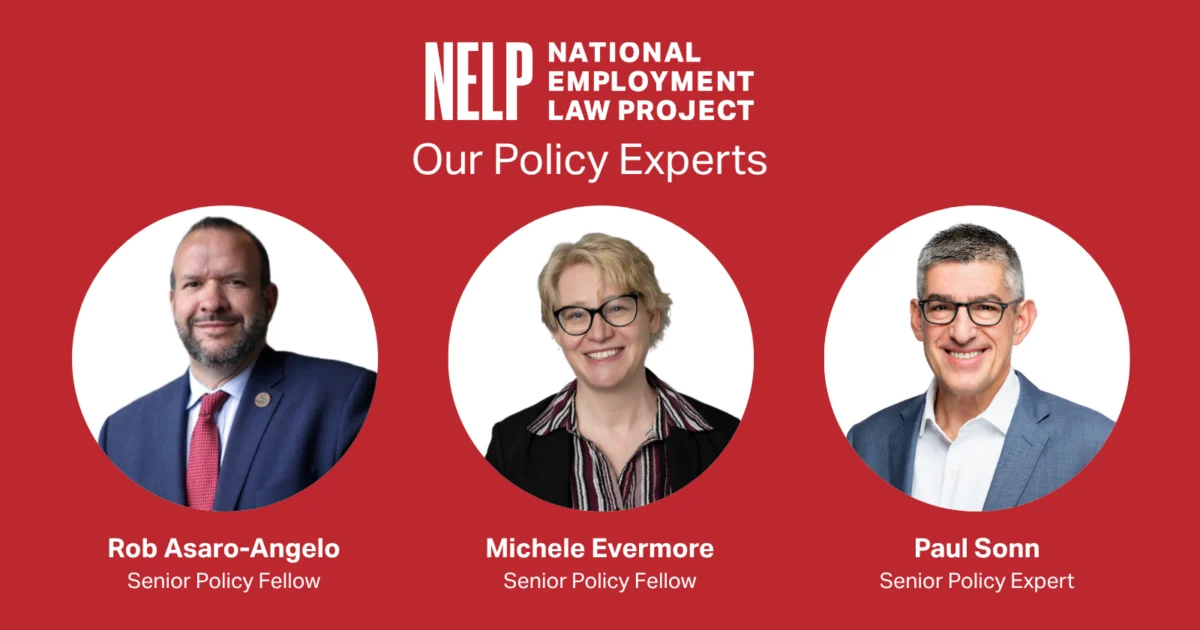
WASHINGTON, D.C. — As the American labor landscape faces an unprecedented inflection point defined by rapid technological shifts, persistent wage stagnation, and the evolving nature of the social safety net, the National Employment Law Project (NELP) has moved to fortify its strategic arsenal. On July 1, 2026, the organization—a titan in the advocacy for workers’ rights—announced the appointment of three nationally recognized policy heavyweights to senior roles.
These appointments signal a transition from reactive advocacy to a more proactive, architect-level approach to policy innovation. By securing the expertise of Rob Asaro-Angelo, Michele Evermore, and Paul Sonn, NELP is positioning itself to lead the national discourse on AI-driven job displacement, the modernization of unemployment insurance, and the structural enforcement of labor standards in an increasingly precarious economy.
The Strategic Shift: Building a "Nucleus" for Reform
The announcement comes at a time when the gap between worker productivity and wage growth remains a central challenge in the U.S. economy. Rebecca Dixon, President and CEO of NELP, described the move as a deliberate attempt to aggregate high-level expertise to tackle systemic issues.
"We are thrilled to have such extraordinary leaders as Rob, Michele, and Paul taking on these significant new roles for NELP," Dixon said in a statement. "Among the nation’s most renowned worker advocates, each is an accomplished architect of both visionary policies and winning campaigns. Together, they will be the nucleus of a team that advances transformative policies for workers across the country."
The organization’s mission remains clear: to build a just and inclusive economy. However, the scope of its ambition has widened. NELP is no longer merely fighting for the status quo; it is actively designing the "next generation" of workplace protections, focusing on how policy can adapt to the digital age and the rise of the algorithmic manager.
Meet the New Leadership Team
The appointments reflect a diversity of experience spanning executive state government, federal policy oversight, and grassroots legal strategy.
Rob Asaro-Angelo: Strengthening the Enforcement Engine
As the new Senior Policy Fellow for Worker-First Protections, Rob Asaro-Angelo brings a wealth of executive experience to NELP. His tenure as Commissioner of the New Jersey Department of Labor and Workforce Development (2018–2026) was marked by a series of aggressive legislative and regulatory victories. Under his leadership, New Jersey became a laboratory for worker-centric policy, enacting a $15 minimum wage, expanding paid family leave, and implementing a groundbreaking temporary workers’ bill of rights.
In his new role, Asaro-Angelo will focus on the "enforcement gap"—the discrepancy between what the law promises workers and what they actually receive. His work will prioritize strategies to combat wage theft and modernize state agencies, ensuring that they possess the technological and administrative capacity to monitor and punish labor standard violations in real-time.
Michele Evermore: Modernizing the Social Safety Net
Michele Evermore returns to NELP as the Senior Policy Fellow for Economic Security and Worker Transitions. As one of the country’s foremost authorities on Unemployment Insurance (UI), Evermore’s appointment is particularly timely given the volatility of the current job market. Having served as Deputy Director for Policy in the Biden administration’s Office of Unemployment Insurance Modernization, she brings an insider’s perspective on the fragility of state-level systems.
Evermore’s mandate at NELP is to reshape how workers transition between jobs—a critical task as AI and automation threaten to displace large segments of the workforce. By bridging the gap between historical UI systems and the needs of a 21st-century gig and hybrid workforce, Evermore aims to ensure that economic security is not a luxury, but a foundational right for all laborers.
Paul Sonn: The Architect of Wage Policy
A long-time stalwart of the movement for fair pay, Paul Sonn has been appointed Senior Policy Expert for Wages and Affordability. Sonn, who also serves as the director of the NELP Action Fund, has been instrumental in the success of the "Fight for $15" movement. His background—spanning the Brennan Center for Justice and the NAACP Legal Defense Fund—gives him a unique perspective on the intersection of civil rights and economic justice.
Sonn’s focus will be on the "next generation" of wage policy. This includes not just increasing the nominal minimum wage, but developing strategies to ensure that wages keep pace with inflation and the rising cost of housing, healthcare, and education. Furthermore, he will spearhead NELP’s efforts to establish "just cause" employment protections, shielding workers from arbitrary termination and providing guardrails against the encroachment of AI in hiring and firing processes.
Chronology of Influence: How NELP Shaped the Last Decade
To understand the weight of these appointments, one must look at the trajectory of NELP’s influence over the last decade. Since its founding in 1969, the organization has evolved from a legal aid-focused entity to a comprehensive policy powerhouse.
- 2015–2018: NELP provides the intellectual and strategic framework for the "Fight for $15," helping city and state governments successfully pass record-breaking minimum wage legislation.
- 2020–2022: During the COVID-19 pandemic, NELP plays a crucial role in advising federal and state lawmakers on the expansion of unemployment insurance, preventing millions from falling into poverty during the economic lockdown.
- 2023–2025: The organization begins shifting its focus toward "algorithmic management," publishing research on how technology is used to monitor and discipline workers in warehouses and gig platforms.
- 2026 (Current): NELP formalizes its "next generation" strategic focus by integrating top-tier experts into its core leadership to address the nexus of technology, labor rights, and social insurance.
Supporting Data: The Need for New Solutions
The necessity of NELP’s new strategic direction is supported by sobering economic data. Despite low headline unemployment rates, the quality of work remains a pervasive issue.
- Wage Stagnation: While productivity has surged, real wages for the bottom 50% of the workforce have remained relatively flat when adjusted for inflation in essential goods.
- The Wage Theft Crisis: Recent reports suggest that billions of dollars are stolen from workers annually through unpaid overtime, off-the-clock work, and misclassification, a problem that disproportionately affects immigrant and low-wage workers.
- The AI Disruption: According to labor economists, roughly 25–30% of current tasks in the U.S. economy could be automated by 2030. Without proactive policy, this transition threatens to hollow out middle-class jobs and exacerbate wealth inequality.
- UI Accessibility: During the 2020 crisis, the antiquated UI systems in many states failed to process claims for millions of Americans, highlighting the desperate need for the "modernization" that Michele Evermore has been tasked with leading.
Implications: The Road Ahead
The integration of Asaro-Angelo, Evermore, and Sonn into NELP’s leadership marks a clear signal to both corporate interests and government regulators: the era of incremental policy is over.
Implications for State Governments
Expect to see a more aggressive push from NELP-aligned advocates at the state level. By leveraging Asaro-Angelo’s experience in New Jersey, NELP is expected to provide "playbooks" for state labor departments across the country to replicate high-impact enforcement models.
Implications for Tech and AI
With Paul Sonn’s leadership on "guardrails for tech and AI," the organization is likely to push for legislative frameworks that mandate transparency in algorithmic management. This includes the right for workers to contest automated decisions and protections against "digital surveillance" that undermines health and safety standards.
Implications for National Policy
As the 2026 midterms and future election cycles approach, NELP’s research will likely serve as the bedrock for progressive economic platforms. By focusing on "social insurance modernization," Evermore’s team will likely lobby for a national standard for unemployment benefits, removing the current patchwork of state-by-state discrepancies that leave workers in conservative-leaning states at a disadvantage.
Conclusion: A Mission for the Future
The National Employment Law Project’s decision to elevate these three leaders is more than just a personnel update—it is a re-declaration of purpose. In an economy characterized by rapid technological disruption and a fraying social contract, the organization is betting that a combination of deep legal expertise, administrative acumen, and grassroots organizing will be the antidote to rising inequality.
As Rebecca Dixon noted, the work ahead is transformative. Whether through the enforcement of existing labor standards or the creation of new protections for an AI-integrated workforce, the newly strengthened NELP is clearly preparing for a long, high-stakes battle for the soul of the American workplace. With over 100 million lives already impacted by its work in the last decade, the organization’s next chapter promises to be its most consequential yet.
