





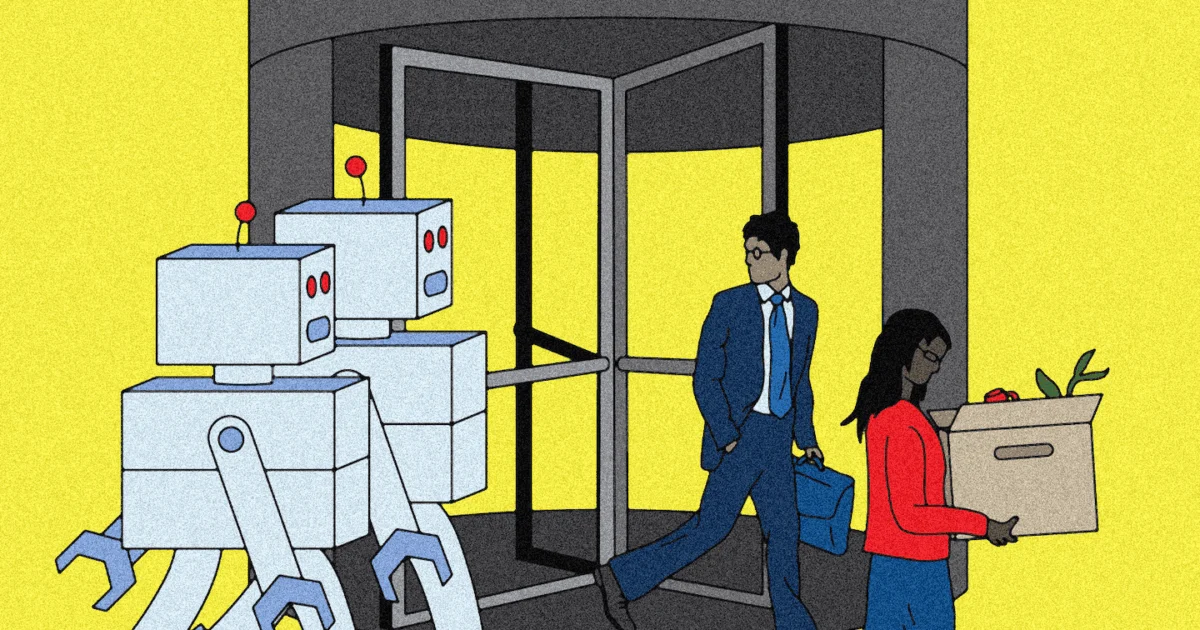
As the rapid integration of artificial intelligence across professional sectors moves from speculative discourse to economic reality, the traditional American social safety net is facing its most significant stress test since the Great Depression. Rebecca Dixon, CEO of the National Employment Law Project (NELP), has sounded a clarion call, arguing that current unemployment insurance (UI) systems are fundamentally ill-equipped to handle the unique, high-skill displacement likely to be wrought by the AI revolution.
For millions of American workers, the current unemployment framework is a relic of an industrial-era economy, characterized by stingy benefits and archaic eligibility requirements that exclude the very populations most vulnerable to the modern technological shift.
Main Facts: A System at Its Breaking Point
The core of the issue lies in the massive disparity in support provided by individual states. As Dixon points out, the variance in maximum weekly payments—ranging from a paltry $235 in Mississippi to $1,105 in Massachusetts—creates a "geography of poverty" for displaced workers. When a white-collar professional, accustomed to a middle-class salary, is suddenly displaced by automation, the current benefit caps in many states represent a catastrophic drop in income that can lead to home foreclosures and systemic financial instability.
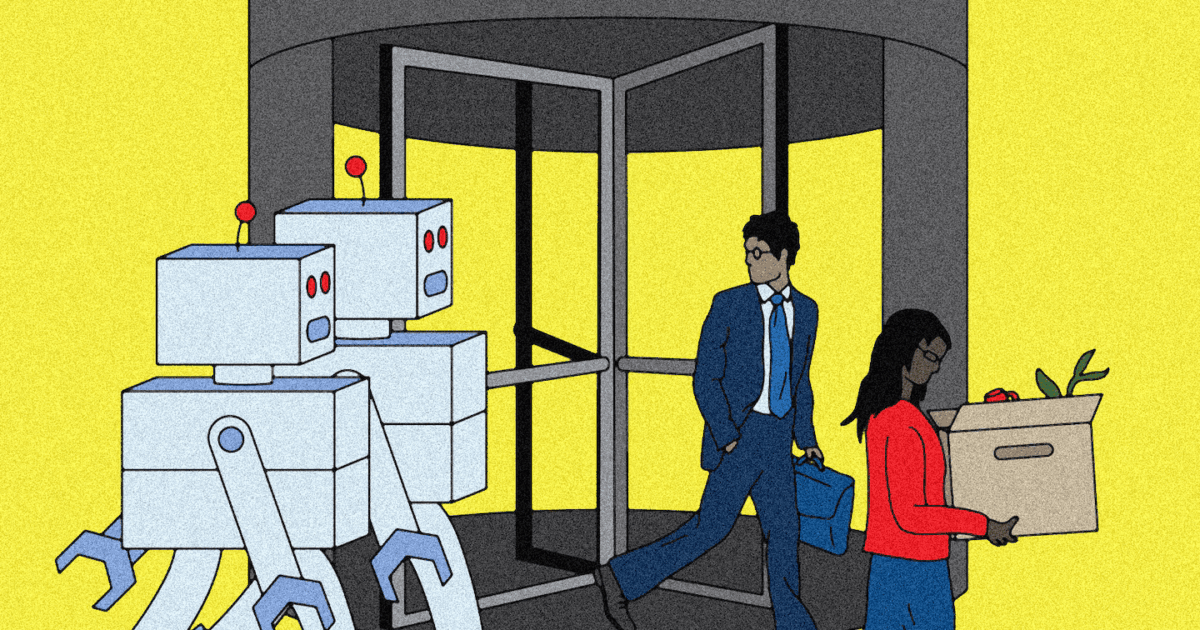
The NELP’s position is clear: the current system fails to account for the "white-collar crunch." Unlike previous waves of automation, which largely affected manual labor, AI is targeting cognitive tasks—coding, data analysis, legal research, and content creation. These workers have higher baseline expenses, and the current UI system provides no mechanism for the wage-replacement ratios necessary to keep such families afloat during a period of structural economic transition.
Chronology: The Evolution of Unemployment Policy
To understand the current crisis, one must look at the historical trajectory of U.S. labor protections:
- 1935: The Social Security Act: Established the framework for state-run unemployment insurance. It was designed primarily for blue-collar industrial workers in a steady, 40-hour-week labor market.
- 1970s-1990s: The Rise of the "Gig" Economy: As the labor market shifted toward part-time, temporary, and contract work, the UI system failed to adapt. Eligibility remained tied to traditional, full-time W-2 employment.
- 2008-2010: The Great Recession: Revealed the inadequacy of state trust funds, leading to the first major push for federal extensions of benefits.
- 2020: The COVID-19 Pandemic: Exposed the systemic exclusion of freelancers, gig workers, and part-time employees. The federal government was forced to create the Pandemic Unemployment Assistance (PUA) program, acknowledging that the standard system was effectively "broken" for the modern workforce.
- 2026: The AI Inflection Point: As AI displaces white-collar roles, economists are realizing that the "stopgap" measures used in 2020 are no longer enough. The current crisis is not a temporary pandemic; it is a permanent structural shift in labor demand.
Supporting Data: The Gaps in Coverage
The data suggests that the "traditional" employee—the only individual fully protected by state UI—is becoming a minority in the new economy.
- Eligibility Exclusion: A significant percentage of the workforce, including independent contractors, part-time workers, and recent college graduates who have yet to establish a sufficient "base period" of earnings, are systematically denied benefits.
- Replacement Rates: In states like Mississippi, the maximum weekly benefit is roughly 25% of the national median income for a full-time worker. This is widely considered insufficient to cover the basic costs of living, including health insurance premiums and housing.
- The "Cliff" Effect: Because UI benefits are often calculated based on recent quarterly earnings, those who work in volatile industries or who have experienced reduced hours due to AI-assisted efficiency gains often find themselves earning too little to qualify for meaningful support, yet too much to be classified as "unemployed."
Official Responses and Policy Proposals
Rebecca Dixon and the NELP are advocating for a fundamental modernization of the system. Their platform includes three pillars of reform:
1. Federal Minimum Standards
The NELP argues that the federal government must set a "floor" for weekly benefit amounts. Relying on state-level management has resulted in a "race to the bottom," where states minimize benefits to attract businesses, leaving workers to bear the brunt of the risk.
2. Expanding Eligibility
The definition of a "worker" must be expanded. Recent graduates entering an AI-saturated market, who may find their entry-level roles automated away before they even start, should be eligible for a baseline benefit. Furthermore, the exclusion of part-time and gig workers is described by labor experts as "an archaic holdover" that ignores the reality of the 21st-century labor market.
3. AI-Adjusted Retraining
The current UI system is passive; it provides money but not necessarily the tools to navigate a new economy. Dixon advocates for "UI 2.0," where benefits are tied to mandatory but high-quality AI-literacy training programs, effectively turning the safety net into an engine for workforce upskilling.
Implications: The Social Cost of Inaction
The failure to reform unemployment insurance in the age of AI carries profound social and political implications.
Economic Stagnation: If a large segment of the middle class is suddenly pushed into poverty due to AI-related displacement, consumer spending will plummet. The velocity of money will slow, potentially triggering a long-term recession that even the most productive AI systems cannot offset.

Political Instability: The history of economic displacement shows that when populations feel the social contract has been broken, political polarization intensifies. If AI is perceived as a tool that serves the interests of capital while discarding the interests of labor, the societal backlash could lead to protectionist policies that stifle innovation rather than managing it.
The "White-Collar" Awakening: Historically, UI was viewed as a blue-collar issue. Now, with software engineers, graphic designers, and paralegals facing displacement, the political constituency for UI reform has expanded. This may be the window of opportunity for structural change.
Conclusion: A New Social Contract
The transition to an AI-driven economy is inevitable, but the destruction of the middle class is not. As NELP and other advocacy groups emphasize, the goal of unemployment insurance should not merely be to provide a subsistence-level survival check. Instead, it should serve as a bridge to the future of work.
By raising the floor on benefit amounts, expanding eligibility to include the modern, flexible workforce, and integrating proactive retraining, the United States can transform a potential catastrophe into an orderly transition. The challenge for policymakers is to recognize that in an era of intelligent machines, the most valuable asset remains a secure, stable, and capable human workforce. If the government fails to protect that asset, the cost of the coming disruption will be measured not just in dollars, but in the long-term erosion of the American dream.
Further Reading and Related Initiatives
- A Vetted Solution to Potential AI Job Loss (August 31, 2026): An analysis of transition assistance programs.
- Four Seasoned Experts Now Leading NELP’s Policy Team (August 28, 2026): Profiles of the leadership driving the current legislative push.
- Building Good Governance through Labor Enforcement Partnerships (August 28, 2026): A report on how state agencies can better collaborate to protect workers in an era of rapid technological change.
