




By Dan Zukowski
Published July 9, 2026
The United States Department of Transportation (DOT) has unveiled its latest slate of infrastructure investments, announcing on July 7, 2026, that it has awarded grants to 127 critical projects nationwide. While the move represents a significant infusion of capital into the American landscape, the distribution of these funds has ignited a fresh debate regarding the federal government’s priorities in the transition toward a more sustainable and equitable transportation network.
According to the latest data, more than three-quarters of the total grant funding has been earmarked for road and bridge projects. In stark contrast, public transit initiatives secured less than 10% of the total award pool, a disparity that transit advocates argue undermines the nation’s climate goals and urban mobility strategies.
The Landscape of the Recent DOT Funding Cycle
The infrastructure grants, which were finalized following a rigorous review process, come at a time when the Biden-Harris administration—represented by Transportation Secretary Sean Duffy—is balancing the massive, multi-year demands of the Bipartisan Infrastructure Law with local political pressures to repair aging highways.
The sheer scale of demand for federal support remains staggering. The DOT revealed that it received nearly 1,200 eligible applications for this round of funding, with municipalities, states, and regional authorities requesting a combined total of over $14.5 billion. The application period, which saw intense lobbying from state departments of transportation and metropolitan planning organizations, officially closed on February 24, 2026.
The successful 127 projects represent a small fraction of the total applications, underscoring the fierce competition for federal dollars. While the DOT has attempted to diversify its portfolio, the heavy concentration on traditional highway expansion and bridge reinforcement indicates that asphalt and steel remain the primary focus of federal infrastructure spending.
Chronology: From Application to Allocation
The path to these recent awards was marked by a lengthy vetting process designed to identify projects with the highest impact on safety, economic development, and connectivity.
- February 24, 2026: The application window for the DOT infrastructure grant program closed. The department reported a record-breaking volume of interest, with requests totaling $14.5 billion—far exceeding the available appropriations for this cycle.
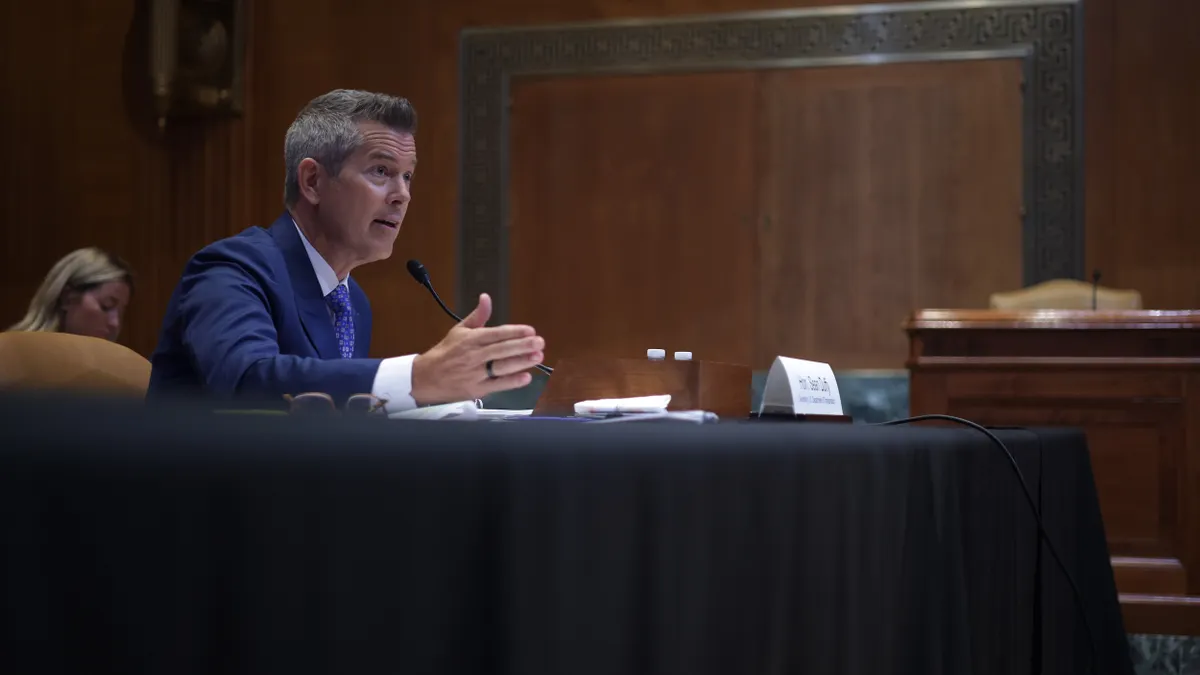
- March – May 2026: Technical review committees within the DOT evaluated the proposals. During this period, Secretary Sean Duffy testified before the Senate Subcommittee on Transportation, Housing and Urban Development, emphasizing the need to balance modernization with the maintenance of existing assets.
- May 19, 2026: Secretary Duffy’s testimony provided early signals that the department would prioritize projects that could demonstrate immediate safety improvements and supply chain resilience, which often favor highway projects over long-term transit investments.
- July 7, 2026: The Department of Transportation officially announced the 127 recipients of the grant funds.
- July 9, 2026: Initial public reaction surfaced as urban planners and environmental groups began to scrutinize the funding ratios, highlighting the significant gap between road funding and transit investment.
Supporting Data: A Breakdown of the Disparity
The raw numbers from the July 7 announcement tell a story of a transportation policy still rooted in a 20th-century framework. Of the total funding distributed, the allocation can be categorized as follows:
- Highways and Bridges: >75% of total award funds.
- Public Transit: <10% of total award funds.
- Aviation, Rail, and Trucking: The remaining ~15% of funds were distributed among aviation infrastructure (airport runways and terminals), freight and passenger rail improvements, and expanded truck parking facilities.
The data suggests that while the DOT has made strides in funding "complete streets" and multimodal hubs in previous cycles, the sheer cost of replacing massive, aging bridge spans and widening congested interstates has consumed the vast majority of the budget.
For transit proponents, the less-than-10% allocation is particularly stinging. Many transit agencies are currently facing a "fiscal cliff" as pandemic-era federal subsidies expire and ridership patterns shift toward hybrid work models. Without significant federal capital investment, many of these agencies face the prospect of service cuts, which could lead to a "death spiral" of declining ridership and diminished revenue.
Official Responses and Political Context
The DOT’s messaging emphasizes the necessity of maintaining the "backbone" of American commerce. In a statement released alongside the awards, the department highlighted the importance of truck parking and freight rail, citing the need to ensure that the nation’s supply chain remains resilient against future shocks.
Secretary Sean Duffy, during his May testimony, defended the department’s approach, noting that federal infrastructure policy must be practical. "We are tasked with ensuring that our nation’s goods move efficiently, and that the daily commute for millions of Americans remains safe," Duffy noted. "Many of our bridges are reaching the end of their design life, and the cost of inaction is far higher than the cost of reconstruction."

However, critics in the urban planning community argue that this "practicality" ignores the long-term environmental consequences. "By continuing to pour billions into highway projects, we are effectively incentivizing sprawl and locking in high carbon emissions for decades to come," says Dr. Elena Vance, a senior fellow at the Institute for Sustainable Urbanism. "When you prioritize highways over transit at an 8-to-1 ratio, you are choosing a path of increased congestion rather than one of efficient mobility."
Implications: The Future of Urban Mobility
The implications of this funding distribution are profound for cities and suburban regions alike.
1. The Climate Challenge
The U.S. has committed to significant reductions in greenhouse gas emissions by 2030. Transportation is the largest sector for domestic emissions. By favoring highway projects, which often lead to induced demand—where new capacity simply encourages more driving—the DOT risks missing its climate targets.
2. Economic Competitiveness
Cities that rely on robust transit systems to move their workforce are now at a disadvantage. If federal funds continue to flow toward private automobile infrastructure, municipalities may be forced to raise local taxes to support their transit systems, potentially creating a divide between wealthy, transit-capable cities and those that struggle to maintain basic bus service.
3. The "Truck Parking" Pivot
One notable element of this cycle was the emphasis on truck parking. As freight volumes increase, the lack of safe parking for long-haul drivers has become a significant safety issue. While the inclusion of these projects is a victory for the logistics industry, it further shrinks the pool of money available for urban bus rapid transit (BRT) and light rail projects.
4. Regional Inequities
There is growing concern that the current application process favors states with large, well-funded departments of transportation that have the capacity to write complex grant proposals. Smaller transit agencies and rural areas with limited administrative staff may be losing out, further exacerbating the urban-rural divide in infrastructure quality.

Conclusion: A Turning Point?
As the 2026 fiscal year progresses, the conversation surrounding the DOT’s funding priorities is likely to intensify. With thousands of applicants still waiting for funding and many transit agencies hovering near insolvency, the pressure on the federal government to recalibrate its approach will only grow.
While the current round of funding provides much-needed relief for aging bridges and critical interstate arteries, it has also highlighted a significant strategic misalignment between current federal investment patterns and the desired future of American mobility. For policymakers, the challenge ahead is to bridge the gap between maintaining the status quo of a highway-dominated system and investing in the multimodal, transit-oriented future that many urban centers are striving to achieve.
Moving forward, the effectiveness of these 127 projects will be measured not just by the safety of the bridges or the smoothness of the new pavement, but by the extent to which they provide equitable access to economic opportunity for all Americans. For now, however, the heavy reliance on highway funding suggests that the shift toward a transit-first infrastructure policy remains an uphill battle.
