



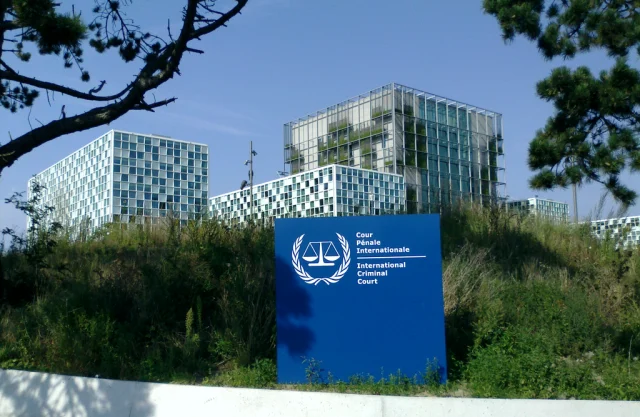
In a landmark legal challenge that strikes at the intersection of international law and domestic civil liberties, two prominent U.S.-based advocacy organizations have filed a federal lawsuit against the Trump administration. The plaintiffs—Democracy for the Arab World Now (DAWN) and the Taxpayer Alliance Against Genocide (TAAG)—allege that sweeping economic sanctions imposed on officials of the International Criminal Court (ICC) and the United Nations constitute an unconstitutional overreach that stifles First Amendment rights and violates statutory limitations on executive power.
The litigation, filed in a Manhattan federal court, centers on an Executive Order (EO) issued in early 2025. This order, which authorizes harsh economic penalties against international jurists and human rights experts, has effectively created a "chilling effect" on American citizens, according to the plaintiffs. By criminalizing interaction with sanctioned individuals, the administration is accused of forcing advocacy groups into a state of self-censorship, effectively barring them from participating in the global discourse on war crimes and human rights accountability.
The Legal Core: First Amendment and Statutory Limits
The crux of the lawsuit lies in the ambiguity of the administration’s mandate. The Executive Order prohibits U.S. persons from providing "any service" to individuals sanctioned for their involvement in investigations into alleged U.S. war crimes in Afghanistan or the issuance of arrest warrants for high-level officials allied with the United States, including Israeli Prime Minister Benjamin Netanyahu.
The "Chilling Effect" and Self-Censorship
DAWN and TAAG argue that the term "service" is dangerously vague. In the context of international human rights advocacy, a "service" could be interpreted by the administration to include sharing research, coordinating witness testimony, or engaging in legal briefings with ICC prosecutors and UN Special Rapporteurs. Because the penalty for violating these sanctions includes potential criminal prosecution and civil asset forfeiture, the plaintiffs contend they have been forced to cease vital collaborative work.
Challenging Executive Overreach
Beyond the First Amendment claims, the lawsuit challenges the administration’s invocation of the International Emergency Economic Powers Act (IEEPA). The plaintiffs argue that the president has fundamentally misused this act. Under the Berman Amendments to the IEEPA, the executive branch is explicitly prohibited from using economic sanctions to restrict the flow of information or communications. The lawsuit asserts that by targeting those involved in the investigation and documentation of human rights abuses, the Trump administration has exceeded its statutory authority, effectively weaponizing economic policy to shield foreign officials from international scrutiny.
A Chronology of Escalating Tensions
The current legal confrontation is the culmination of a rapidly deteriorating relationship between Washington and international judicial bodies.
- February 2025: President Trump issues an Executive Order authorizing sanctions against ICC prosecutors and judges, specifically targeting investigations into U.S. military conduct in Afghanistan and the actions of key U.S. allies in the Middle East.
- May 2026: A federal judge issues a temporary injunction blocking sanctions against UN Special Rapporteur Francesca Albanese, citing a likely violation of her First Amendment rights. The administration promptly ignores the spirit of the ruling, adding Albanese back to the sanctions list shortly thereafter.
- June 2026: ICC judges themselves initiate legal action against the administration, asserting that the sanctions constitute an unlawful attempt to intimidate the judiciary of an international court.
- July 2026: Secretary of State Marco Rubio announces a formal diplomatic campaign aimed at dismantling the ICC "brick by brick," signaling a total departure from international cooperation in favor of a unilateralist foreign policy.
- Late July 2026: DAWN and TAAG file their complaint in Manhattan, marking the most recent expansion of the judicial battleground.
Supporting Data: The Impact of the Sanctions
The sanctions have targeted not only state actors but also independent voices essential to the verification of international humanitarian law. Among those sanctioned is Francesca Albanese, the UN Special Rapporteur on the situation of human rights in the Palestinian territories. Her work, which relies heavily on documentation provided by NGOs like DAWN, has been a central pillar in international reporting on the ongoing conflict.
The financial and operational impact on these organizations has been severe. The plaintiffs note that their ability to publish reports, conduct public advocacy, and communicate with the international community has been crippled by the threat of being labeled a "material supporter" of a sanctioned entity. For many human rights defenders, the "service" they provide to the ICC—such as submitting amicus briefs or facilitating communication with survivors—is now a high-risk activity that could lead to federal investigation.
Official Responses and Rhetoric
The administration has remained defiant, framing the sanctions as a necessary measure to protect U.S. sovereignty and national security. Secretary of State Marco Rubio has characterized the ICC’s actions as an "illegitimate assault" on the rights of democratic nations to defend themselves.
In a recent op-ed, Rubio outlined the administration’s strategy: "We will use every tool at our disposal to ensure that the ICC does not interfere with the security of the United States or our allies. We are dismantling this institution because it has abandoned its mission and become a political weapon."
The plaintiffs, however, view this rhetoric as a dangerous erosion of the post-WWII international order. Omar Shakir, Executive Director of DAWN, underscored the gravity of the situation in a recent press statement: "The Trump administration is using the blunt instrument of economic sanctions not only to punish human rights defenders but to police the political expression of millions of Americans. The government is violating the constitutional rights of American citizens in order to shield officials of a foreign government who have committed a genocide."
Raed Jarrar, DAWN’s advocacy director, added: "When the world’s most powerful country aims to dismantle the world’s only permanent international court, it sends the message that the powerful are above the law. It is not the ICC that Rubio is dismantling—but the rules-based international order that grew out of the ashes of World War II."
Broader Implications for Global Justice
The implications of this lawsuit extend far beyond the specific individuals named in the complaint. If the court rules in favor of the Trump administration, it would set a precedent that the executive branch has near-total discretion to use economic sanctions to silence domestic advocacy groups that support international institutions. This could lead to a permanent fracturing of the relationship between the U.S. and the international legal community.
Furthermore, the case raises profound questions about the nature of the First Amendment in a globalized era. Does the right to petition the government for a redress of grievances include the right to petition an international court? If the U.S. government can criminalize collaboration with international judges, it effectively insulates itself from any form of external legal accountability.
Legal scholars observing the case note that the judiciary now faces a difficult balancing act. The courts must weigh the president’s broad latitude in foreign policy and national security against the fundamental, non-negotiable protections of the First Amendment. As the legal filings pile up—from the ICC judges themselves, to the family of the sanctioned UN expert, and now to these advocacy organizations—the federal judiciary is being forced to define the limits of executive power in an age of intense geopolitical volatility.
As the case moves forward, the eyes of the international community remain fixed on Manhattan. The outcome will likely serve as a definitive statement on whether the United States will remain a participant in the international legal order or whether it will continue to operate under a framework of "exceptionalism," where domestic political goals supersede the pursuit of international justice.
