





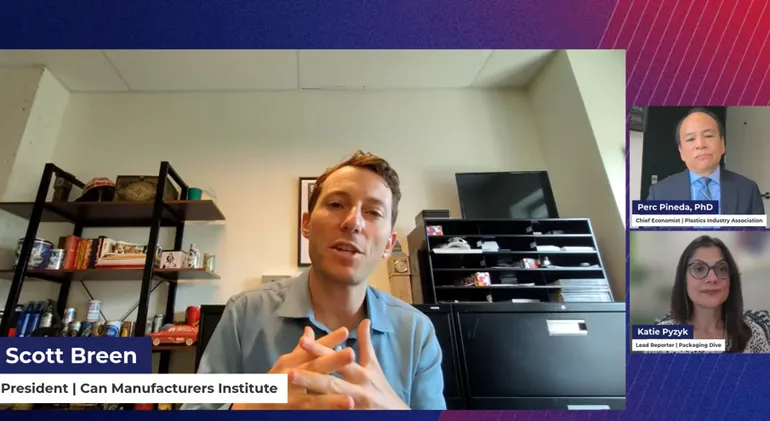
Editor’s note: This report synthesizes key insights from the "Supply Chain Outlook: Trends and Risks to Watch in 2026" virtual event, hosted by Packaging Dive, Supply Chain Dive, Manufacturing Dive, and Trucking Dive.
The global manufacturing landscape is currently grappling with a trifecta of destabilizing forces: aggressive protectionist trade policies, volatile geopolitical conflict in the Middle East, and the pending renegotiation of the foundational United States-Mexico-Canada Agreement (USMCA). For the metals and plastics industries, these factors have converged to create an environment of extreme price sensitivity, supply chain fragility, and long-term planning paralysis.
As corporate leaders look toward the remainder of 2026, the consensus among industry experts is that the "business as usual" model of procurement and trade is effectively obsolete. Instead, firms must pivot toward hyper-localized supply chain strategies and intensive government advocacy to buffer against the systemic shocks currently rippling through global markets.
The Metal Markets: The High Cost of Section 232 Protectionism
For the metal packaging sector, the primary antagonist remains the Section 232 tariff regime. Originally implemented in 2018, these tariffs on steel and aluminum imports were escalated from 25% to 50% in 2025, creating what industry representatives describe as a permanent, systemic inflationary pressure on the can-making supply chain.
Chronology of Tariff Escalation and Market Response
The journey of these tariffs has been marked by a series of cascading consequences:
- 2018: The initial implementation of Section 232 tariffs aimed to bolster domestic production.
- 2025: The escalation to 50% created immediate, unavoidable cost burdens for U.S. manufacturers.
- Late 2025 – Early 2026: Can manufacturers, already operating on thin margins, began exhausting their existing stockpiles and were forced to seek alternative sourcing outside of traditional North American trade corridors.
- Mid-2026: The market witnessed a significant surge in reliance on Persian Gulf aluminum suppliers to compensate for the diversion of Canadian product toward European markets.
Scott Breen, president of the Can Manufacturers Institute (CMI), notes that the unintended consequence of these tariffs is a shift in the global geography of supply. "While aluminum beverage cans are predominantly made from recycled content, the need for primary aluminum is unavoidable. When tariffs push Canadian suppliers to favor the European market, U.S. producers are forced to source from the Persian Gulf, a region currently grappling with intense geopolitical instability."
Supporting Data on Metal Inflation
The impact of these policies is not merely theoretical; it is visible in the Consumer Price Index (CPI). Canned food prices have outpaced those of frozen and fresh alternatives, serving as a bellwether for the "tariff tax" being levied on the American consumer.
- Beverage Prices: Up 2% to 3% since mid-2025.
- Canned Fruits and Vegetables: Up approximately 5% during the same period.
- Import Reliance: U.S. producers import nearly 80% of their tinplate steel, yet domestic investment in tinplate production remains stagnant. Because tinplate constitutes only 1% of total U.S. steel output, it is viewed as a "niche" product, leaving manufacturers with little domestic relief and high exposure to international price volatility.
Plastics in Limbo: The Uncertainty Trap
While the metal industry deals with the blunt force of tariffs, the plastics sector is navigating a more insidious challenge: the "uncertainty trap." According to Perc Pineda, chief economist at the Plastics Industry Association, the situation for plastics is characterized by uneven, sporadic price fluctuations rather than the acute spikes seen in the metals market.
The complexity of the plastics supply chain—which spans from upstream petrochemicals to downstream packaging—means that trade policy impacts are felt differently at every stage. The persistence of Section 301 tariffs on Chinese imports has already caused a noticeable decline in specific packaging segments, such as polyethylene sacks and bags, which saw a 7.2% drop in import volume in the first five months of 2026.
However, the real concern for manufacturers is the lack of policy clarity. With equipment investments requiring long-term capital commitment, the temporary nature of tariff exemptions (currently set to expire in December 2027) forces companies into a "wait-and-see" mode. This hesitation hinders the modernization of domestic manufacturing facilities, potentially ceding the long-term competitive advantage to emerging industrial hubs in Asia.
Geopolitical Instability: The Iran Conflict and Energy Links
The conflict in the Middle East has served as a masterclass in how localized war can trigger global supply chain contagion. In March 2026, the targeting of major aluminum production facilities in the Gulf region sent shockwaves through global commodities markets.
The Mechanism of Disruption
- Direct Supply Impact: The physical damage to Gulf production facilities tightened global supply, leading to a sharp, sudden increase in aluminum and steel prices.
- Market Sentiment: The subsequent news of potential peace talks led to a brief, steep price decline, illustrating the market’s hyper-reactivity to diplomatic headlines.
- The "Energy Tax": For the plastics industry, the conflict acts through a different channel: the price of crude oil and natural gas. While U.S. resin production benefits from domestic natural gas abundance, the global nature of resin pricing means that any upward pressure on energy costs creates an immediate, upward drag on domestic resin prices, which rose by 6% in April and 14% in May 2026.
Official Responses and Advocacy Strategies
The industry’s response to these challenges is taking the form of high-level lobbying and a push for structural trade reforms. The CMI is currently spearheading a campaign for "trade relief," advocating for a two-pronged approach:
- Immediate Tariff Relief: Directing government attention toward lowering tariffs on primary aluminum and tin-plated steel to reduce the cost burden on essential food and beverage packaging.
- Strategic Reciprocity: Proposing equivalent tariffs on imported, pre-filled food cans. The current system allows foreign food producers to bypass the tariff costs applied to raw steel/aluminum, creating an uneven playing field for domestic packagers.
Implications for the Future: The USMCA Pivot
The decision by the U.S. government to decline the renewal of the USMCA in its current form represents a watershed moment for North American trade. While the immediate reaction has been one of market anxiety, industry experts are beginning to frame this as an opportunity to modernize trade relationships.
Strategic Considerations for the New Agreement:
- Consolidating North American Strength: There is a growing consensus that the U.S., Canada, and Mexico should leverage a new agreement to form a more unified front against industrial overcapacity from China.
- Global Competitive Benchmarking: Industry leaders are increasingly looking at the newly formed Asian trading blocs—which account for 30% of global trade—as the new standard for competitiveness. To remain relevant, a successor to the USMCA must be more than a simple extension; it must be an agile, forward-looking pact that facilitates the flow of raw materials while protecting the manufacturing base.
As we look toward 2027 and beyond, the message is clear: the era of predictable trade is over. Whether through the lens of metal packaging or plastic resin production, the key to survival in the current climate is the ability to interpret geopolitical signals, diversify sourcing strategies, and aggressively pursue trade policies that protect the domestic industrial base from the volatile tides of global conflict and protectionist policy.
For manufacturers, the path forward requires not just technical expertise in production, but a sophisticated understanding of the intersection between international diplomacy and the bottom line.
