



In the rapidly evolving landscape of digital travel, a quiet revolution is underway. The traditional search engine, once the undisputed gatekeeper of the traveler’s journey, is being supplanted by AI-driven assistants. For hotel giants, the stakes are existential: if your property cannot be “read” and understood by a large language model (LLM), it effectively ceases to exist in the new digital marketplace.
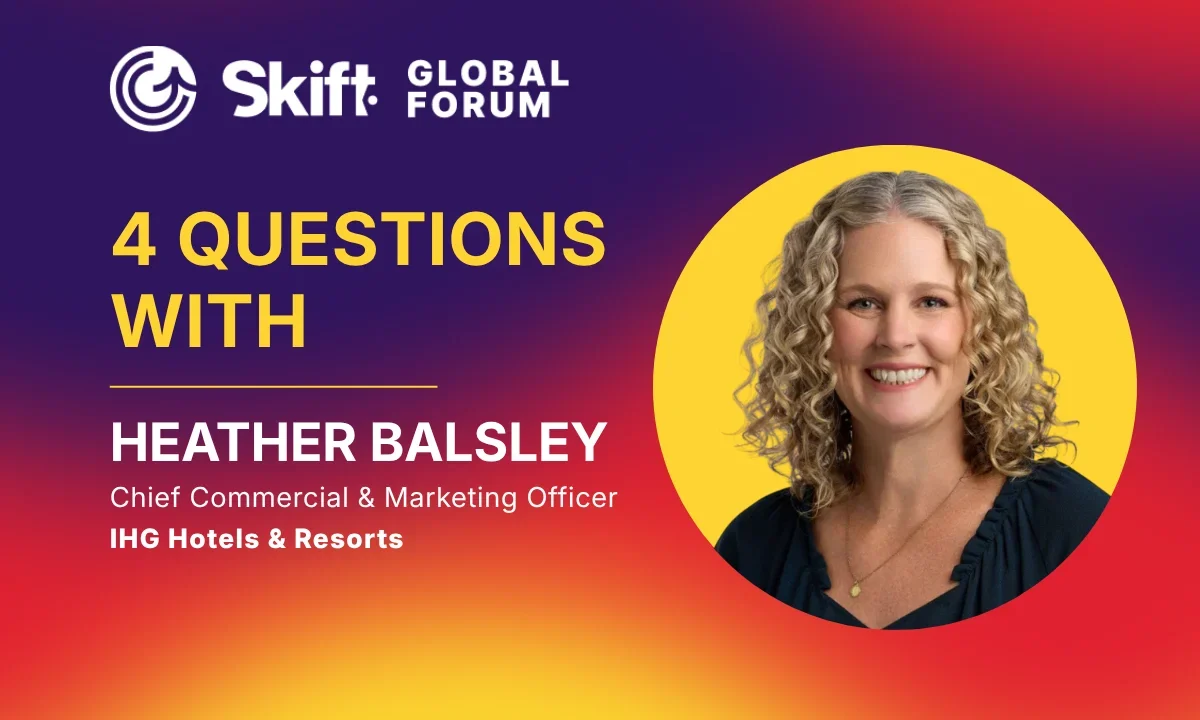
Heather Balsley, Chief Commercial & Marketing Officer at IHG Hotels & Resorts, is leading the charge to ensure that the hotel group remains not just visible, but indispensable, in this new era. Ahead of her appearance at the Skift Global Forum, Balsley sat down to discuss the delicate balance between technical optimization and the immutable value of the direct guest relationship.
The New Front Door: Why Legibility is the New Currency
For decades, hotel distribution was about "booking engines" and "GDS connectivity." Today, it is about "semantic legibility." When a traveler asks an AI, “Find me a quiet, boutique hotel in downtown Chicago with high-speed internet and proximity to public transit,” the AI does not browse the web in the traditional sense. It draws upon vast, ingested datasets to synthesize an answer.
If a hotel’s digital content is shallow—consisting of generic stock photos and vague descriptions—the AI will likely bypass it in favor of a property with rich, structured, and descriptive data.
“AI tools can only be as helpful as the content they’re drawing from,” Balsley explains. “Travelers are asking AI more nuanced questions. That means hotel content needs to go beyond basic descriptions and amenities. It needs to be rich, accurate, and relevant so AI can understand what makes a property unique and connect it with the right guest.”
To meet this challenge, IHG is preparing to launch a new, comprehensive content platform later this year. This is not merely a website update; it is a fundamental re-architecture of how the company structures, manages, and syndicates its property data. By creating a more robust, machine-readable infrastructure, IHG is effectively “training” the external AI models to recognize the value proposition of their portfolio.
Chronology of a Digital Pivot
The shift toward AI-readiness did not happen overnight. To understand IHG’s current trajectory, one must look at the evolution of their digital strategy over the last decade:
- 2015–2018: The Mobile Consolidation. IHG focused on unifying the mobile experience. As booking patterns shifted away from desktop, the priority was minimizing friction within the proprietary app environment.
- 2019–2022: Loyalty Ecosystem Expansion. The company doubled down on the IHG One Rewards program, realizing that in a fragmented digital landscape, the loyalty program was the strongest anchor for direct bookings.
- 2023–2024: The Generative AI Awakening. With the explosion of LLMs, IHG identified that the "search" paradigm was shifting from keywords to natural language. The company began auditing its entire content library to ensure it could withstand the scrutiny of AI reasoning.
- Late 2026 and Beyond: The Predictive Content Era. The upcoming platform launch represents the shift from "static information" to "dynamic, AI-compatible content delivery," where the data is structured to be instantly retrieved and utilized by third-party AI assistants.
Supporting Data: The Cost of Invisibility
While specific internal metrics remain proprietary, industry-wide data suggests the necessity of this pivot. Research indicates that over 60% of modern travelers now use some form of AI or automated assistant during their inspiration or planning phase.
Furthermore, the "cost of acquisition" for travelers via traditional paid search has risen by nearly 20% year-over-year. By optimizing content for AI—often referred to as AIO (Artificial Intelligence Optimization)—brands can theoretically capture a larger share of the "unbranded" search market. When a user asks an AI for a recommendation, the brand that provides the most precise, data-rich answer is the one that captures the lead. For a group as large as IHG, capturing even a 1% increase in organic AI-driven traffic represents millions of dollars in potential revenue.
The Philosophy of the "Direct Relationship"
Despite the massive investment in technical infrastructure, Balsley maintains a philosophical boundary: the AI may lead the guest to the door, but it cannot own the experience inside the room.
“I think it’s equally important to recognize that new discovery channels don’t replace direct relationships with travelers,” Balsley notes. She draws a parallel to the rise of Online Travel Agencies (OTAs) and mobile booking apps in the early 2000s. While these platforms were initially viewed as existential threats to hotel brands, the industry ultimately adapted. The companies that thrived were those that utilized these channels for discovery but funneled the long-term relationship back into their own loyalty ecosystems.
“AI may transform how guests find us, but brands that consistently deliver meaningful experiences and strong relationships will continue to earn their business in the long run,” she adds.
Implications for the Industry
The strategy outlined by Balsley suggests several key implications for the broader hospitality sector:
1. The Death of Generic Marketing
The days of "one-size-fits-all" hotel descriptions are numbered. Because AI models are designed to match specific user intent with specific property attributes, hotels must move toward hyper-specialized content. A property that is "great for families" needs to clearly communicate its specific child-friendly amenities in a way that is semantically tagged for machine consumption.
2. The Return of Data Governance
Marketing teams are increasingly becoming data management teams. The ability to manage metadata, schema markup, and high-quality descriptive content is becoming just as critical as traditional advertising spend.
3. The "Channel Agnostic" Future
IHG’s approach highlights a move toward being "present everywhere." Rather than trying to force travelers into a specific portal, IHG is focusing on the "omnipresence" of its brand data. If the AI is on a social platform, a voice assistant, or a dedicated travel app, IHG wants its "content signature" to be there, ready to be synthesized.
The Test of Value: A Simple Rule
When asked how she filters through the noise of technological disruption, Balsley offers a refreshingly simple litmus test:
- Does it create a better experience for the guest?
- Does it deliver tangible value for the hotel owner?
“Technology will continue to evolve, but those fundamentals don’t change,” Balsley says. “If something helps travelers make more confident decisions, reduces friction, strengthens loyalty, or improves hotel performance, it’s worth pursuing. If it doesn’t, it’s probably a distraction.”
As the industry gathers at the Skift Global Forum in New York, the conversation will undoubtedly revolve around the speed of innovation. However, Balsley’s perspective serves as a grounded reminder: in a world increasingly run by algorithms, the most successful brands will be the ones that use technology to enhance, rather than replace, the human connection.
IHG’s strategy is a recognition of the new reality—that the future of hospitality is as much about code and syntax as it is about pillows and service. By making themselves "legible" to the machines, they are ensuring that when the AI provides an answer, the name at the top of the list is IHG.
