




The promising dawn of the all-electric era in the United States has hit a formidable regulatory, geopolitical, and economic wall. In a series of rapid-fire decisions spanning the first half of 2026, some of the world’s largest automotive brands have systematically dismantled, delayed, or outright canceled their U.S. electric vehicle (EV) portfolios.
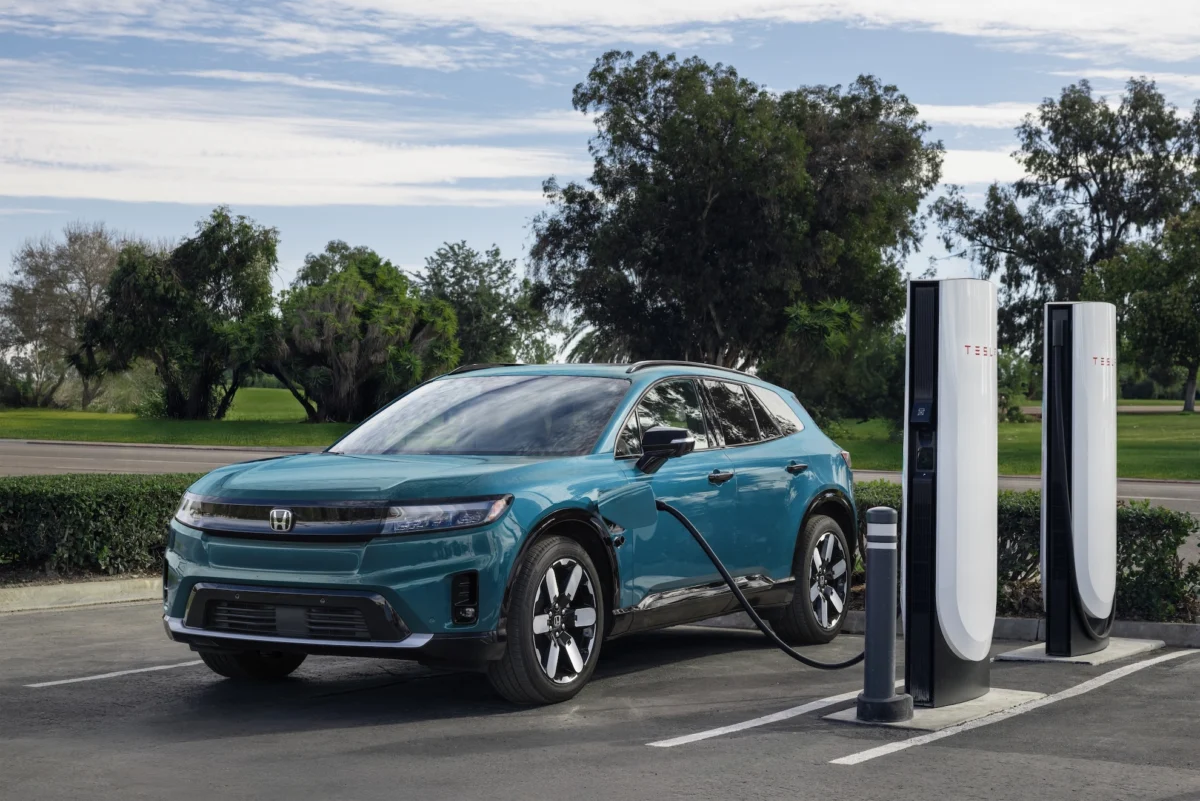
The most recent casualty is the Honda Prologue—the Japanese automaker’s sole remaining all-electric offering in the U.S. market. Honda’s quiet confirmation to TechCrunch that the Prologue is officially dead marks the end of an era and serves as a stark emblem of a much larger trend.
What was once envisioned as a rapid, inevitable transition to zero-emission passenger vehicles has evolved into a highly fragmented, "K-shaped" global market. While electrification continues at a breakneck pace across Europe and China, the United States is increasingly left behind, characterized by canceled vehicle lines, resurrected internal combustion platforms, and protectionist regulatory hurdles.
Main Facts: The De-Electrification of the American Showroom
The cancellation of the Honda Prologue is not an isolated corporate stumble; it is the climax of a coordinated retreat by global automakers from the U.S. electric market. Over the last nine months, brands ranging from pioneering EV giant Tesla to legacy players like Volkswagen, Volvo, and Nissan have aggressively scaled back their American EV programs.

Several key factors have driven this industry-wide pivot:
- The Expiration of Federal Subsidies: The termination of the $7,500 federal EV tax credit in the fall of 2025 severely dampened consumer demand, exposing the fragility of a market heavily reliant on government incentives.
- Geopolitical Tariffs and Supply Chain Realignment: Punitive tariffs on imported batteries and vehicles, alongside strict domestic manufacturing mandates, have made foreign-produced EVs financially unviable in the U.S.
- National Security Interventions: Strict bans on Chinese-connected vehicle technology have forced brands with Chinese corporate ties, most notably Polestar, to abandon the U.S. market entirely.
- Corporate Strategic Realignments: Major automakers are abandoning low-margin or slow-selling EV models to reinvest capital into highly profitable internal combustion engine (ICE) vehicles, hybrid powertrains, or long-term autonomous and artificial intelligence programs.
The result is an American consumer landscape with fewer, more expensive electric options, contrasting sharply with international markets where EV adoption continues to climb.
Chronology of the EV Retreat (Late 2025 – Mid-2026)
The current retrenchment did not happen overnight. It is the result of a domino effect of policy shifts and market realities that accelerated rapidly over a ten-month period:
[Fall 2025] ──────────────── [Jan 2026] ─────────────── [March 2026] ─────────────── [April 2026] ─────────────── [June 2026] ─────────────── [July 2026]
Federal tax credit ends;     Tesla axes Model S/X;      Honda cancels 0 Series;     VW stops ID.4 in TN;        Polestar banned from US    Honda confirms death
Nissan drops MY2026 Ariya    shifts to AI & robotics    Volvo pulls EX30;           shifts to gas SUVs          over Chinese tech rules    of the Prologue
                                                        Hyundai drops Ioniq 6
Fall 2025: The Subsidy Cliff and Early Warning Signs
The collapse of the $7,500 federal tax credit in late 2025 sent shockwaves through dealership networks. Simultaneously, Nissan quietly decided not to produce a 2026 model year of its Ariya SUV for the U.S. market. The Ariya, which was Nissan’s first major all-electric vehicle since the pioneering Leaf, struggled to find its footing without federal subsidy support.

January 2026: Tesla Abandons the Pioneers
Tesla, the undisputed architect of the modern EV market, announced it would permanently cease production of its flagship luxury vehicles, the Model S sedan and Model X SUV. The decision marked a tectonic shift for the company, signaling a transition away from niche luxury passenger vehicles toward high-volume consumer models (Model 3 and Model Y) and speculative investments in robotics and autonomous "Cybercabs."
March 2026: The Great Japanese and Scandinavian Pullback
March 2026 saw a flurry of cancellations. Sony and Honda’s joint venture, Sony Honda Mobility, officially abandoned its highly publicized "Afeela" EV project, terminating plans for two upcoming models. Just weeks prior, Honda canceled three of its own planned U.S. EVs, including the highly anticipated mid-sized 0 Series SUV and an Acura RDX EV variant.
During the same month, Hyundai announced it would stop importing the standard Ioniq 6 sedan from South Korea due to tariff pressures, and Volvo pulled its highly anticipated, affordable subcompact EX30 and EX30 Cross Country models from the U.S. market.
April 2026: Volkswagen Reverts to Gas
Volkswagen announced it would halt production of its ID.4 electric SUV at its Chattanooga, Tennessee assembly plant. The factory, which had been heavily retrofitted for electric vehicle production, was redirected toward high-volume, gas-powered models like the Atlas SUV.

June 2026: Geopolitics Claims Polestar
The U.S. Department of Commerce officially barred Swedish EV maker Polestar—owned by China’s Geely—from selling its vehicles in the U.S. due to national security regulations targeting Chinese-connected vehicle software and hardware.
July 2026: The End of the Prologue
CarBuzz and TechCrunch confirmed that Honda had officially terminated the Prologue program, leaving the automaker without a single all-electric vehicle in its active U.S. lineup.
Supporting Data: Market Realities and Financial Headwinds
The decisions of these automotive executives are deeply rooted in hard sales data and macroeconomic indicators.
According to data published by Kelley Blue Book and Cox Automotive, American consumers purchased 247,226 EVs in the second quarter of 2026. While this represented a modest sequential growth from the first quarter of the year, it accounted for just 5.8% of the total U.S. automotive market.

| Period | EV Sales (U.S.) | Market Share | YoY Growth/Decline | Key Policy Context |
|---|---|---|---|---|
| Q4 2024 | ~280,000 | ~7.2% | +15.0% | Active $7,500 Federal Tax Credit |
| Q4 2025 | ~179,200 | ~4.8% | -36.0% | Post-Tax Credit Expiration |
| Q2 2026 | 247,226 | 5.8% | -20.5% | New Tariffs & Connected Tech Bans |
The data highlights a market in a slow, painful recovery, but one that remains far below its historical peaks. The 20.5% year-over-year decline in Q2 2026 sales underscores the devastating impact of the tax credit’s expiration.
For individual models, the financial calculations became unsustainable:
- The Honda Prologue: Despite a solid start—selling 33,000 units in 2024 and 39,000 in 2025—sales plummeted once the vehicle lost its tax-credit eligibility. Built on General Motors’ Ultium platform at GM’s Ramos Assembly Plant in Mexico, the Prologue’s logistics and licensing costs could no longer be justified against falling demand.
- The Hyundai Ioniq 6: Because it is manufactured in South Korea, the vehicle faced a steep tariff disadvantage compared to domestic models. Hyundai chose to protect its margins by focusing exclusively on the Georgia-assembled Ioniq 5 and Ioniq 9, relegating the Ioniq 6 to a low-volume, high-end "N" performance import.
Official Responses: Corporate Rationales and Regulatory Realities
Automakers have defended their decisions by pointing to an unsupportive regulatory landscape and shifting consumer demand.
Honda’s Strategic Overhaul
In confirming the end of the Prologue, Honda spokespeople emphasized a desire to focus on hybrid platforms, which have seen a massive resurgence in the U.S. Regarding the cancellation of the futuristic 0 Series and Acura EV models, Honda executives directly blamed rising U.S. tariffs and the influx of low-cost Chinese competition in global markets, which forced a consolidation of their capital.

Volkswagen’s Pivot to Proven Profitability
Volkswagen Group of America framed its decision to suspend ID.4 assembly in Chattanooga as a pragmatic response to consumer preference. A spokesperson stated:
"Our focus must remain on delivering vehicles that align with current market demand. By shifting Chattanooga’s capacity back to high-volume, gas-powered SUVs like the Atlas, we ensure the long-term viability of our U.S. operations."
Tesla’s Pivot to AI and Robotics
Elon Musk and Tesla executives have shrugged off the end of the Model S and Model X, describing them as legacy platforms. During recent investor calls, Tesla made it clear that its future capital expenditure is dedicated to autonomy. The dismantling of the Fremont assembly lines to make room for "Optimus" humanoid robot production confirms that Tesla no longer views itself primarily as a traditional passenger car company.
Polestar’s Geopolitical Eviction
Polestar’s leadership expressed deep disappointment over the Department of Commerce’s refusal to grant them a connected-vehicle waiver. While sibling company Volvo (also owned by Geely) received authorization, Polestar was left without a path forward. In an official statement, the company noted:

"While we are forced to cease new sales of the Polestar 3 and Polestar 4 in the United States, we remain committed to supporting our existing American customers through our service network."
Strategic Implications: The Emergence of a "K-Shaped" Global Market
The retrenchment of EVs in the United States has profound implications for the global automotive industry, climate policy, and technological development.
The Transatlantic and Transpacific Divergence
The global EV market is undergoing a "K-shaped" split. In Europe and China, regulatory mandates, robust public charging infrastructure, and government subsidies continue to drive high rates of EV adoption. In contrast, the United States is carving out a protectionist path, increasingly relying on hybrid vehicles and traditional internal combustion engines.
This divergence risks turning the U.S. into a technological "island." Global automakers may begin designing vehicles primarily for non-U.S. markets, leaving American consumers with older platforms or modified hybrid drivetrains that do not reflect global engineering standards.

The Rise of the Software-Defined Vehicle Ban
The exclusion of Polestar highlights a new era of geopolitical trade barriers: national security bans on "connected vehicle" technology. As modern cars become essentially computers on wheels, governments are increasingly viewing software, sensors, and cameras as potential espionage risks. This precedent could severely restrict global supply chains, making it nearly impossible for international joint ventures to navigate the regulatory requirements of the U.S. market.
The Hybrid Renaissance
With pure battery electric vehicles (BEVs) facing headwinds, the clear winner of the current transition is the hybrid. Companies like Toyota, which were once criticized for their slow adoption of pure EVs, now look highly prescient. Consumers who are hesitant to adopt pure electric cars due to patchy charging infrastructure and high costs are flocking to plug-in hybrids (PHEVs) and traditional hybrids.
Ultimately, the retreat of models like the Honda Prologue, the VW ID.4, and the Volvo EX30 suggests that the road to a zero-emission future in the United States will be much longer, more volatile, and far more reliant on fossil-fuel stopgaps than anyone predicted just a few years ago.
