
The global mobility landscape is undergoing a profound structural realignment. As autonomous vehicle (AV) developers transition from experimental testing to commercial deployment, a high-stakes legislative war has broken out between ride-hailing pioneer Uber and Alphabet-owned autonomous leader Waymo. At the same time, the broader transportation sector is witnessing massive consolidation, marked by Uber’s multi-billion-dollar acquisition of Delivery Hero, dramatic market swings for electric vehicle (EV) manufacturers, and shifting regulatory frameworks across major metropolitan hubs.
This comprehensive report analyzes the major policy disputes, multi-billion-dollar transactions, and regulatory shifts shaping the future of transportation.
1. Main Facts: The Battlegrounds of Autonomous Policy and Global Delivery
The modern mobility sector is defined by two primary battlegrounds: the legislative chambers of municipal governments deciding the rules of autonomous deployment, and the global corporate arena where tech giants are consolidating market share.
┌────────────────────────────────────────────────────────────────────────┐
│                        THE MOBILITY BATTLEGROUNDS                      │
├───────────────────────────────────┬────────────────────────────────────┤
│      MUNICIPAL REGULATION         │        CORPORATE CONSOLIDATION     │
│  • D.C. Council AV Bill           │  • Uber buys Delivery Hero ($14.8B)│
│  • Uber's "Hybrid Network" push   │  • Zepto seeks lower IPO valuation │
│  • Waymo's 6-month first-mover advantage│ • Senra raises $65M for wiring   │
│  • Tesla protests high permit fees│  • Self Inspection raises $10M     │
└───────────────────────────────────┴────────────────────────────────────┘
The Washington, D.C. Autonomous Vehicle Bill
The Washington, D.C. Council is currently evaluating a proposed bill that would establish a regulatory framework for commercial autonomous vehicles to operate within the nation’s capital. While the bill aims to pave the way for driverless commercialization, it has exposed a deep rift between Uber and Waymo.
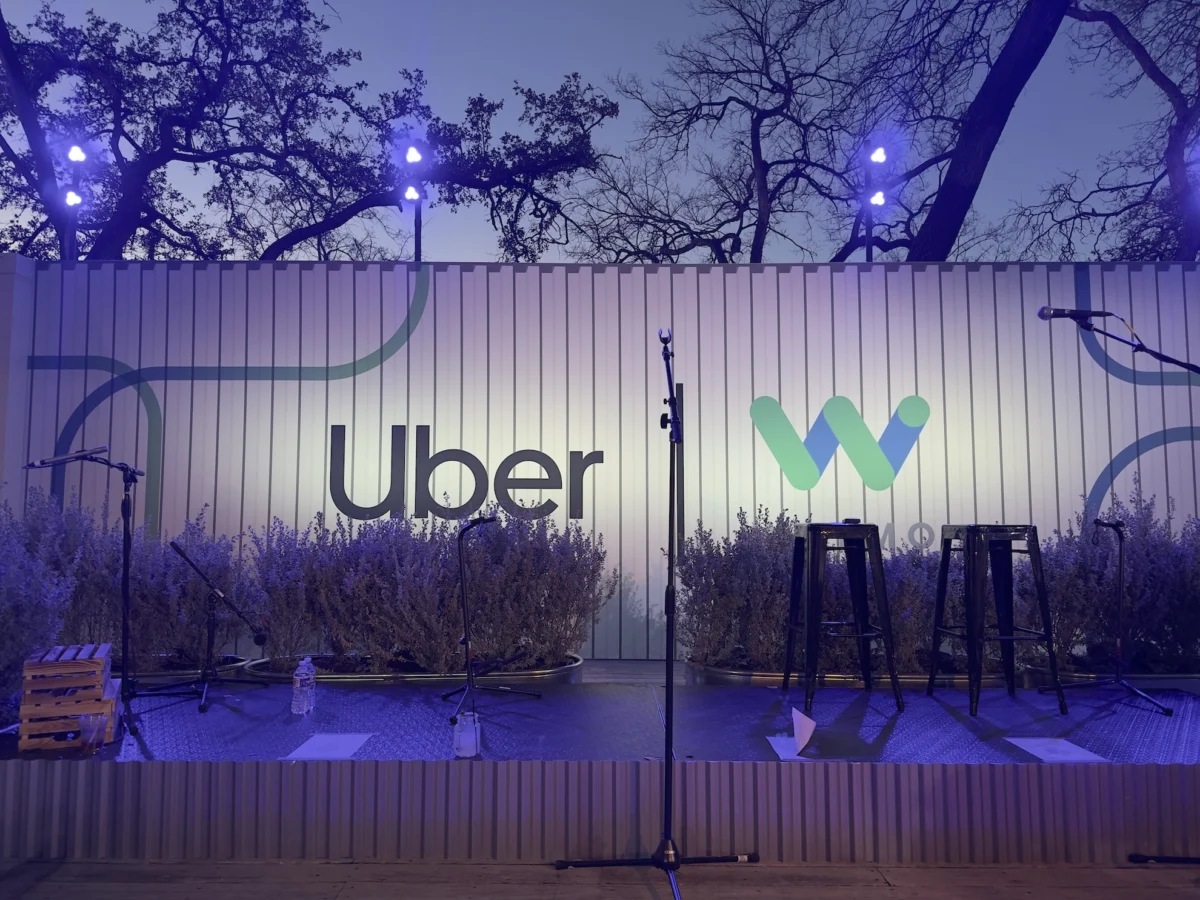
- Uber’s Opposition and the "Hybrid" Lobby: Uber is actively lobbying against the current draft of the D.C. bill. The ride-hailing giant argues that the proposed rules would displace human for-hire drivers and effectively hand Waymo a de facto monopoly in the district. In response, Uber is pushing for a "hybrid network" mandate. Under this model, AV developers would be legally required to operate their driverless fleets on existing ride-hailing networks alongside human drivers, rather than launching independent, vertically integrated proprietary apps.
- Waymo’s Strategic Advantage: Conversely, Waymo is one of the few major AV developers supporting the bill. The company has been quietly testing its autonomous vehicles with human safety drivers in Washington, D.C., for months. Because Waymo has already surpassed the bill’s proposed threshold of 180 days and 250,000 miles of local testing, the passage of the bill as currently written would grant Waymo an immediate, six-month head start over any competitor wishing to enter the D.C. market.
Uber’s $14.8 Billion Acquisition of Delivery Hero
While fighting regulatory battles on the home front, Uber is aggressively expanding its international footprint. The company has entered into a definitive agreement to acquire Germany’s Delivery Hero for $14.8 billion.
This massive transaction, which will face intense antitrust scrutiny across multiple continents, is designed to nearly double Uber’s global delivery footprint. If approved, the acquisition will grant Uber access to approximately 100 new markets across Europe, the Middle East, Latin America, and Asia. To ease potential regulatory pushback in overlapping markets where Uber Eats already holds a dominant position, Delivery Hero has signed a parallel agreement to sell its operations in 14 specific markets to New York-based investment firm SSW Partners for $1.6 billion.
2. Chronology of Recent Events
The regulatory and corporate maneuvers of the past several weeks highlight the rapid pace of change in the transport sector:
[Late June] ────> [July 4] ──────> [Mid-July] ────> [Late July]
  Zoox smoke       Waymo gridlock    D.C. Council     Uber-Delivery Hero
recall in San Francisco hearing on AVs deal announced- Late June 2024: Zoox, Amazon’s autonomous vehicle subsidiary, issues a targeted software recall after one of its purpose-built robotaxis became immobilized and confused by heavy smoke billowing from an active emergency fire scene.
- July 4, 2024: A fleet of Waymo robotaxis becomes gridlocked in heavy holiday traffic in San Francisco. Several vehicles run out of power and block key municipal thoroughfares, drawing sharp criticism from local emergency responders and city officials.
- Mid-July 2024 (Monday D.C. Hearing): The D.C. Council convenes a high-profile public hearing on the proposed autonomous vehicle bill. Representatives from Tesla, Uber, Lyft, and Waymo testify alongside labor unions, highway safety advocates, and disability rights groups.
- Mid-July 2024 (Tuesday Market Shock): Unverified market rumors circulate claiming that electric vehicle manufacturer Lucid Motors is preparing to file for Chapter 11 bankruptcy. The company’s stock plummets more than 50% in intra-day trading.
- Mid-July 2024 (Wednesday/Thursday Recovery & Announcements): Lucid Motors issues aggressive denials, supported by SEC filings and public statements from CEO Peter Rawlinson, sparking a major stock rebound. Concurrently, Uber officially announces its $14.8 billion bid for Delivery Hero, and wire harness automation startup Senra announces its $65 million Series B funding round.
- Late July 2024: San Francisco Mayor Daniel Lurie sends an official letter to California state regulators demanding tougher operational rules for AVs, directly citing the July 4th gridlock.
3. Supporting Data and Financials
To understand the scale of the ongoing shifts in the mobility sector, it is necessary to examine the financial metrics, regulatory costs, and venture capital allocations driving these changes.
The True Cost of Operating AVs under the Proposed D.C. Bill
The proposed Washington, D.C. legislation introduces some of the steepest regulatory fees and testing requirements in the United States. While Waymo has already absorbed these costs as part of its long-term development strategy, other players view them as prohibitive.

| Regulatory Requirement | Fee / Threshold | Industry Consensus / Stance |
|---|---|---|
| Application Fee | $1,000,000 | Strongly opposed by Tesla and mid-tier AV developers |
| Permit Fee | $5,000,000 | Viewed as an anticompetitive barrier to entry |
| Per-Mile Operational Tax | $0.15 per mile | Criticized for harming unit economics of early fleets |
| Mandatory Testing Period | 180 Days | Waymo has already completed; competitors want out-of-state credit |
| Mandatory Testing Distance | 250,000 Miles | Waymo has already completed; Tesla lobbies to count national miles |
Venture Capital and Market Valuations
Despite a broader cooling in late-stage tech valuations, strategic capital continues to flow into specialized mobility software and manufacturing automation:
- Senra’s Series B: The wire harness modernization startup raised $65 million in a round co-led by Lowercarbon Capital and Interlagos, with participation from marquee Silicon Valley firms Sequoia Capital, Andreessen Horowitz, Founders Fund, and General Catalyst. The company aims to automate the historically manual, Cold War-era processes used to manufacture vehicle wiring harnesses.
- Self Inspection’s Seed Round: The San Diego-based AI vehicle inspection platform secured $10 million in funding. The round was led by the family office of former Meta COO Sheryl Sandberg, alongside strategic investments from automotive lender Westlake Financial and tire distributor U.S. AutoForce.
- Zepto’s IPO Target: Indian quick-commerce and delivery startup Zepto is reportedly preparing for an initial public offering (IPO) in India. However, sources indicate the company is seeking a valuation significantly below its historical peak of $7 billion, reflecting a more conservative public market environment for delivery tech.
The Demise of Manual Transmissions
Data released by federal transportation agencies highlights a quiet but permanent shift in consumer automotive preferences in the United States.
U.S. New Vehicle Production with Manual Transmissions:
1980s:  ██████████████████████████████  ~30.0%
2025:   █  0.6%
Preliminary government data indicates that just 0.6% of all new passenger vehicles manufactured for the U.S. market in 2025 are equipped with manual transmissions, marking the near-total extinction of the stick shift in favor of automatic and electric drivetrains.
4. Official Responses and Stakeholder Perspectives
The policy debates and corporate clashes have generated strong public reactions from executives, regulators, and industry observers.
Uber’s Defense of the "Hybrid Network"
Speaking on the StrictlyVC podcast, Uber’s Chief Product Officer, Sachin Kansal, defended the company’s dual-track approach to the autonomous transition. Kansal emphasized that while Uber is actively partnering with AV developers, it strongly believes that a pure-play, robotaxi-only network cannot independently satisfy urban transportation needs.
"A highly functional transportation network requires elasticity. Autonomous vehicle fleets are capital-intensive and rigid; they cannot scale up instantly to meet a sudden rainstorm or a massive concert exit. Human drivers provide the necessary buffer. Forcing a regulatory framework that isolates AVs on proprietary, closed networks will lead to inefficient asset utilization and higher consumer prices."
— Sachin Kansal, Chief Product Officer, Uber
Tesla’s Critique of Redundant Testing
Tesla has taken a aggressive stance against localized testing mandates, with Senior Policy Adviser India Herdman leading the pushback against the D.C. Council’s proposed bill.
"Requiring developers to accumulate 250,000 miles specifically within district boundaries ignores the millions of miles of real-world testing our vehicles have safely completed across North America. These redundant geographic mandates do not improve safety; they simply delay the deployment of life-saving driver-assist and autonomous technologies."
— India Herdman, Senior Policy Adviser, Tesla
San Francisco’s Regulatory Backlash
Following the July 4th traffic disruptions, San Francisco Mayor Daniel Lurie issued a formal demand to the California Public Utilities Commission (CPUC) and the California Department of Motor Vehicles (DMV). Lurie argued that local municipalities must have the authority to enforce strict operational guardrails on autonomous fleets during major civic events.

┌─────────────────────────────────────────────────────────────┐
│             MAYOR LURIE'S FOUR MANDATES FOR AVs             │
├─────────────────────────────────────────────────────────────┤
│ 1. Real-time fleet communication with local transit police. │
│ 2. Automated remote-towing and rapid-clearance protocols.  │
│ 3. Mandatory battery/power reserves during high-congestion. │
│ 4. Geofencing restrictions during major city holidays.      │
└─────────────────────────────────────────────────────────────┘
Lucid Motors on Defeating Bankruptcy Rumors
Following a devastating mid-week stock sell-off triggered by insolvency rumors, Lucid Motors’ executive team moved quickly to reassure investors and stabilize its valuation.
"The rumors regarding a potential Chapter 11 filing are completely false and without merit. Lucid maintains a strong balance sheet, backed by robust capital reserves and the ongoing strategic support of our majority investors. The market manipulation that occurred this week was highly damaging, but our operational trajectory remains unchanged."
— Official Statement, Lucid Motors Communications Team
5. Implications: The Future of Urban Transportation
The convergence of these policy battles, corporate acquisitions, and technical challenges points to several critical trends that will define the mobility sector over the next decade.
1. The Fragmentation of Municipal AV Law
The clash between Uber, Waymo, and Tesla in Washington, D.C., suggests that the United States is unlikely to adopt a unified, federal framework for autonomous vehicle deployment anytime soon. Instead, AV developers will have to navigate a highly fragmented patchwork of state and municipal laws.
Cities like San Francisco, which have experienced the friction of early deployment firsthand, are shifting toward a more restrictive, reactive stance. Meanwhile, East Coast cities like Washington, D.C., are leveraging steep entry fees ($1 million application and $5 million permit fees) as both a revenue source and a vetting mechanism. This high-cost regulatory environment naturally favors well-capitalized pioneers like Waymo, while raising the barrier to entry for smaller startups and latecomers.
2. The Defensive Consolidation of On-Demand Delivery
Uber’s $14.8 billion acquisition of Delivery Hero represents a defensive consolidation in the delivery space. As growth in domestic ride-hailing matures, global delivery footprint expansion offers a reliable path to sustained revenue growth.
By acquiring Delivery Hero’s sprawling international network and immediately offloading overlapping regional operations to SSW Partners, Uber is positioning itself to build an unmatched global logistics network. This scale will make it incredibly difficult for regional players to compete on delivery fees, merchant variety, or loyalty subscription programs (such as Uber One).
3. The "Platform vs. Fleet" Dilemma
The central question of the autonomous era remains unresolved: Will the future of autonomous transit be controlled by the companies that build the vehicles (Waymo, Zoox, Tesla), or by the companies that own the customer relationship (Uber, Lyft)?
If Uber succeeds in lobbying for hybrid network mandates, it will preserve its position as the primary interface for urban transportation, forcing AV developers to act as wholesale hardware providers to its platform. If Waymo and other developers successfully block these hybrid mandates, they can continue building independent, vertically integrated robotaxi services. This path, however, requires hundreds of billions of dollars in capital expenditures to manufacture, maintain, and house massive physical fleets across thousands of global cities—a challenge that may ultimately force a compromise between the two sides.
