




In an era where economic competitiveness is increasingly defined by technological superiority and digital transformation, nations are engaged in a silent, high-stakes arms race: the competition for research and development (R&D) investment. Governments worldwide utilize complex webs of tax incentives to attract corporate innovation, hoping to spark domestic breakthroughs that drive long-term GDP growth. However, a comprehensive 2025 analysis reveals a staggering disparity in how these subsidies are applied, ranging from negligible relief in some nations to generous, multi-layered support in others.
The State of Global R&D Subsidies: Main Facts
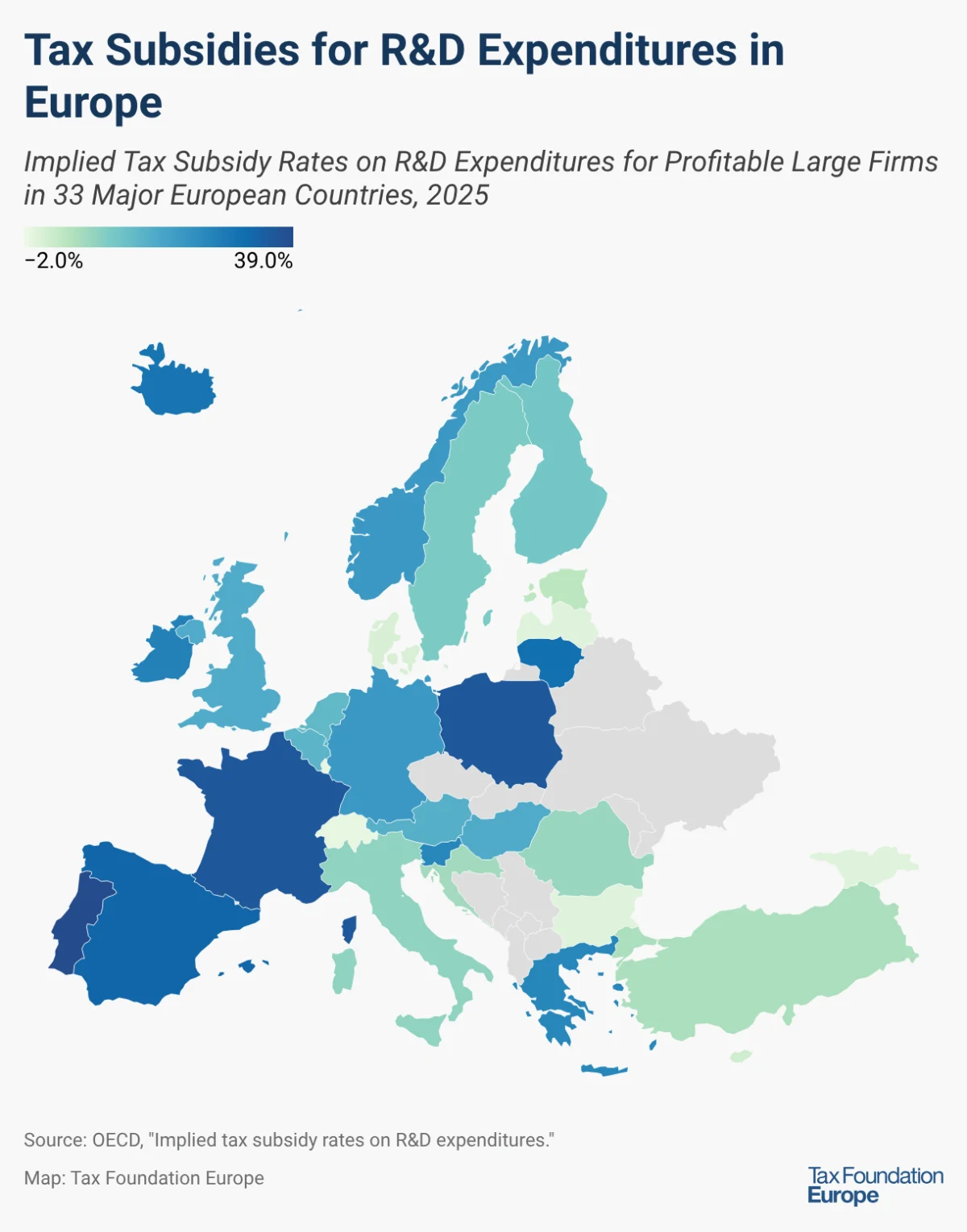
At the heart of the debate over innovation policy is the "implied tax subsidy rate"—a metric used by the OECD to quantify the value of R&D tax relief. As of 2025, the average implied subsidy rate for large, profitable firms across 33 major European economies stands at 16 percent. Yet, this average masks extreme volatility in national policy.
Portugal currently leads the pack among countries providing significant relief, boasting an implied tax subsidy rate of 39 percent. France and Poland follow closely behind, each offering a 36 percent subsidy rate. On the opposite end of the spectrum, countries like Denmark (1 percent), Cyprus (2 percent), and Estonia (4 percent) offer minimal fiscal encouragement for R&D expenditures. Perhaps most telling are the jurisdictions—including Bulgaria, Georgia, Latvia, Luxembourg, Malta, and Switzerland—that offer no significant expenditure-based R&D tax relief at all, relying instead on broader economic conditions to attract innovative firms.
The disparity extends well beyond the European continent. When compared to global economic giants, the United States currently offers an implied subsidy rate of 7 percent for large, profitable firms, a figure that pales in comparison to China’s aggressive 32 percent subsidy rate. This gap illustrates a fundamental divide in fiscal philosophy: while some nations view R&D as a public good requiring direct, heavy state subsidization, others prioritize general tax neutrality.
A Chronological Shift: Recent Developments (2024–2025)
The fiscal landscape for R&D is far from static. In the last twelve months, several nations have recalibrated their tax codes to bolster innovation.
2024 Trends: Throughout the previous calendar year, many nations began reassessing the efficacy of their existing R&D credits, leading to a wave of legislative adjustments. The focus was largely on closing the gap between stagnant productivity growth and the increasing cost of high-tech development.
2025 Legislative Changes:
- Lithuania: By increasing its corporate tax rate in 2025, Lithuania inadvertently enhanced the value of its preferential R&D deductions. This shift saw the implied subsidy rate for large profitable firms climb from 31 percent to 34 percent.
- The Slovak Republic: Similar to Lithuania, a recalibration of the corporate tax structure pushed the Slovak Republic’s subsidy rate from 28 percent to 33 percent.
- The Netherlands: Taking a more direct approach, the Dutch government explicitly increased tax credit rates for in-scope R&D, raising their subsidy profile from 31 percent to 35 percent.
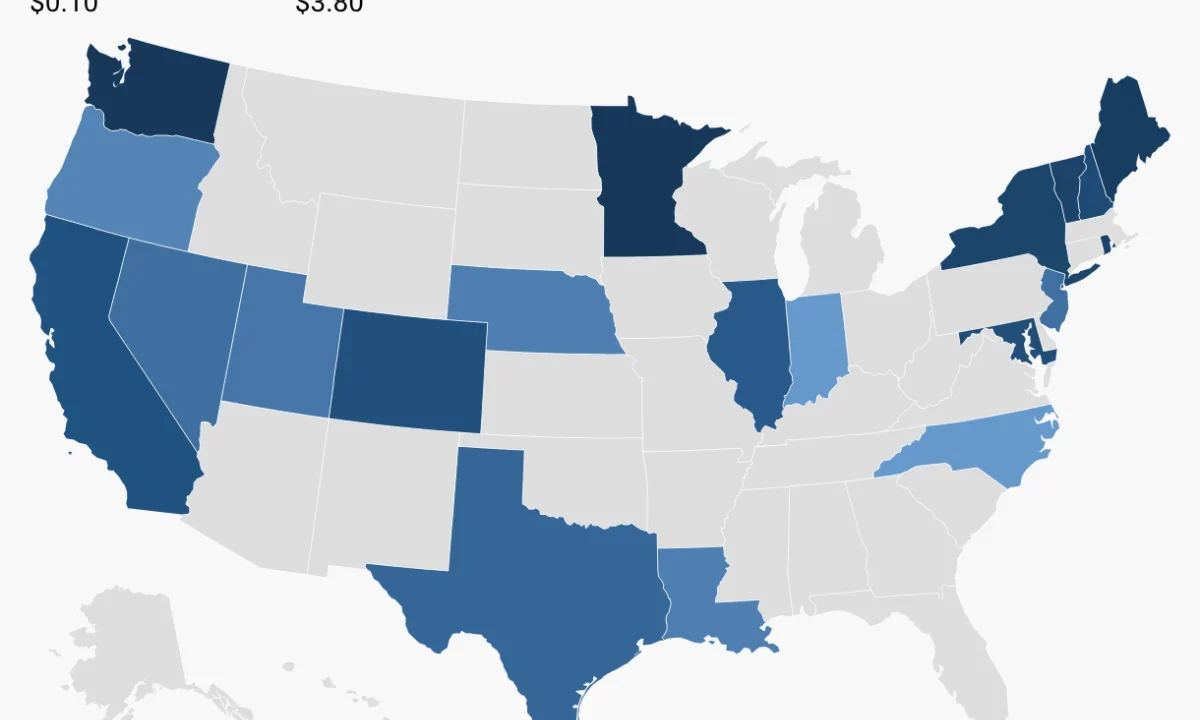
- The United States: After a period of regulatory turbulence, the U.S. moved to restore its pre-2022 expensing regime. By scrapping temporary R&D amortization requirements—which had previously forced companies to spread out R&D costs over several years—the U.S. effectively raised its implied subsidy rate from 3 percent to 7 percent.
Supporting Data: SMEs vs. Large Enterprises
A critical component of the OECD’s research involves the stratification of benefits based on company size. While many policymakers publicly champion the role of Small and Medium-sized Enterprises (SMEs) as the engines of innovation, the data reveals that most countries provide identical expenditure-based R&D relief to both SMEs and large firms.
However, there are notable exceptions. Germany, Iceland, and the Netherlands have implemented policies that are explicitly more generous toward SMEs, recognizing the unique capital constraints these firms face. France also provides specialized relief for SMEs, particularly those in a loss-making position. Conversely, Croatia stands out as a rare case where the policy environment is slightly more favorable to large enterprises than to smaller, emerging competitors.
The situation for loss-making firms is inherently more complex. Because these firms lack the taxable income to immediately benefit from tax deductions, their "realized" subsidy rate often drops below that of profitable firms. While many countries utilize refunds or carryover provisions to mitigate this, the administrative hurdles often result in a lower effective benefit, creating a "fiscal ceiling" that can stifle startups during their most vulnerable, pre-revenue phases.
Official Responses and Strategic Implications
The reliance on R&D tax incentives is not without its critics. While these measures are designed to increase private sector investment, they present significant challenges regarding administrative burden and fiscal sustainability.
The Challenge of "Genuine Innovation"
Economists argue that determining which activities qualify as "genuine innovation" is an inherently fraught process. Governments often face the "administrative trap": to prevent tax avoidance and ensure fiscal losses are contained, they must implement rigorous auditing and compliance requirements. These requirements, in turn, increase the cost of doing business, potentially negating the very financial benefits the subsidies were meant to provide.
A Shift in Policy Philosophy
Leading tax experts suggest that governments may be over-relying on R&D-specific preferences. Instead, many suggest that policymakers could achieve better outcomes at a lower revenue cost by shifting their focus toward neutral tax treatments. By allowing firms to fully recover their capital costs and enabling the seamless offsetting of operating losses, governments could support risky, innovative ventures without the distortionary effects of cherry-picking specific R&D projects for subsidies.
This "neutrality" approach argues that the best way to foster innovation is not through government-selected tax credits, but through a tax system that does not penalize investment in the first place. When firms can rely on predictable, full-cost recovery, they can make long-term R&D commitments based on market demand rather than chasing volatile, government-defined tax incentives.
The Path Forward: Balancing Spillovers and Fiscal Health
The primary justification for R&D tax relief is the concept of "positive spillovers"—the idea that one firm’s innovation provides societal benefits that the firm itself cannot fully capture, such as knowledge sharing or technological advancement that lifts entire industries. However, when these subsidies become too high or too complex, they invite "rent-seeking" behavior, where companies optimize their accounting departments rather than their laboratories.
As we move deeper into 2025, the global landscape reflects a maturing understanding of these incentives. Nations like the Netherlands and Lithuania are betting that higher rates will yield higher output, while the United States is betting on the stability of full expensing. Yet, the underlying message from the data is clear: tax subsidies are a blunt instrument.
To truly drive a new era of global innovation, policymakers must look beyond the headline rates. They must grapple with the administrative costs that weigh down smaller firms, the fiscal risks associated with loss-making startups, and the fundamental question of whether a complex R&D credit is superior to a simple, neutral, and fair corporate tax code. The competition for the future of industry is on, but the winners may not be those with the highest subsidies—they will be those with the most efficient systems for turning capital into breakthroughs.
