




As the global landscape of nicotine consumption undergoes a seismic shift, state governments across the United States are grappling with a complex policy dilemma. For decades, the decline of combustible cigarette smoking has been hailed as a monumental victory for public health. However, that same success has created a burgeoning "revenue crater" in state budgets, as traditional excise tax collections—historically a reliable source of funding for state programs—continue to evaporate.
Enter oral nicotine pouches: the latest generation of alternative nicotine products (ANPs). These products offer consumers the desired nicotine hit without the combustion, tar, or myriad carcinogens associated with traditional cigarettes. While their adoption represents a potential milestone in harm reduction, state legislatures are now rushing to bring these products into their tax nets. The result is a patchwork of inconsistent, often punitive, tax regimes that threaten to undermine the very public health benefits they could otherwise promote.
The Fiscal Paradox: Balancing Revenue and Public Health
The fundamental challenge for policymakers is a classic economic trade-off. Historically, states have relied on "sin taxes" on cigarettes not only to discourage consumption but to generate significant, albeit declining, revenue. As smokers transition to non-combustible alternatives, states face an inevitable fiscal reality: they must either find new revenue sources or face budgetary shortfalls.
Taxing nicotine pouches appears, at first glance, to be a logical solution to plug this revenue gap. However, the mechanism of that taxation is critical. If states impose heavy-handed taxes on nicotine pouches—treating them as equivalent to combustible cigarettes or high-risk tobacco products—they artificially inflate the price of safer alternatives. This creates a significant barrier to entry for smokers looking to switch, effectively locking them into the continued use of more dangerous, combustible products to avoid the price point of the new, taxed alternatives.
Chronology of an Emerging Market and Regulatory Response
The rapid ascent of nicotine pouches is a relatively recent phenomenon, but the regulatory response has been swift and chaotic.
- Pre-2020: Nicotine pouches were a niche product, largely flying under the regulatory radar. Most state tax statutes were built around "Other Tobacco Products" (OTP) categories designed for cigars, snuff, and pipe tobacco.
- 2021-2023: As market share for pouches surged, states began to take notice. Legislatures initiated efforts to define these products within existing statutory frameworks, often by shoehorning them into broad OTP definitions.
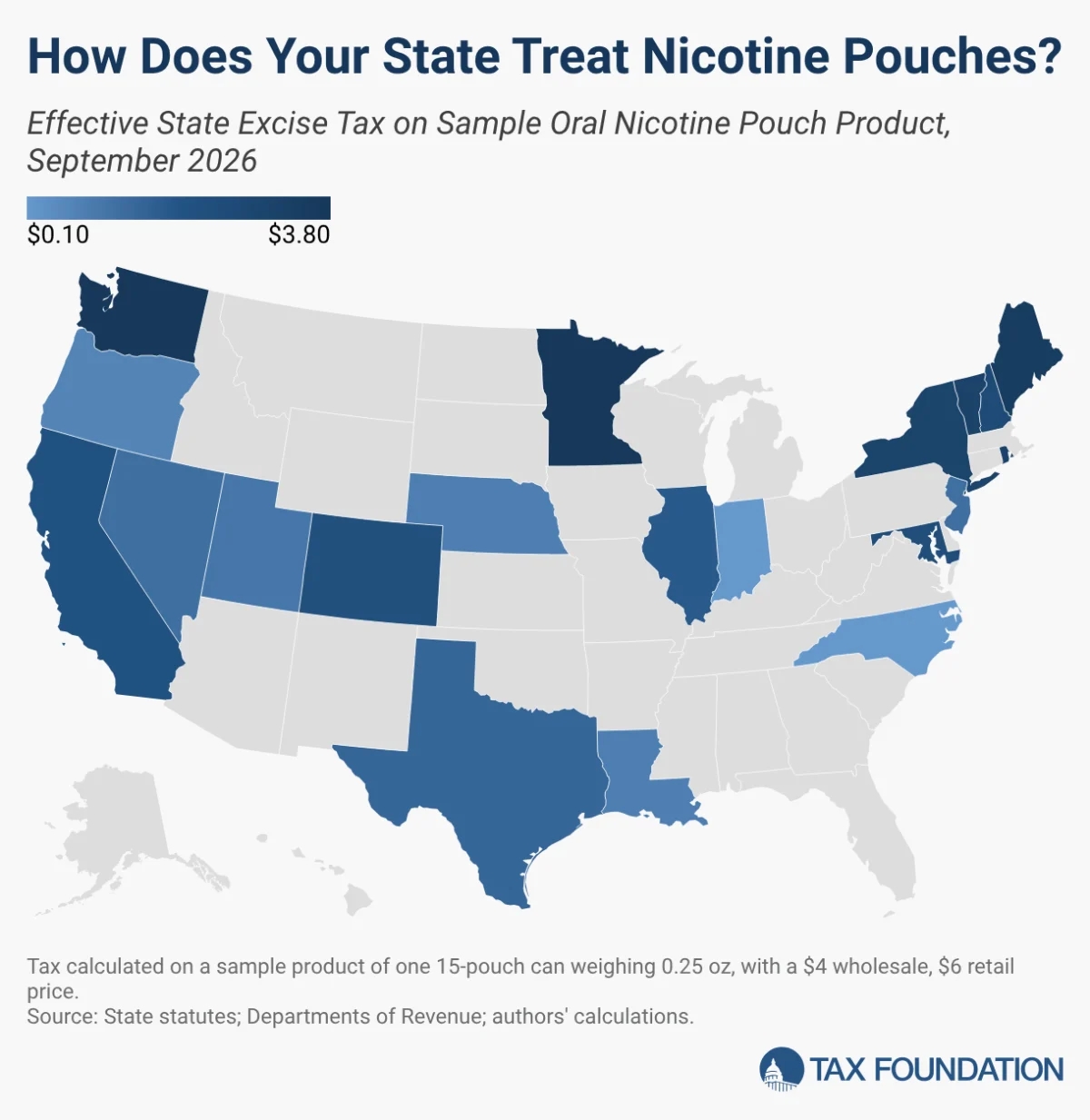
- September 2026: A landmark milestone in the regulatory landscape, where 20 states and the District of Columbia have formally incorporated nicotine pouches into their tax systems.
- The Current Outlook: With states like Iowa signaling intent to implement new, specific taxes by January 2027, the trend is clearly moving toward widespread taxation. The focus has now shifted from whether to tax these products to how to tax them in a way that is both fiscally sustainable and medically rational.
Supporting Data: The High Cost of Inconsistent Taxation
To understand the scope of the problem, one must examine the extreme variance in tax treatment. By using a standardized sample—a single can of 15 pouches with a $4 wholesale price and $6 retail price—the disparity between states becomes glaring.
The High-Tax Leaders
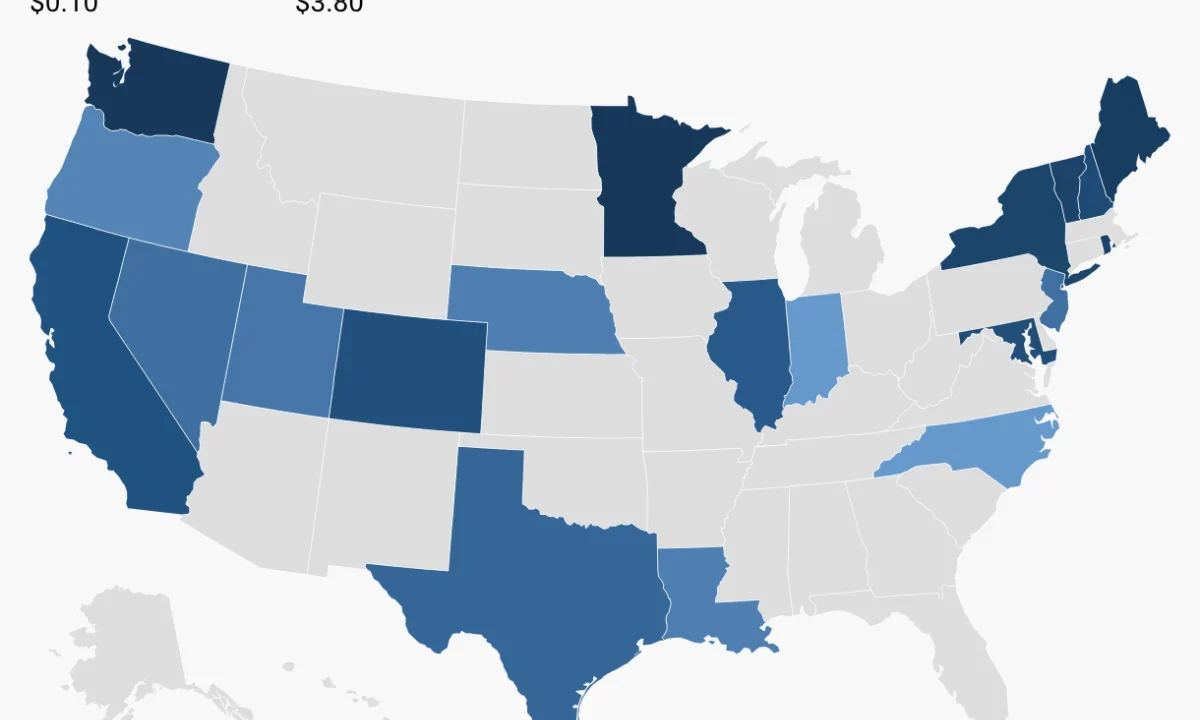
Some states have adopted aggressive, high-rate structures that treat pouches as luxury or high-harm goods. Minnesota and Washington lead the pack, imposing a tax burden of $3.80 per sample can, largely driven by 95 percent wholesale tax rates. Maine follows closely behind with a $3.54 burden, utilizing a weight-based tax with a one-ounce minimum. Vermont and Rhode Island round out the top tier, with taxes exceeding $3.00 per can.
The Low-Tax/Rational Approaches
Conversely, states like North Carolina have adopted a more tempered approach, levying a tax of just $0.005 per pouch—equating to $0.10 per standard 20-count can. Indiana, Oregon, Louisiana, and Nebraska also maintain more modest structures, often utilizing flat-rate excise taxes or lower percentage-based wholesale taxes.
This wide variance is not merely a matter of state preference; it is a catalyst for illicit behavior. Much like the cigarette smuggling rings that emerged from interstate tax differentials, the current pouch tax landscape incentivizes cross-border arbitrage. A consumer in Washington can save over $3.00 per can by simply crossing the border into Oregon, or potentially avoid the tax entirely by purchasing in states like Idaho. These gaps distort markets and foster an environment where illicit trade can thrive.
Official Perspectives and the Harm Reduction Framework
Public health experts and economists are increasingly aligning on a "Harm Reduction" framework. The core argument is pragmatic: because the primary dangers of smoking stem from the combustion of tobacco and the inhalation of tar and carbon monoxide, products that deliver nicotine without these elements are, by definition, less harmful.
The Problem with "Other Tobacco Products" (OTP)
Many states categorize pouches under the "OTP" umbrella alongside cigars, loose-leaf tobacco, and snuff. This is a policy error. Many modern nicotine pouches contain zero tobacco, instead utilizing synthetic or extracted nicotine. By treating a tobacco-free, non-combustible product identically to traditional snuff, states ignore the fundamental difference in the risk profiles of these items.
The Case for Ad Quantum Taxation
The Tax Foundation and other policy researchers advocate for ad quantum (per unit or per weight) taxes rather than ad valorem (percentage of price) taxes. An ad valorem tax is inherently regressive and unstable, as it fluctuates with retail price changes and fails to account for the actual health impact of the product. An ad quantum tax, by contrast, provides a stable, predictable revenue stream for the state while allowing for a more equitable application of tax rates that can be scaled according to the relative risk of the product.
Implications: The Future of Nicotine Policy
The implications of current tax trends are significant for the future of public health and state fiscal stability.
1. Market Distortions and Illicit Trade
As long as tax rates remain wildly inconsistent between jurisdictions, states will continue to struggle with "leakage." Revenue that could have been collected in the home state will flow across borders, and in some cases, toward unregulated, untaxed black-market products. This not only defeats the revenue-raising goal but also prevents regulators from ensuring product safety and quality standards.
2. The Opportunity for "Principled" Taxation
If states must tax nicotine pouches to offset the decline in cigarette revenue, they have a unique opportunity to do so in a way that encourages, rather than punishes, the transition to safer alternatives. A principled tax policy would:
- Establish a specific, separate category for oral nicotine pouches rather than grouping them with traditional tobacco.
- Implement ad quantum rates that are significantly lower than those applied to combustible cigarettes.
- Align tax rates with relative harm. Since pouches represent a massive reduction in health risks compared to cigarettes, the tax burden should reflect that difference.
3. The Path Forward
As we approach 2027 and beyond, the adoption of pouches will only accelerate. States currently without tax regimes for these products should avoid the temptation to rush into broad, blunt-force taxation. Instead, they should look at the data—both the fiscal data of lost cigarette revenue and the health data regarding the success of harm reduction.
By creating a tax framework that acts as a "nudge"—making the safer product more affordable than the deadly one—states can achieve a rare policy win-win. They can stabilize their revenue streams while simultaneously fostering an environment that incentivizes the reduction of the most harmful forms of nicotine consumption.
The era of the "revenue crater" is here, but the solution does not have to be a race to the bottom of punitive, irrational taxation. Through smart, evidence-based policy, states can modernize their tax codes for a post-combustion world, proving that fiscal responsibility and public health progress are not mutually exclusive, but rather, two sides of the same coin.
