





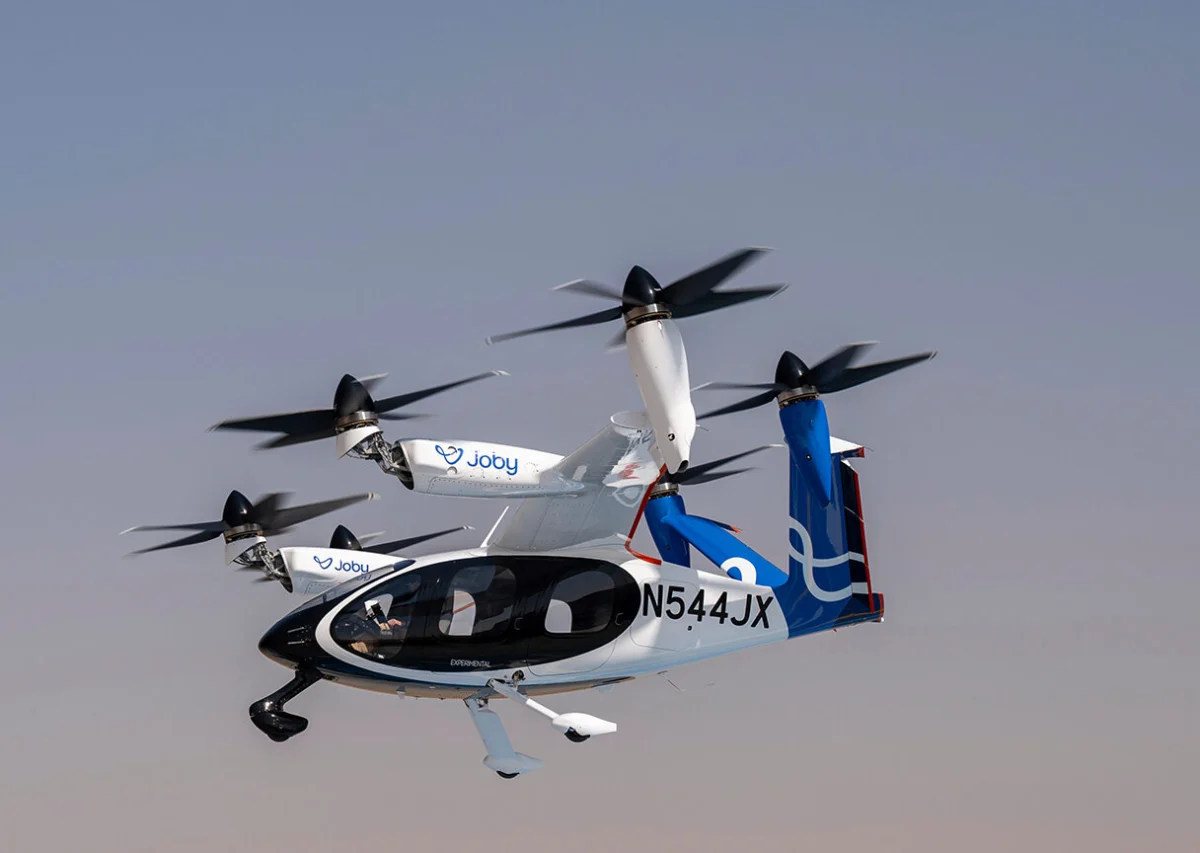
The science fiction trope of the "flying car" is rapidly shedding its celluloid skin, transforming into a tangible, high-stakes infrastructure reality. This week, the city of Kissimmee, Florida, took a decisive step toward this airborne future, unveiling specialized infrastructure at the Kissimmee Gateway Airport designed to support an emerging fleet of electric vertical take-off and landing (eVTOL) aircraft. As the state positions itself as the epicenter of the Advanced Air Mobility (AAM) revolution, the transition from congested asphalt to the open skies is no longer a matter of "if," but "when."
The Genesis of a New Commute
The recent announcement in Kissimmee marks a pivotal moment in regional logistics. By installing sophisticated air-traffic management technology alongside high-capacity fast-charging stations, Kissimmee Gateway Airport is effectively establishing one of the nation’s first “vertiports.”
"We will go from the Orlando area to Tampa within 30 minutes," Kissimmee Aviation Director Shaun Germolus stated during a recent press conference. This claim is not mere hyperbole; it is a direct response to the chronic traffic congestion that plagues the Interstate 4 corridor—a route notoriously difficult to navigate by automobile. By bypassing traditional highway infrastructure, eVTOLs offer a transformative value proposition: the reclamation of time.
Chronology: A Rapid Ascent Toward Certification
The path to this week’s announcement has been paved by a series of strategic developments over the past several years, signaling a coordinated effort by Florida’s aviation sector:
- Early 2024: Florida officials begin serious discussions regarding the integration of AAM into existing metropolitan transportation frameworks.
- May 2026: A wave of momentum hits the Gulf Coast as Tampa International Airport and St. Petersburg’s Albert Whitted Airport publicly unveil their visions for air taxi hubs. These announcements signaled that the private and public sectors were aligning on the necessary infrastructure requirements.
- February 2026: A landmark moment occurred in Dubai, where Joby Aviation—a leader in the sector—conducted high-profile flight demonstrations. The success of these trials provided the "proof of concept" necessary to bolster investor confidence in the U.S. market.
- Late 2026: The Kissimmee Gateway Airport project reaches completion, providing the critical ground-side infrastructure—specifically charging capacity—required for commercial operations.
- 2027-2028 (Projected): Industry analysts expect the first round of FAA type-certification for passenger-carrying eVTOL aircraft, marking the official dawn of commercial air taxi services.
The Technological Backbone: Supporting the eVTOL Fleet
The infrastructure unveiled in Kissimmee is significantly different from that of a traditional general aviation airport. eVTOLs require a unique ecosystem, primarily centered on energy management and traffic orchestration.
The Charging Challenge
Unlike traditional aircraft that rely on liquid fuel, eVTOLs are dependent on high-density battery packs. The charging stations installed at Kissimmee are designed for rapid turnaround times. Because the business model of an air taxi relies on high utilization rates—meaning the aircraft must be in the air as much as possible—the ability to "refuel" via fast-charging in minutes rather than hours is the cornerstone of economic viability.
Air-Traffic Management (ATM) in 3D
Traditional air-traffic control is designed for fixed-wing aircraft operating at high altitudes and approaching runways in a linear fashion. The "sky taxi" model requires a dynamic, low-altitude management system. The technology implemented at Kissimmee integrates digital flight paths that allow for "corridors" of travel. These corridors utilize GPS-denied navigation and autonomous obstacle avoidance to ensure that multiple vehicles can operate in the same airspace without the need for manual, ground-based oversight for every movement.
Official Perspectives and Public Policy
The political appetite for this technology in Florida is robust. State Senator Kristin Arrington (D-Kissimmee) has been a vocal proponent of the initiative, framing the investment as a historical necessity.
"History has shown that communities that have invested in transportation have prospered and grown," Arrington noted in a statement. Her perspective highlights the economic theory that accessibility dictates prosperity. By shortening the commute between Orlando’s tourism hub and the Gulf Coast’s business centers, Florida is effectively creating a "megaregion" that can operate with the fluidity of a single city.
From a regulatory standpoint, the Federal Aviation Administration (FAA) remains the final gatekeeper. While local airports can build the "ports," the FAA must ensure the vehicles themselves meet stringent safety standards equivalent to those of commercial airliners. The industry expectation is that the next 12 to 24 months will be dominated by rigorous flight testing and airworthiness certification.
Implications for Florida and Beyond
The integration of air taxis into Florida’s transit network carries profound implications for the state’s economy, environment, and social structure.
Economic Shifts
If a 30-minute commute replaces a two-hour drive, the labor market changes. Professionals who previously felt tethered to a specific city due to commuting constraints may find themselves with a much wider radius of employment opportunities. Furthermore, the development of these hubs creates new high-tech jobs in maintenance, vertiport operations, and specialized logistics.
Environmental Impact
The environmental argument for eVTOLs is centered on decarbonization. By shifting short-haul regional traffic from combustion-engine vehicles—which spend significant time idling in traffic—to electric aircraft, the state could see a measurable reduction in localized carbon emissions. Proponents argue that the energy efficiency of a fully electric, high-occupancy eVTOL is superior to that of a single-occupant gasoline-powered sedan sitting in a traffic jam.
The Challenge of Public Acceptance
Despite the excitement, the industry faces hurdles. Noise pollution is a primary concern. Unlike helicopters, which are notoriously loud, eVTOLs are designed to use distributed electric propulsion, which allows for significantly lower acoustic footprints. However, public perception remains a barrier. Residents in flight paths will need to be convinced that these aircraft are not merely "noisy nuisances" but essential, quiet components of a modern transit system.
Supporting Data: The Market Potential
Market analysts at firms like Morgan Stanley and Deloitte have projected the AAM market to reach a global valuation in the hundreds of billions by 2040. Florida, with its unique combination of high tourist density, sprawling geography, and favorable weather, is widely considered the "proving ground" for this industry.
Currently, the average commute in the Tampa-Orlando corridor during peak hours can exceed 150 minutes by car. The eVTOL model, operating at speeds of 150–200 miles per hour, reduces this to a fraction of the time. When accounting for the "last mile" connectivity—where passengers take an electric shuttle to the vertiport—the total trip time is still expected to be roughly 40-50% faster than traditional road travel.
Looking Toward the Horizon
The announcement at Kissimmee is a testament to the fact that the future of transportation is moving from the highway to the sky. While the infrastructure is now in place, the true test will occur when the first commercial passengers step into an electric aircraft for their commute to work.
The transition will not happen overnight. It will be a gradual integration, starting with specialized routes and eventually scaling to a networked system that touches every corner of the state. As the FAA moves toward certifying these vehicles, the infrastructure in Kissimmee, Tampa, and St. Petersburg will serve as the blueprints for cities across the globe.
Florida is no longer just a destination for retirees and tourists; it is rapidly becoming a laboratory for the next century of human mobility. The "long-awaited future" mentioned by officials is finally touching down, proving that the most effective way to solve the gridlock of the present is to rise above it.
Summary of Key Developments
- Infrastructure: Kissimmee Gateway Airport has officially installed charging and management systems for eVTOLs.
- Efficiency: Travel times between Orlando and Tampa are expected to drop from two-plus hours to approximately 30 minutes.
- Certification: FAA certification for the first generation of passenger eVTOLs is anticipated within the next two years.
- Vision: State and local leaders are viewing AAM as a primary driver for future economic development and regional connectivity.
As the industry stands on the precipice of commercial viability, the focus now shifts to safety, public integration, and the scaling of the "vertiport" network. The sky, once a vast expanse above the gridlock, is poised to become the most efficient transit lane in the state of Florida.
