




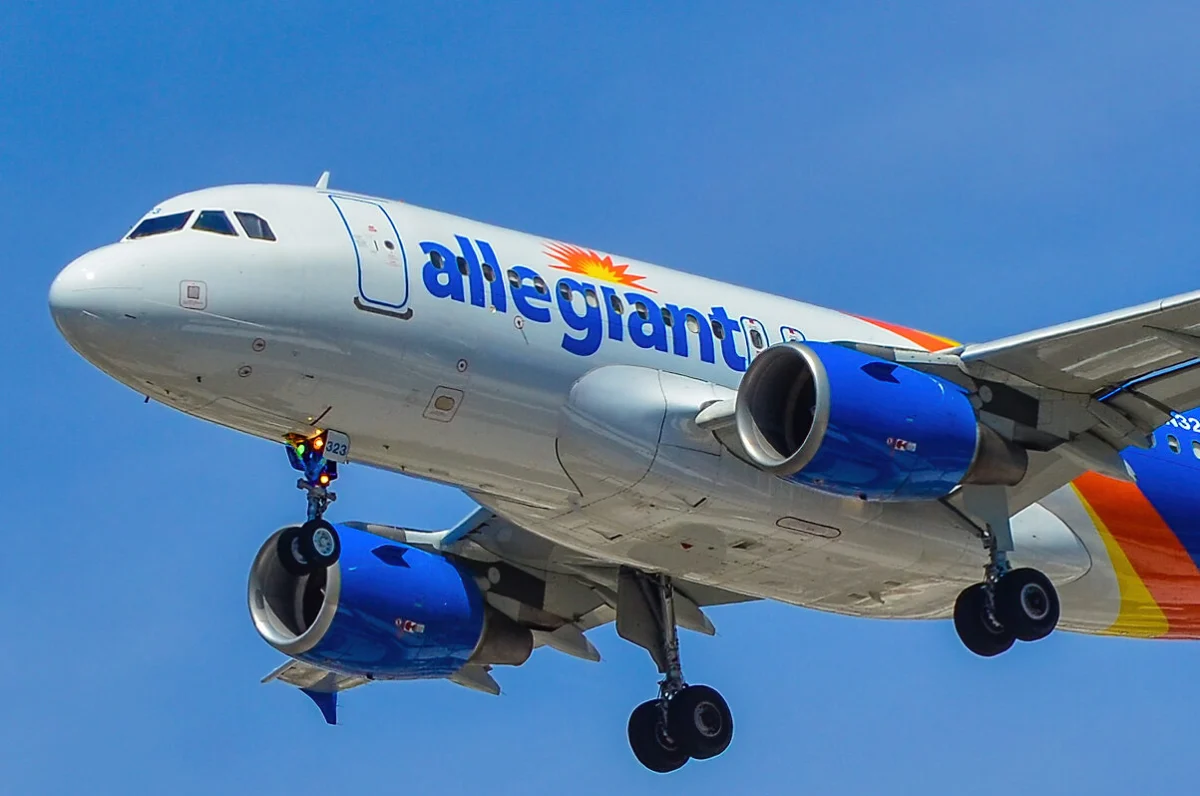
In a seismic shift for the low-cost aviation sector, Las Vegas-based Allegiant Air has officially abandoned its long-standing "direct-distribution-only" strategy. In a move that signals the end of an era for the airline, Allegiant has inked an exclusive 12-month agreement with Expedia Group, naming the travel giant its first authorized Online Travel Agency (OTA) distributor.
This decision marks a fundamental change in philosophy for an airline that, as recently as February 2026, was aggressively touting the financial and operational superiority of its closed-loop, direct-booking model. By inviting a third-party intermediary into its sales ecosystem, Allegiant joins a growing list of ultra-low-cost carriers (ULCCs) that have finally recognized the inescapable gravity of the global travel distribution landscape.
Main Facts: The Anatomy of the Deal
The partnership, which went live this month, allows consumers to search, book, and manage Allegiant itineraries directly through Expedia’s platforms. While the financial specifics remain opaque—specifically whether Allegiant is paying traditional commissions or utilizing a non-commission model similar to Ryanair—the strategic impact is immediate.
- Exclusivity: The deal is set for an initial 12-month term, serving as a pilot program for Allegiant’s re-entry into the OTA space.
- Distribution Shift: Allegiant previously restricted its sales to its own website and mobile app, while utilizing metasearch engines like Google Flights and Kayak solely to drive traffic back to its own booking engine.
- Operational Integration: Unlike traditional "screen scraping," where OTAs pulled Allegiant data without the airline’s consent, this partnership involves a direct API connection, ensuring better data integrity, passenger communication, and ancillary revenue capture.
Chronology: From Fortress Distribution to Open Doors
The "Direct-Only" Era (2010–2025)
For over a decade, Allegiant’s business model was defined by its "fortress" approach to distribution. By keeping sales in-house, the airline avoided GDS (Global Distribution System) fees and OTA commission structures. This allowed Allegiant to maintain total control over the customer experience, from seat selection to the upsell of vacation packages. Executives frequently argued that the "cost of acquisition" through third parties was an unnecessary tax on their low-fare structure.
The Turning Point (Early 2026)
As of February 2026, Allegiant leadership was still doubling down on its direct-distribution strategy during investor calls. They argued that their unique route network—primarily secondary airports and leisure-focused, non-daily service—did not require the reach of an Expedia or Booking.com. However, internal data reportedly began to show a softening in market penetration as competitors became increasingly aggressive in digital marketplaces.
The Ryanair Influence (2024–2026)
The industry landscape changed significantly as Europe’s Ryanair, the undisputed king of direct-distribution, began to buckle. After years of litigation and public battles with OTAs, Ryanair eventually signed deals with over eight major booking platforms. Industry analysts suggest that Allegiant’s board closely monitored the "Ryanair Pivot," observing that the European giant was able to maintain its low-cost structure while simultaneously expanding its reach through third-party sales.
The Announcement (Q3 2026)
Following months of silent negotiations, the partnership was unveiled. The deal represents the final surrender of the "direct-only" dogma that once served as a cornerstone of the ULCC sector.
Supporting Data: Why OTAs Remain King
The decision to partner with Expedia is not merely a strategic choice; it is a response to shifting consumer behavior. Data from the travel industry consistently underscores why airlines struggle to stay "direct-only" in a competitive environment:
- Search Volume Dominance: Expedia Group remains one of the largest top-of-funnel engines for travel intent. A significant percentage of travelers begin their journey on an OTA to compare flight times and pricing across multiple carriers. By staying off these platforms, Allegiant was effectively invisible to a massive segment of price-sensitive travelers.
- Conversion Rates: Studies show that consumers are more likely to convert when they can bundle flights with hotels and car rentals. Expedia’s platform provides this "Total Trip" functionality, which Allegiant’s standalone site often struggled to match in terms of user experience and algorithmic personalization.
- The "Ancillary Gap": Allegiant relies heavily on ancillary revenue (bags, seat assignments, priority boarding). The challenge for the airline has always been how to effectively sell these add-ons through a third party. The new API-driven integration with Expedia is designed specifically to ensure that Allegiant’s ancillary products are pushed to the customer at the point of sale, mitigating the risk of revenue dilution.
Official Responses and Executive Rationale
In a statement following the announcement, Allegiant’s leadership emphasized that the deal is about "customer reach" rather than a failure of their previous model.
"Our commitment to providing the lowest possible fares remains the core of our business," said an Allegiant spokesperson. "However, the digital ecosystem is evolving. Partnering with Expedia allows us to meet our customers where they are already shopping, ensuring that our unique, non-stop leisure network is accessible to the widest possible audience without sacrificing the operational efficiencies that define our brand."
Expedia Group, for its part, framed the deal as a "win-win" for the ecosystem. "We are thrilled to bring Allegiant’s unique network of leisure flights to our travelers," an Expedia representative noted. "Our technology provides a seamless way for Allegiant to reach new customers while giving them the tools to manage their bookings and ancillaries directly."
Industry observers remain skeptical of the "no-commission" rumors. While Ryanair famously dictates terms to OTAs, Allegiant lacks the sheer market dominance of the Irish carrier. Analysts are waiting for the next quarterly earnings report to see if Allegiant reveals "distribution costs" on their balance sheet, which would indicate the true price of this partnership.
Implications: A New Era for Low-Cost Carriers
The Allegiant-Expedia deal has profound implications for the airline industry, suggesting that the "fortress distribution" model is becoming obsolete.
1. The Death of the "Direct-Only" Mandate
Allegiant’s move likely signals the end of the debate regarding whether ULCCs can survive without OTAs. The reality of modern travel is that customer acquisition costs—driven by the dominance of search giants like Google and travel aggregators like Expedia—have made it prohibitively expensive to rely solely on organic direct traffic.
2. The Rise of "Connected" Distribution
The integration isn’t just about listing flight times. By using modern API standards, Allegiant is ensuring they maintain control over their brand. This is a far cry from the "screen-scraping" era where OTAs acted as unauthorized agents. The industry is moving toward a future where airlines retain control of their product while leveraging the marketing muscle of third parties.
3. Investor Scrutiny
Wall Street will be watching Allegiant’s margins with a magnifying glass. If the airline manages to increase its load factors—the percentage of seats filled—without a significant dip in profitability, the deal will be considered a massive success. If, however, the commission costs eat into the already razor-thin margins of the ULCC model, the partnership may be short-lived.
4. Competitive Response
How will competitors like Frontier or Spirit react? Both have traditionally leaned on their own sites, though they have been more open to third-party distribution than Allegiant historically. If Allegiant sees a boost in market share, we can expect the remaining "direct-only" holdouts to initiate their own RFP (Request for Proposal) processes for OTA partnerships within the next 18 months.
Conclusion: Adapting to the Digital Reality
The Allegiant-Expedia partnership is a testament to the fact that in the 21st-century travel economy, scale is the ultimate currency. While Allegiant spent years building a brand based on independence and direct-to-consumer value, the sheer influence of global travel aggregators proved too significant to ignore.
As the 12-month pilot unfolds, the aviation industry will be watching closely. This isn’t just a deal between a single airline and an OTA; it is a bellwether for the future of travel distribution. The "direct-only" dream, while theoretically pure, is increasingly clashing with the digital reality of the modern passenger. Allegiant has chosen to adapt, signaling that in the world of high-volume, low-cost travel, the best way to control the customer experience is to be present wherever the customer chooses to look.
For the passenger, this is a clear win: more visibility, easier comparisons, and, ideally, more competitive pricing as the market for leisure travel becomes more transparent than ever. For the industry, it is a reminder that even the most stubborn traditions must eventually bend to the evolving habits of the global traveler.
