




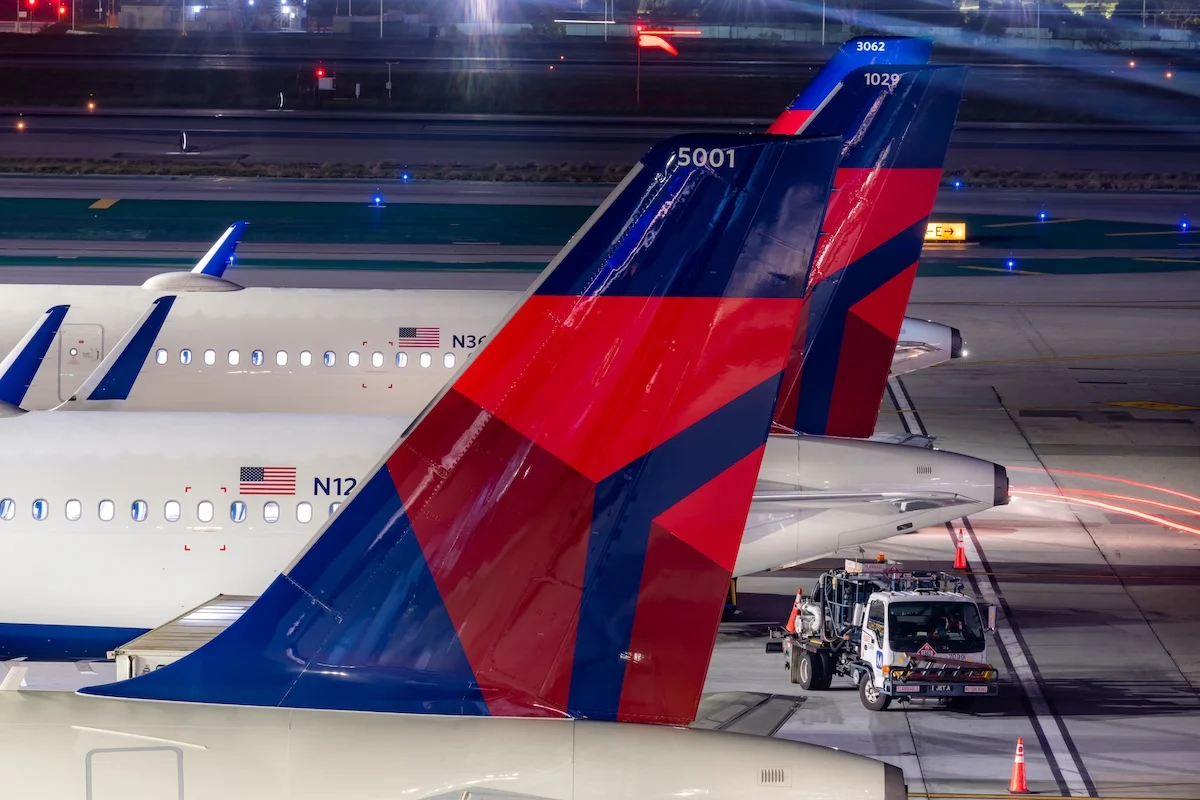
In a strategic maneuver that reinforces its dominance across the Pacific, Delta Air Lines has announced the launch of nonstop service between Los Angeles International Airport (LAX) and Manila, the capital of the Philippines. This long-anticipated route, scheduled to commence on March 28, 2027, marks a pivotal expansion for the carrier, positioning it as the sole U.S.-based airline offering a direct link between the two major Pacific hubs.
The announcement is not merely an addition to a flight schedule; it is the cornerstone of Delta’s broader, multi-year initiative to transform LAX into a premier gateway for trans-Pacific travel. By bridging the gap between the Southern California market—home to one of the largest Filipino-American populations in the United States—and the rapidly growing Southeast Asian economy, Delta is positioning itself to capture a significant share of both business and leisure traffic.
The Main Facts: Bridging the Pacific
The new service will operate on a daily basis, utilizing state-of-the-art long-haul aircraft designed to accommodate the grueling 15-plus hour journey across the Pacific Ocean. While Delta has yet to finalize the specific aircraft configuration for the route, industry analysts anticipate the deployment of the Airbus A350-900 or A350-1000, both of which feature the premium-heavy cabin layouts that have become the hallmark of Delta’s international strategy.
Key details regarding the launch include:
- Launch Date: March 28, 2027.
- Route: Los Angeles (LAX) to Manila Ninoy Aquino International Airport (MNL).
- Competitive Stance: Delta will be the only U.S. carrier providing nonstop service on this route, placing it in direct competition with Philippine Airlines, which has historically dominated the direct transit market between Manila and the U.S. West Coast.
- Strategic Intent: The route serves as the latest expansion in Delta’s "Asia-Pacific Pivot," a strategy that seeks to leverage LAX as a central node for travelers moving between the Americas and Southeast Asia.
A Chronology of Delta’s West Coast Evolution
Delta’s path to the Manila launch was not an overnight decision. It is the result of a decade-long transformation of its West Coast infrastructure.
The Foundation (2015–2019)
Following the consolidation of the U.S. airline industry, Delta identified LAX as a critical "focus city" and, eventually, a strategic hub. Between 2015 and 2019, the airline invested billions into the modernization of Terminals 2 and 3 at LAX. This phase was characterized by operational stabilization and the development of a reliable domestic feeder network, which allowed the airline to capture local Southern California traffic to support its nascent long-haul aspirations.
The Pandemic Pivot (2020–2022)
Despite the global grounding of fleets during the COVID-19 pandemic, Delta remained committed to its infrastructure projects at LAX. While competitors slashed capital expenditure, Delta continued construction on the $2.3 billion Terminal 3 redevelopment. During this period, the airline shifted its focus from purely defensive capacity management to an aggressive "recovery-first" strategy, identifying that post-pandemic travel would prioritize premium experiences and direct, non-stop long-haul connectivity.
The Expansion Phase (2023–2026)
With the domestic network at LAX matured, Delta turned its attention to the international arena. The airline began increasing frequencies to Seoul-Incheon, its primary trans-Pacific hub, while simultaneously vetting potential routes that could bypass the Seoul connection. The decision to finalize the Manila route in 2027 represents the culmination of this planning phase, reflecting years of market research into diaspora travel patterns and corporate trade links between California and the Philippines.
Supporting Data: Why Manila?
The demand for a direct LAX-Manila route is backed by compelling demographic and economic data.
The Filipino-American Diaspora
According to recent U.S. Census Bureau estimates, California is home to over 1.6 million Filipinos and Filipino-Americans. Los Angeles County alone hosts the largest concentration of this population in the United States. Historically, these travelers have relied on connections through Tokyo, Seoul, Taipei, or on Philippine Airlines’ direct flights. Delta’s entry into the market provides a compelling alternative, particularly for its vast loyalty program members who previously had to choose between non-stop convenience or Delta’s premium onboard product.
Economic Ties
The economic relationship between the Philippines and the U.S. continues to strengthen, particularly in the sectors of Business Process Outsourcing (BPO), technology, and maritime services. As Manila continues to modernize its infrastructure, the demand for premium business travel—the bread and butter of Delta’s "Delta One" business class—is expected to grow. By providing a direct link, Delta is effectively shortening the "business distance" between Silicon Beach in Los Angeles and the financial districts of Makati and Bonifacio Global City.
Official Responses and Corporate Vision
Delta’s leadership has framed the Manila route as a testament to the carrier’s long-term commitment to the Los Angeles market.
"Customers traveling through Los Angeles continue to benefit from Delta’s investments in LAX, including an expanding Asia-Pacific network and the opening of our second Delta One Lounge," said Jeff Arinder, Delta’s vice president of network planning. "We are not just adding a flight; we are completing a missing piece of our global puzzle. Our passengers have asked for a direct link to Manila, and we are proud to be the carrier that delivers that connectivity with the industry-leading service they expect."
Industry observers note that the inclusion of the "Delta One Lounge" in Arinder’s statement is no coincidence. Delta is increasingly using its premium lounge infrastructure to drive loyalty for its long-haul flights. By offering a high-end ground experience at LAX that mirrors the quality of its onboard cabin, Delta creates a "seamless premium loop" that is difficult for competitors to replicate.
Implications for the Aviation Market
The announcement of the LAX-MNL route sends a strong signal to the global aviation industry.
Competitive Dynamics
Philippine Airlines, which has long enjoyed a near-monopoly on nonstop flights to the U.S. West Coast, now faces its most significant challenge in recent memory. Delta’s entry will likely force a competitive response, potentially resulting in lower fares for consumers and an escalation in product quality. United Airlines and American Airlines will also be watching closely, as this move signals that Delta is comfortable aggressively expanding its international footprint while others may be choosing a more conservative approach.
The Future of the "Hub-and-Spoke" Model
Delta’s strategy at LAX is a refined iteration of the classic hub-and-spoke model, but with a modern twist: it is a "Coastal Gateway" model. By focusing on high-demand, long-haul international routes that bypass the traditional mid-continent hubs (like Atlanta or Minneapolis), Delta is reducing total transit time for West Coast travelers. If the Manila route proves successful, industry analysts expect to see similar route announcements for other underserved Southeast Asian markets.
Operational Challenges
Operating a route of this magnitude is not without its hurdles. Crew logistics, fuel costs for ultra-long-haul flights, and the complexities of international regulatory compliance at Ninoy Aquino International Airport will require precise execution. However, Delta’s recent track record of successful launches—including its expansion into South American and European markets—suggests the carrier is well-equipped to manage the operational complexities.
Conclusion
The launch of nonstop service from Los Angeles to Manila in 2027 represents more than just a new line on a flight map. It is the culmination of a strategic vision that places the modern, premium-focused traveler at the center of the aviation experience. By leveraging its modernized LAX infrastructure, its deep-rooted loyalty program, and its commitment to the trans-Pacific market, Delta Air Lines is setting the stage for a new chapter in global connectivity. For the millions of travelers who have waited for a direct, premium-class alternative between the two cities, the wait is nearing its end. As March 2027 approaches, the aviation industry will be watching to see if Delta’s ambitious bet on Manila pays the dividends the carrier expects.
