

The Indianapolis Speedrome, a historic venue known for its tight, high-banked oval and its signature Figure-8 racing, has long been a staple of Indiana’s grassroots motorsports culture. However, the 50th Annual 3-Hour Figure-8 Championship—an event intended to be a celebratory milestone—will now be remembered for a disturbing series of events that escalated from on-track aggression to a full-scale physical altercation and, ultimately, felony criminal charges.
For those unfamiliar with the discipline, Figure-8 racing is a high-stakes endurance trial where drivers navigate a track designed with a literal intersection. The inherent danger of crossing paths at high speed is the primary attraction, but this past Sunday, the line between competitive risk and criminal negligence was shattered in a display that has left the local racing community reeling.
The Anatomy of an Incident: A Chronological Breakdown
The violence that erupted during the final minutes of the 3-hour marathon was not an instantaneous explosion, but rather the culmination of a deteriorating relationship between competitors on the track.
The Initial Rivalry
With approximately 10 minutes remaining in the race, Jeffrey Shackelford (driving the No. 28 car) and Mark Tunny (driving the No. 3T) were locked in a fierce battle for the lead. According to witnesses and on-track footage, the pressure of the championship intensified the contact between the two vehicles. Tensions boiled over when Mark Tunny initiated contact with Shackelford, eventually spinning him out.
The Escalation
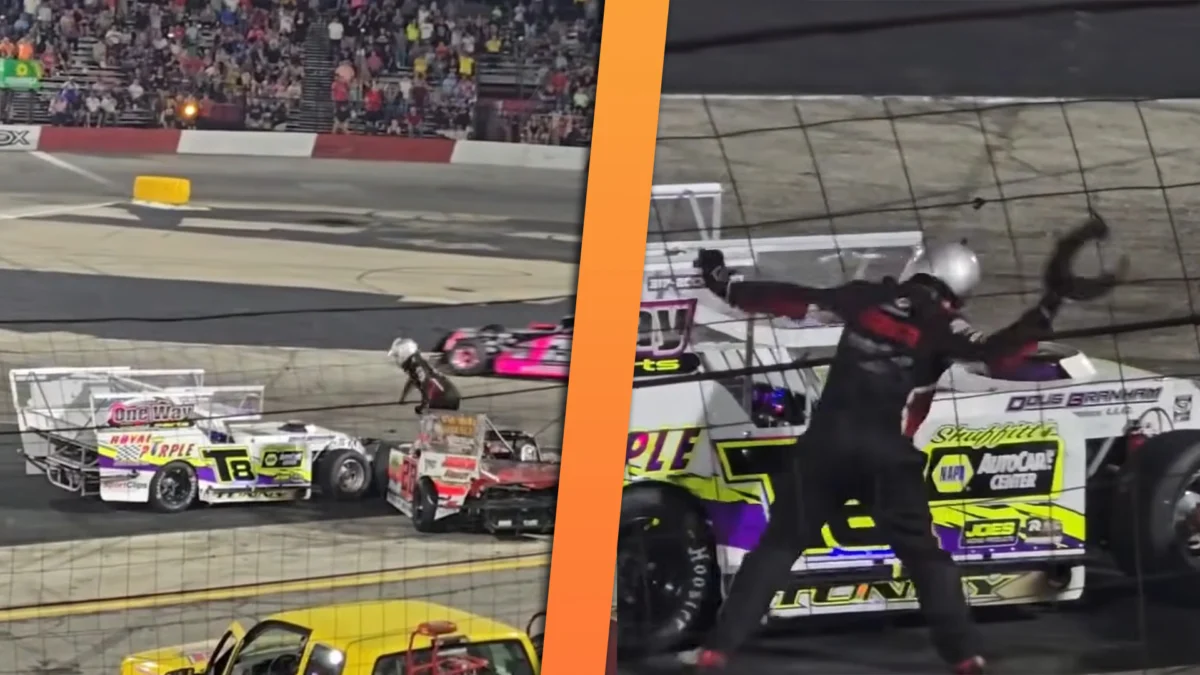
The situation transitioned from a racing incident to something more sinister when Dana Tunny—Mark’s brother, who was competing in the No. T8 car—entered the fray. Despite being roughly 200 laps down and largely irrelevant to the lead battle, Dana Tunny performed a T-bone maneuver on Shackelford as he attempted to rejoin the race.
The Physical Confrontation
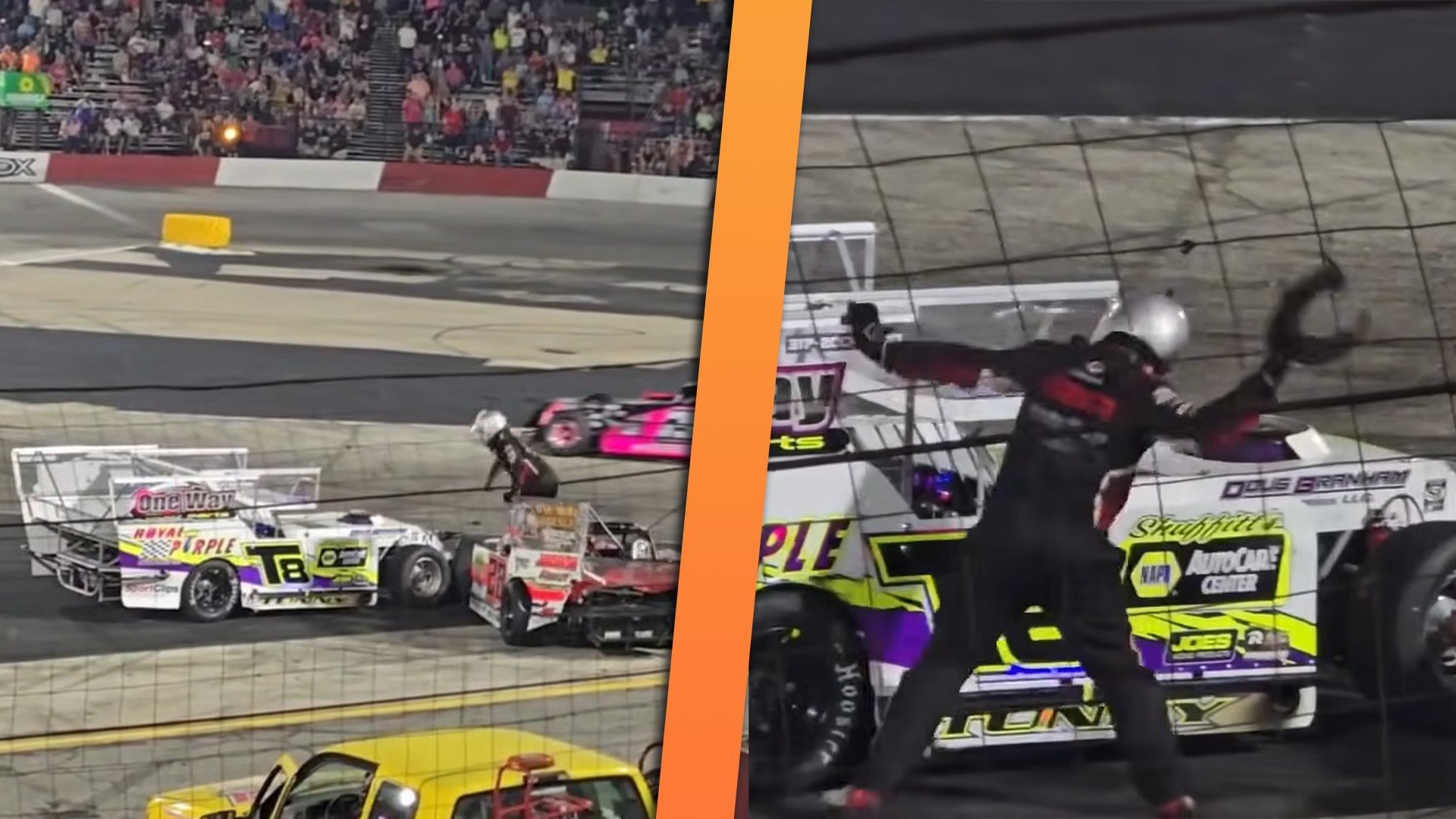
The aftermath was caught on viral video, showing a clearly incensed Shackelford exiting his vehicle to confront the Tunnys. What followed was a surreal sequence of events: as Shackelford stood near his stationary car, Dana Tunny maneuvered his vehicle across the track to strike Shackelford’s car again while he was vulnerable. In a desperate act of retaliation, Shackelford climbed into the cockpit of Dana’s car, engaging in a physical brawl and hurling his helmet at his rival before track officials and law enforcement intervened to pull the drivers apart.
The "Pit Lane" Reckoning: A Threat to Public Safety
While the on-track confrontation was intense, the situation reached a legal tipping point during the transit through the pit area. According to reports from Fox 59 and CBS 4, as Dana Tunny navigated his vehicle toward the pits, he allegedly swerved intentionally at a group comprising Shackelford’s pit crew and nearby spectators.
This maneuver, which authorities categorized as a weaponization of a vehicle, turned an interpersonal dispute into a public safety crisis. The act triggered a near-riotous response, with onlookers swarming the vehicle, landing punches and kicks on the car in an attempt to protect those in the path of the driver.
Official Responses and Legal Consequences
The swift intervention of local authorities prevented further injury, but the legal fallout for Dana Tunny was immediate and severe. The Marion County Prosecutor’s Office, having reviewed the evidence provided by both track security and fan footage, filed two Level 6 counts of Criminal Recklessness against Tunny.
The charges reflect the two distinct stages of his alleged misconduct:
- The Tactical Hit: The intentional T-bone of Shackelford while he was standing on or near his car.
- The Pit Lane Incident: The act of swerving a motor vehicle toward team members and spectators, which prosecutors deemed a reckless disregard for human life.
In the state of Indiana, a Level 6 felony is the lowest level of felony but carries a significant weight, with potential sentencing ranging from six months to two and a half years per count. The decision to pursue these charges underscores a growing intolerance within the racing community for "retaliatory driving," where drivers use their vehicles as tools of intimidation rather than instruments of sport.
The Context: Why Figure-8 Racing is Vulnerable
Figure-8 racing is a unique beast. By design, it creates situations where traffic is forced to collide or dodge one another at a central intersection. It is a sport built on the premise of managed chaos. When drivers respect the "unwritten rules" of the track, it is a thrilling test of reaction times and spatial awareness. When those rules are discarded, the track becomes a dangerous environment for both drivers and crew.
Industry experts note that while emotions often run high in short-track racing, the "Code of the Track" generally dictates that disputes are handled either through official protest or, at most, a post-race confrontation in the pits. Taking that aggression into the cockpit—using the car to settle a score—is the ultimate taboo.
Implications for the Indianapolis Speedrome
The fallout from this incident extends far beyond the legal troubles of one driver. The Indianapolis Speedrome is now facing intense scrutiny regarding safety protocols and driver discipline. For a track that has celebrated 50 years of history, this event marks a dark chapter that could result in:
- Stricter Disciplinary Procedures: The track may move toward permanent bans for drivers who engage in intentional, off-track, or post-contact violence.
- Enhanced Security Measures: The proximity of fans to the pit lane, highlighted by the danger posed to those standing near the track, will likely lead to a reevaluation of spectator barriers and access zones.
- Insurance and Liability Impacts: Such high-profile incidents often trigger reviews by insurers, potentially leading to increased costs or more stringent requirements for race organizers.
Conclusion: A Lesson in Professionalism
The events of this past Sunday at the Speedrome serve as a sobering reminder of the responsibility that comes with piloting a multi-thousand-pound machine. Regardless of the adrenaline, the heat of competition, or the intensity of a championship battle, the moment a driver uses their car to endanger others, they forfeit their status as a competitor and become a liability.
As the legal process plays out for Dana Tunny, the racing community is left to reflect on the importance of sportsmanship. The 50th Annual 3-Hour Figure-8 Championship was supposed to be a celebration of a unique American motorsport. Instead, it has become a cautionary tale about the thin line between the adrenaline of the race and the cold reality of the courtroom.
For the Indianapolis Speedrome, the path forward involves restoring the integrity of the sport. For the drivers, it requires a recalibration of what it means to compete. At the end of the day, no trophy is worth the consequences of a decision made in anger behind the wheel.
Do you have more information on this incident or other local racing news? Reach out to our editorial team at [email protected].
