




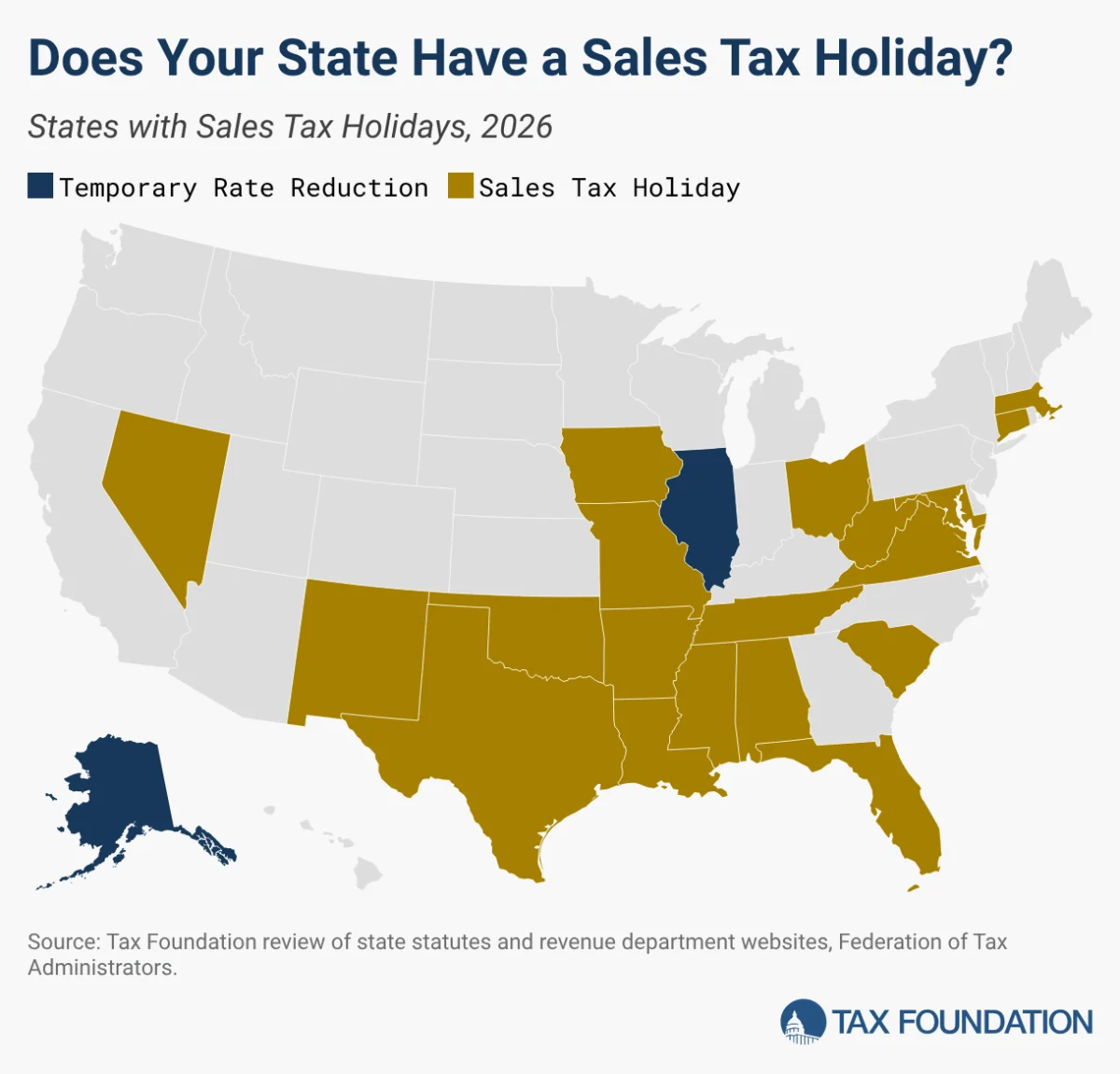
Despite their enduring popularity on the campaign trail, sales tax holidays—designated periods where specific goods are exempted from state and local sales taxes—remain a contentious fixture of American fiscal policy. Far from the economic silver bullet proponents claim them to be, these temporary exemptions represent a triumph of political optics over sound economic governance. As we move through 2026, the trend shows no sign of slowing, with 20 states now hosting such events, an increase from 19 the previous year.
While these holidays are marketed as a boon to the middle class and a stimulus for retail activity, a deeper analysis reveals a complex landscape of administrative nightmares, market distortions, and negligible net economic benefits.
The State of Play: Current Trends and Developments
The 2026 fiscal year has seen a resurgence in the implementation of sales tax holidays. Illinois, for instance, has reintroduced a holiday that was previously active in 2010 and 2022, signaling a return to this policy tool. Alabama has further expanded its roster of tax-exempt events, introducing a new holiday for SNAP-eligible food items, which joins its established exemptions for back-to-school supplies and severe weather preparedness equipment.
These figures represent only the state-level programs. They do not account for the localized sales tax holidays offered by various municipalities, such as those seen in Alaska, nor do they include the temporary "gas tax holidays" that several states have implemented to combat volatile fuel prices. The expansion of these programs suggests that state legislatures view the tax holiday as an essential, if temporary, palliative measure to address public frustration with the cost of living.
A Chronology of Policy Expansion
Sales tax holidays gained traction in the late 20th century as a "feel-good" policy that allowed legislators to demonstrate direct concern for household budgets. The trajectory has moved from narrow, single-purpose exemptions—typically focused on back-to-school essentials—to increasingly diverse categories.
- Initial Phase (Late 1990s–2000s): States began experimenting with "Tax-Free Weekends" focused exclusively on clothing and school supplies.
- Expansion Phase (2010–2020): States broadened the scope to include computers, energy-efficient appliances, and emergency preparedness gear. Maryland, Missouri, Texas, and Virginia became notable for their focus on energy-efficient products.
- Modern Era (2021–Present): The post-pandemic inflationary environment accelerated the return of these holidays. Legislators, facing pressure to provide relief, began reinstating dormant programs and adding niche categories like food and fuel.
The rapid implementation of these policies often creates legislative friction. For example, Illinois’ recent Public Act 104-0468 was signed into law on June 16, 2026, forcing retailers to adjust their systems for an August holiday on a truncated timeline. This pattern of last-minute legislation is the norm, not the exception, creating significant operational headaches for businesses.
The Economic Reality: Shifting Demand vs. Creating Growth
The central argument made by proponents is that sales tax holidays generate economic activity. However, economic data consistently contradicts this. Studies, including those from the National Bureau of Economic Research, suggest that sales tax holidays do not create new demand; they merely shift the timing of existing demand.
Consumers who need a laptop for school or a generator for storm season do not buy more of these items because of a tax break; they simply wait for the holiday to make the purchase they were already planning. When a state waives a 6 percent sales tax, it loses revenue on transactions that would have occurred regardless of the exemption. This revenue loss must be made up elsewhere, often through other, more economically damaging taxes.
Furthermore, these holidays fail to account for "impulse" purchases. While some shoppers may buy additional items, the revenue generated by these incidental sales is insufficient to offset the state’s total loss of tax revenue. By timing these holidays to coincide with peak demand (like the back-to-school rush in August), states are essentially giving away tax revenue on products that are already guaranteed to sell.
Structural Weaknesses: A Symptom of Broader Failure
The persistence of sales tax holidays is a clear indictment of a state’s broader tax code. If a government believes that a 5-to-8 percent tax rate is so burdensome that it must be suspended for a week to allow citizens to afford basic necessities, it is tacitly admitting that the tax is too high throughout the rest of the year.
Rather than enacting meaningful, permanent reforms—such as broadening the tax base to include more services or lowering the base sales tax rate—policymakers prefer the "temporary gimmick." This allows politicians to claim a victory for taxpayers without having to engage in the difficult work of structural tax overhaul. It is, in effect, a performative gesture that obscures the need for sustainable fiscal policy.
The Retailer’s Burden: Compliance and Distortions
For the business community, sales tax holidays are often a logistical nightmare. Retailers must update point-of-sale systems, train staff, and manage inventory spikes—all on a timeline dictated by political, rather than business, logic.
Small Business Disadvantage
Large retailers with sophisticated legal and IT departments can navigate these changes relatively easily. Small businesses, however, struggle. They often lack the staff to handle the rush or the expertise to navigate the labyrinthine regulations regarding which products qualify. When a state defines a "clothing" exemption, it often creates arbitrary distinctions (e.g., is a belt an accessory or clothing?) that require precise product-by-product classification.
Price Manipulation
Some research indicates that retailers may capture up to 20 percent of the tax-holiday benefit by subtly increasing prices during the promotion. This effectively negates the savings for the consumer, particularly those at the lowest income levels, while the state still suffers the full loss of tax revenue.
The "Nevada Model" vs. The Traditional Approach
Nevada has taken a unique approach with its National Guard tax holiday. Instead of forcing retailers to manage the exemption, the burden is placed on the consumer, who must pay the tax and file for a refund later. While this alleviates the pressure on businesses, it creates a barrier for the consumer. The administrative burden is so high that many eligible citizens likely forgo the benefit, rendering the policy ineffective.
Implications for Social Equity
Perhaps the most damaging aspect of sales tax holidays is their impact on low-income households. These consumers are often the least able to "time" their purchases. A family living paycheck-to-paycheck cannot necessarily afford to wait until August to buy school supplies if their children need them in July.
Furthermore, because these holidays often feature price caps—stipulating that only items under a certain dollar amount are exempt—they punish families who need higher-quality, more durable goods. If a family needs a high-quality winter coat that costs $10 over the price cap, they are disqualified from the benefit entirely. This creates an arbitrary tiering of tax relief that disproportionately benefits middle- and upper-class consumers who have the flexibility to shop during the window and the disposable income to buy within the price thresholds.
Conclusion: A Call for Permanent Reform
The prevalence of sales tax holidays across 20 states in 2026 is a testament to their political utility, not their economic wisdom. They provide a visible, easily understood benefit that wins votes, even as they create administrative costs for businesses, distort market behavior, and fail to provide significant relief to the most vulnerable.
If states wish to improve their economic health, they must pivot away from these temporary, inefficient gimmicks. The path toward a more competitive and fair tax environment lies in permanent rate reductions and the broadening of the tax base to ensure a stable, low-rate system year-round. Until policymakers prioritize sound economic principles over the short-term appeal of "tax-free" weekends, these holidays will continue to represent a lost opportunity for genuine, sustainable tax reform.
For those interested in a deeper dive into the mechanics of these policies, the 2022 Tax Foundation report provides a comprehensive breakdown of the long-term consequences of these tax distortions, reinforcing the reality that in the world of fiscal policy, there is no such thing as a free lunch—or a truly free tax holiday.
