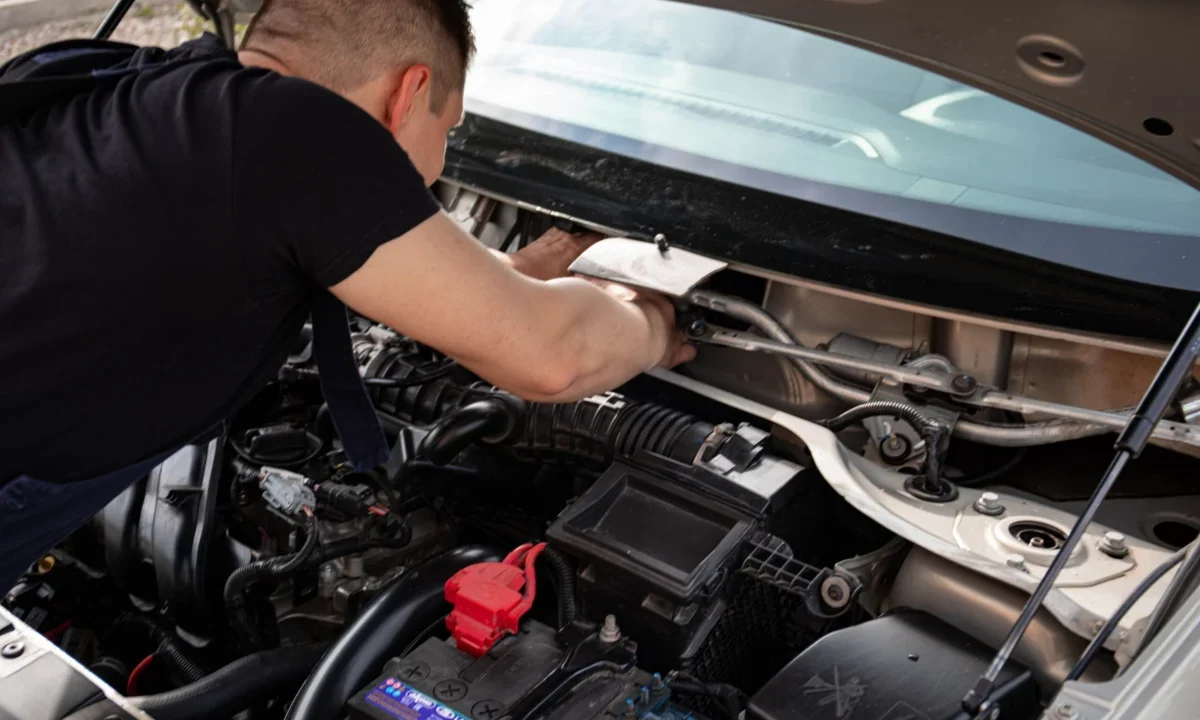



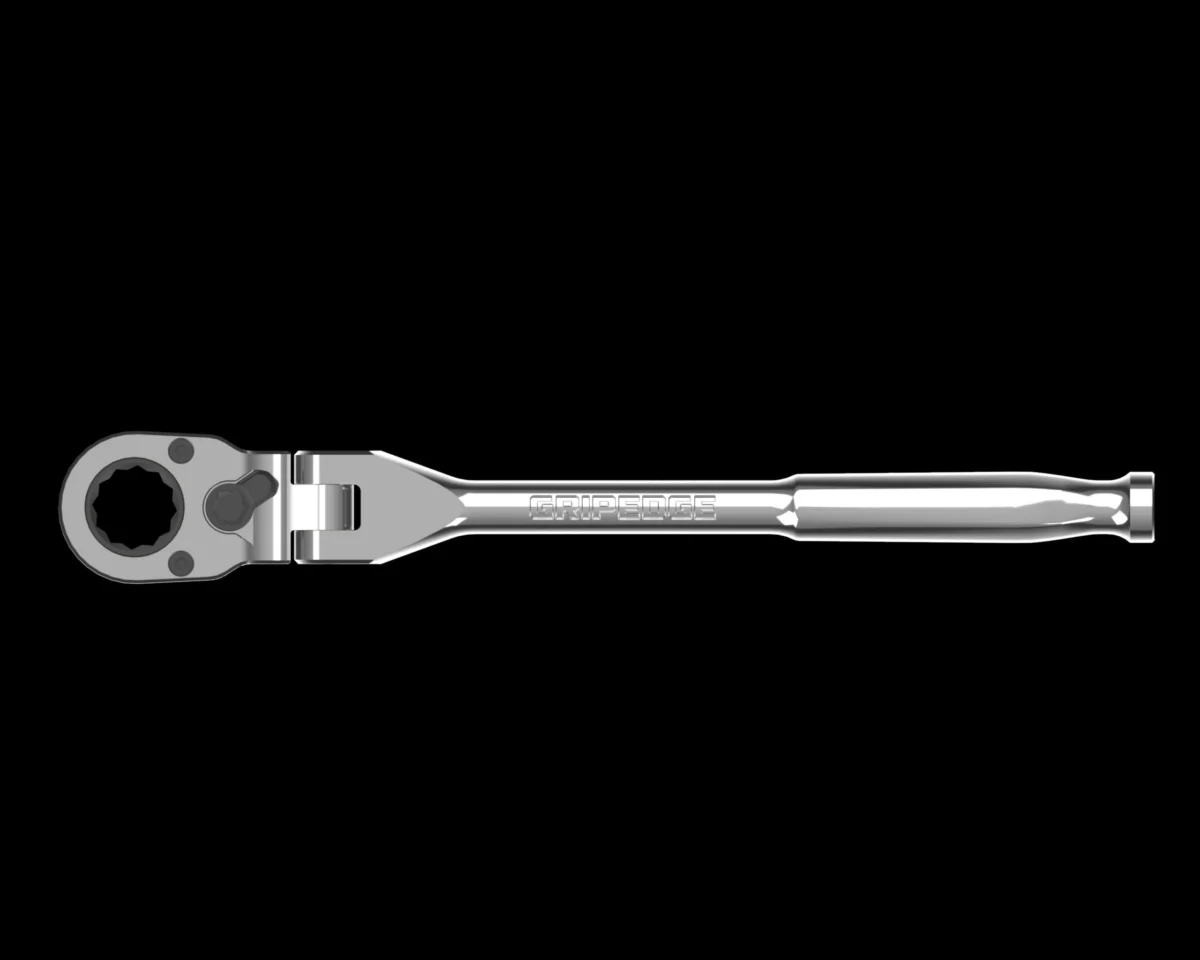
In the high-stakes environments of automotive repair, aerospace engineering, and industrial maintenance, the difference between a successful repair and a prolonged, costly struggle often comes down to a matter of millimeters. Recognizing the pervasive challenges faced by technicians working in increasingly cramped and complex machinery, GripEdge Tools has officially launched its latest engineering breakthrough: the 1/4-inch drive standard flex head 7/16 hex low-profile dual action driver ratchet (DFRA6572).
This new addition to the GripEdge lineup is not merely a tool; it is a specialized solution engineered to address the growing trend of high-density component packing in modern engines and industrial assemblies. By merging a compact form factor with advanced mechanical versatility, GripEdge aims to redefine how professionals interact with fasteners in the most restrictive environments.
Main Facts: The Anatomy of the DFRA6572
The DFRA6572 is designed as a multi-purpose powerhouse, specifically tailored for industries where precision is non-negotiable. At its core, the tool is a 1/4-inch drive ratchet featuring a 7/16-inch hex low-profile architecture. Measuring exactly 6.5 inches in length, the tool provides the necessary leverage for tightening or loosening fasteners without requiring the excessive swing room demanded by standard, bulkier ratchets.
Key Technical Specifications:
- Drive Size: 1/4-inch drive with a 7/16-inch hex low-profile head.
- Mechanism: A high-density 72-tooth gear system.
- Swing Arc: A tight 5-degree arc, enabling operation in confined spaces where handle movement is severely limited.
- Flexibility: A multi-angle flex head capable of 0 to 180-degree rotation.
- Directional Control: An integrated, low-profile reversible switch for instantaneous directional changes.
- Ergonomics: A contoured, high-grip handle designed to mitigate operator fatigue during high-repetition tasks.
- Serviceability: Designed with serviceable internal components, supported by dedicated repair kits to ensure longevity.
The most distinct feature of the DFRA6572 is its "dual action" capability. By incorporating a pass-through retention cavity, the ratchet allows for a direct interface with GripEdge dual action drivers. This configuration creates an exceptionally low-profile assembly that can fit into engine bays, aviation maintenance access panels, and industrial piping arrays that were previously considered "unserviceable" without major component disassembly.
Chronology: The Evolution of GripEdge Engineering
The development of the DFRA6572 was not a sudden occurrence but rather the result of an iterative design process that spanned several years of field observation.
Phase 1: Identifying the "Access Gap" (2021–2022)
GripEdge’s engineering team spent significant time in professional automotive and aerospace workshops. Their research highlighted a recurring issue: as modern equipment becomes more complex, the clearance around critical fasteners has decreased. Traditional ratchets were either too long to fit or too thick to reach, often forcing technicians to resort to makeshift tools that frequently resulted in stripped bolt heads or personal injury.
Phase 2: Prototyping and Ergonomic Testing (2023)
By early 2023, the focus shifted to finding a balance between durability and size. The primary challenge was maintaining torque strength in a tool with such a slim profile. Through the use of high-strength alloy steels and refined gear-tooth geometry, the team developed a 72-tooth mechanism that could withstand the professional-grade torque requirements of aerospace and automotive applications while maintaining a smooth, reliable "click" feel.
Phase 3: Field Validation (Late 2023–Early 2024)
The DFRA6572 underwent rigorous beta testing with industrial partners. During this phase, the flex-head hinge mechanism was stress-tested for wear, ensuring that the 0 to 180-degree pivot remained stable even after thousands of cycles. Feedback from these tests led to the final refinement of the contoured handle, which was adjusted to provide better tactile feedback for technicians wearing gloves.
Phase 4: Commercial Launch (2024)
Following successful field trials, GripEdge officially announced the availability of the DFRA6572, positioning it as the flagship solution for their "low-profile" initiative.
Supporting Data: Why 5 Degrees Matters
In the world of precision mechanics, the "swing arc" is the defining metric for efficiency. A standard ratchet often requires a 10- to 15-degree swing to engage the next tooth in the gear mechanism. In a modern, cluttered engine bay, a technician might only have an opening of 3 to 5 degrees.
Comparative Efficiency Analysis
| Feature | Traditional Ratchet | DFRA6572 |
|---|---|---|
| Swing Arc | 10–15 degrees | 5 degrees |
| Profile Height | High (Clearance issues) | Ultra-Low (Compact) |
| Directional Change | Often requires flipping tool | Integrated Reversible Switch |
| Flexibility | Static or limited pivot | 180-degree multi-angle |
By reducing the swing arc to 5 degrees, the DFRA6572 effectively doubles the efficiency of the operator in tight spaces. Furthermore, the 180-degree flex head allows the handle to be positioned at an angle that avoids knuckles scraping against sharp metal components—a common, yet often overlooked, health and safety concern in the workplace.
Official Responses: Addressing the Professional Need
The introduction of the DFRA6572 has been met with enthusiasm from within the industry. Jared Kukucka, Director of Sales at Grip Tooling Technologies, emphasized that the product was developed with a "problem-first" philosophy.
"The DFRA6572 represents everything GripEdge stands for—solving real problems that professionals face every day on the job," Kukucka stated during the launch press conference. "When you’re working in a tight engine bay or a confined aerospace assembly, every millimeter matters. This ratchet was built specifically for those moments where you are staring at a bolt and wondering how on earth you’re supposed to get a tool on it without taking the entire machine apart."
Kukucka further highlighted the sustainability aspect of the design. "We know that tools of this caliber are investments. By making the internal components serviceable and providing repair kits, we are acknowledging that these tools will see thousands of hours of use. We don’t want our customers to have to discard a tool because of a minor wear-and-tear issue; we want them to be able to restore it to peak performance."
Implications: The Future of Maintenance and Fabrication
The release of the DFRA6572 has significant implications for both professional labor and industrial design.
1. Reducing Downtime
In industrial maintenance and aerospace, "downtime" is the most expensive variable. If a technician can reach a fastener without needing to remove surrounding components, the time required for maintenance drops significantly. The DFRA6572 allows for "surgical" maintenance—reaching the specific component that needs repair without disturbing the surrounding assembly.
2. Ergonomics and Occupational Health
Musculoskeletal injuries and hand fatigue are prevalent in the trades. The combination of a 72-tooth mechanism (which requires less force to initiate movement) and a specifically contoured handle reduces the physical strain on the operator’s hand and wrist. This shift toward ergonomic design is essential for retaining skilled labor in physically demanding industries.
3. A Shift in Tooling Standards
As manufacturers continue to prioritize compact design in their products, the demand for specialized, low-profile tools will only increase. GripEdge’s move to create a "dual action" system suggests that we may see an entire ecosystem of accessories designed to integrate with the DFRA6572. This modular approach allows professionals to build a kit that grows with their needs rather than purchasing static tools that may become obsolete as technology advances.
4. The Value of Serviceability
In an era where "disposable" consumer goods have become the norm, GripEdge’s commitment to repairability is a strong differentiator. By providing repair kits, the company is signaling that the DFRA6572 is a long-term asset. This approach aligns with the growing demand for sustainability and waste reduction within industrial operations.
Conclusion: A New Standard for Access
The GripEdge DFRA6572 1/4-inch drive standard flex head ratchet is a masterclass in functional design. By acknowledging that space is the ultimate luxury in professional repair, GripEdge has provided a tool that empowers technicians to work with greater confidence and speed.
Whether it is navigating the dense wiring and piping of a modern vehicle or the critical fasteners within an aerospace housing, the DFRA6572 provides the necessary reach and leverage to get the job done. As the industry evolves, the tools that survive and succeed will be those that prioritize the human element of engineering—minimizing struggle, maximizing efficiency, and ensuring that no fastener is truly "out of reach."
For the professional technician, the DFRA6572 is more than just another ratchet in the toolbox; it is a vital companion in the daily fight against the constraints of space and time. Through its blend of precision engineering, thoughtful ergonomics, and a commitment to long-term serviceability, GripEdge Tools has set a new benchmark for what can be achieved in a compact package.
