





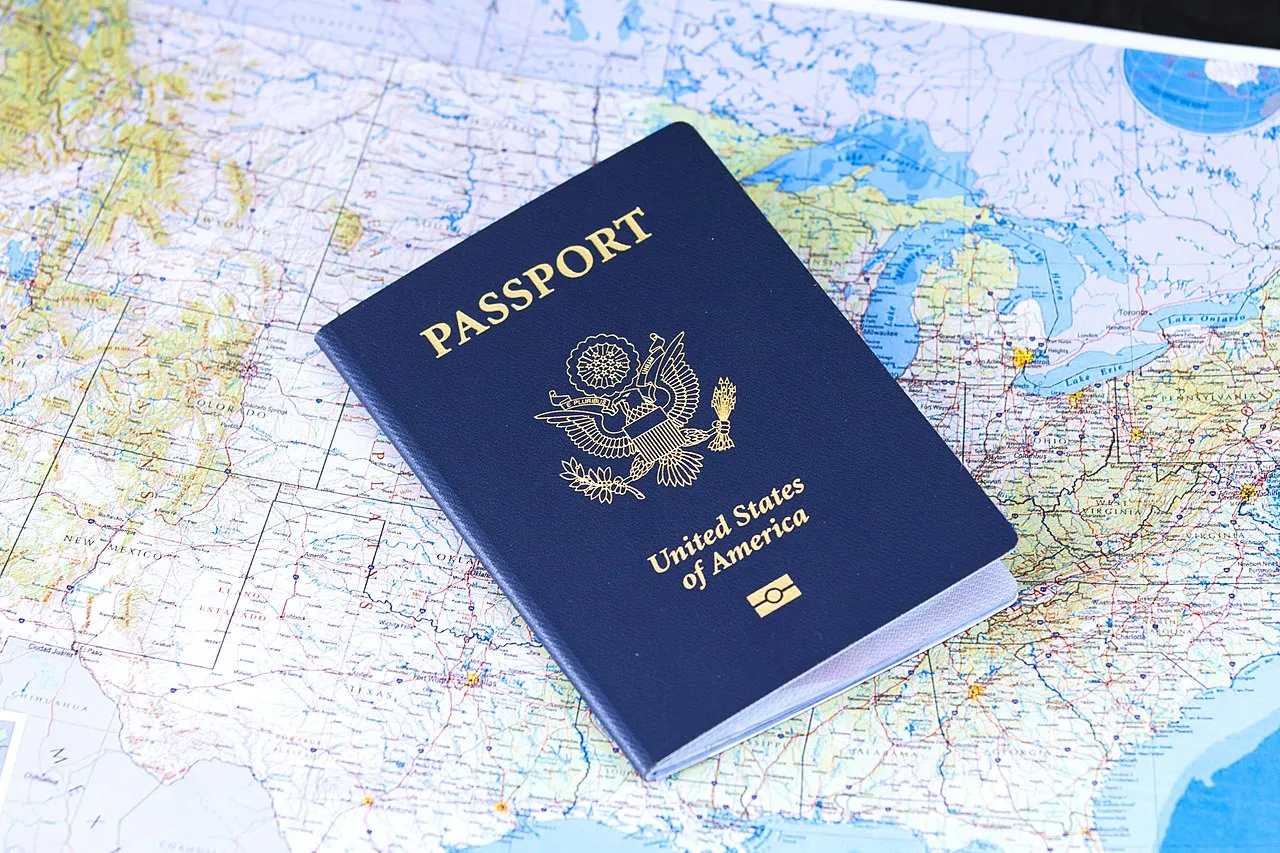
In the modern geopolitical landscape, a passport is far more than a travel document; it is a barometer of diplomatic influence, economic stability, and international standing. The latest findings from the Henley Passport Index have once again cast a spotlight on the United States, which remains stalled at 10th place. While the U.S. passport continues to provide significant global access, its stagnant position reflects a broader, tectonic shift in the hierarchy of international mobility.
The State of Play: Main Facts and Current Rankings
The Henley Passport Index, widely considered the gold standard for global mobility, ranks 199 passports according to the number of destinations their holders can access without a prior visa. In the most recent update, the United States holds visa-free access to 180 countries and territories. While this represents a modest increase of one destination compared to the January 2024 data, it is insufficient to improve the country’s standing.
Occupying the 10th position, the U.S. finds itself in a crowded tier of global mobility. Because the index utilizes a methodology where countries sharing the same number of visa-free destinations share a ranking, the 10th-place spot is currently shared with several other nations. More tellingly, the U.S. now trails 36 other countries that possess greater visa-free reach. This positioning is a far cry from the decade spanning 2006 to 2015, during which the U.S. consistently held the top spot, often sharing the crown with the United Kingdom.
A Chronological Decline: From Dominance to Stagnation
To understand the current state of U.S. travel power, one must look at the historical trajectory of the Henley index. For nearly two decades, the United States was perceived as the undisputed hegemon of global travel. However, the last decade has seen a consistent, albeit gradual, erosion of that influence.
The Peak Years (2006–2015)
During this period, the U.S. passport was synonymous with frictionless international movement. American citizens could navigate the globe with minimal administrative hurdles, a reflection of the country’s post-9/11 security-integrated diplomatic agreements and its robust bilateral relations.
The Turning Point (2016–2022)
Beginning around 2016, the gap between the U.S. and its peers began to shrink. As other nations, particularly in the European Union and Asia, negotiated more aggressive visa-waiver programs, the U.S. found its diplomatic leverage challenged. The trend culminated in October 2023, when the United States fell to 12th place—the lowest ranking it had held in the 20-year history of the index.
The Current Stasis (2023–2024)
The rebound from 12th to 10th place is viewed by experts not as a triumph, but as a minor correction in a long-term downward trend. The stagnation in the 10th position suggests that while the U.S. is not actively losing access, it is failing to keep pace with the aggressive visa-liberalization strategies adopted by rising powers in the Middle East and Asia.
Supporting Data: The Rise of the New Global Elite
The decline of the U.S. is best understood when viewed alongside the meteoric rise of other nations. The current leaderboard is dominated by Singapore, which consistently claims the top spot, offering its citizens access to 195 destinations. Following closely are major European powers, including France, Germany, Italy, and Spain, which have leveraged their internal EU mobility agreements to maintain top-tier status.
The shift is not limited to Europe. Nations like the United Arab Emirates (UAE) have shown the most dramatic ascent in the index’s history. Over the past decade, the UAE has surged forward, adding dozens of visa-free destinations through strategic diplomatic outreach and economic investment. This contrast highlights a critical reality: global mobility is no longer a fixed asset of Western nations but a reward for strategic economic and diplomatic maneuvering.
The data reveals a "mobility gap." While the U.S. remains in the top tier, the divergence between the "haves" and "have-nots" is widening. Countries at the bottom of the index, such as Afghanistan, Syria, and Iraq, remain trapped in cycles of geopolitical instability that restrict their citizens to fewer than 30 visa-free destinations. The U.S. sits in a comfortable, yet precarious, middle ground between these extremes.
Official Perspectives and Expert Analysis
The shift in the U.S. position has not gone unnoticed by policymakers and international relations analysts. Henley & Partners, the firm behind the index, explicitly characterizes this development as a "longer-term shift in mobility power away from the traditional transatlantic leaders."
Dr. Christian H. Kaelin, Chairman of Henley & Partners, has frequently emphasized that the index is a reflection of soft power. "The ability to travel visa-free to a wide array of destinations is no longer merely a convenience—it’s a powerful economic tool," Kaelin noted in the latest report. According to this view, visa-free access is a lubricant for international trade. When citizens can travel easily for business or investment, capital flows follow.
From a diplomatic standpoint, the Department of State often points to security and reciprocity as the primary drivers of visa policy. The U.S. maintains a strict stance on visa waivers, requiring rigorous security screenings for citizens of countries within the Visa Waiver Program (VWP). While this ensures national security, it creates a "closed-loop" dynamic. If the U.S. does not expand its VWP list or negotiate new reciprocal agreements, its ranking is unlikely to improve. Critics argue that the U.S. has become too insular, prioritizing border control at the expense of the soft-power benefits that come with enhanced international mobility.
The Implications: Why Passport Power Matters
The stagnation of the U.S. passport carries significant implications for the American economy, its corporate sector, and its global influence.
Economic and Business Consequences
For the American business traveler, the current ranking is largely sufficient, as the U.S. still maintains access to all major economic hubs. However, the psychological and practical impact of falling rankings cannot be ignored. In a globalized economy, "friction" is the enemy of growth. If competitors from Singapore or the EU can conduct business in emerging markets without the bureaucratic overhead of visa applications, they hold a competitive advantage.
Soft Power and Diplomatic Reach
Passport rankings are, in essence, a measure of international trust. When a country’s passport ranking falls, it can be interpreted as a subtle signal that its diplomatic relationships are underperforming or that its citizens are viewed with more caution by foreign authorities. The long-term decline of the U.S. and the United Kingdom—which has fallen from third to sixth over the last two decades—serves as a cautionary tale about the waning influence of traditional Western power.
Foreign Investment and Talent Attraction
A country’s passport ranking also influences its ability to attract "Global Citizens"—high-net-worth individuals, tech talent, and entrepreneurs. These individuals often prioritize countries that offer ease of movement for themselves and their families. As the U.S. makes the process of entry more complex for international visitors, it risks becoming less attractive to the very people who drive innovation.
Conclusion: The Path Forward
The U.S. passport remains one of the most powerful in the world, providing access to the vast majority of the globe. However, the data from the Henley Passport Index serves as an unmistakable warning. The era in which the United States could rely on its status as a global hegemon to ensure frictionless travel for its citizens is fading.
To reclaim its position, the U.S. must grapple with a changing world order. This will require a delicate balancing act: maintaining the security protocols that define its border policy while simultaneously fostering the diplomatic agreements necessary to reduce travel friction. If the U.S. continues to treat mobility as a static, guaranteed right rather than a dynamic asset to be managed, it risks further erosion of its global standing.
In the coming decade, the nations that succeed will be those that view mobility as an instrument of economic growth. Whether the United States can adapt to this new reality—and leverage its passport as a tool for modern diplomacy—remains one of the most significant, yet overlooked, challenges of contemporary American foreign policy. As the world becomes more interconnected, the value of a passport will only grow, and the U.S. cannot afford to be left behind in the rankings of the global future.
