





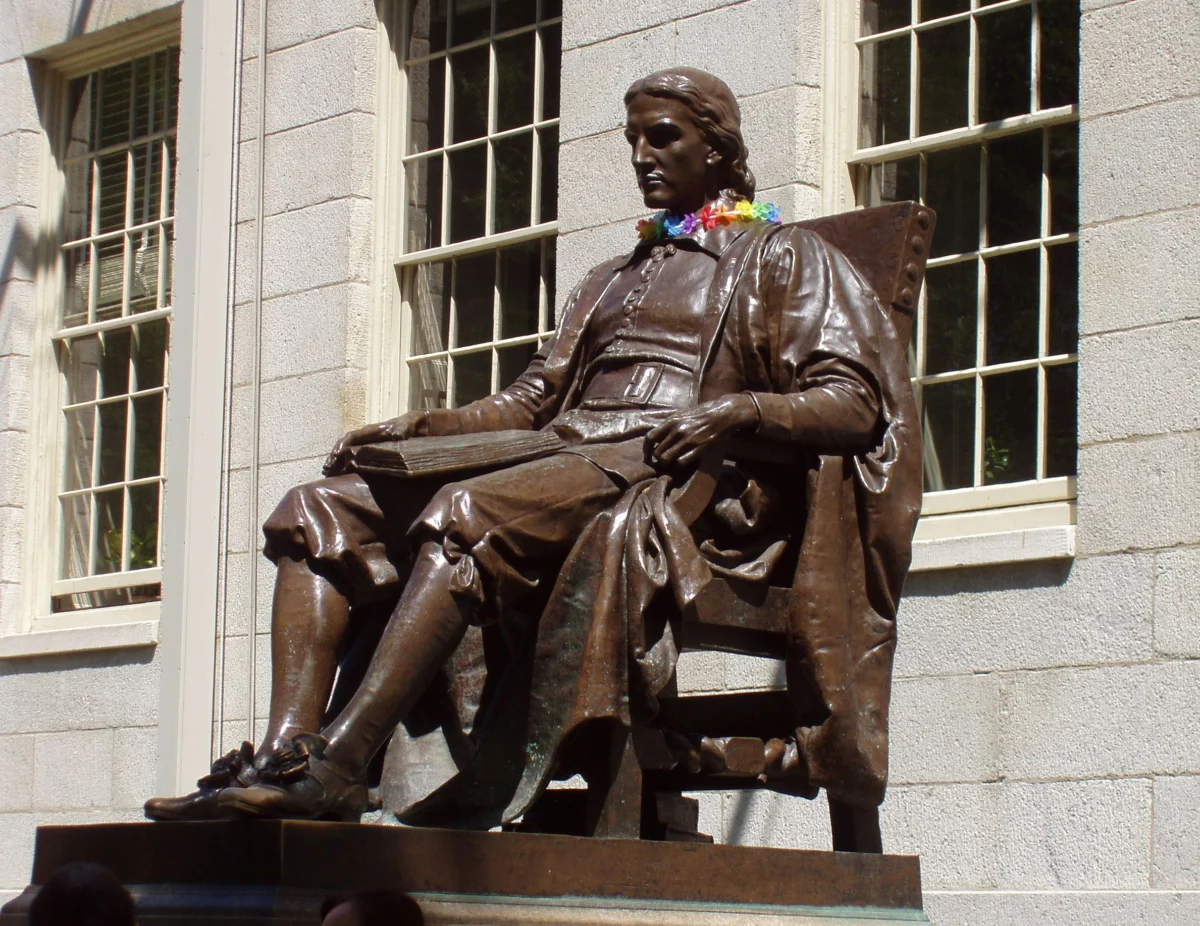
CAMBRIDGE, MA — The U.S. Department of Justice (DOJ) has formally initiated a sweeping compliance review into Harvard University, marking a significant escalation in the federal government’s scrutiny of foreign influence in American higher education. The investigation seeks to determine whether financial aid programs at the Ivy League institution, funded by China-based entities, violate federal civil rights laws by allegedly prioritizing international students over American citizens based on national origin.
The inquiry, led by the DOJ’s Civil Rights Division, centers on whether Harvard has allowed foreign donors to impose discriminatory conditions on endowments, potentially breaching Title VI of the Civil Rights Act of 1964. This landmark legislation mandates that any institution receiving federal financial assistance must not discriminate on the basis of race, color, or national origin.
The Core Allegations: Foreign Strings Attached
The investigation stems from a broader audit of Harvard’s foreign-funding disclosures. Under Section 117 of the Higher Education Act, American universities are legally obligated to report any gifts or contracts from foreign sources that exceed $250,000.
In its formal notice to the university, the DOJ highlighted a troubling pattern regarding what investigators have termed "Chinese Restricted Funds." The department alleges that certain donors from China have stipulated that their financial contributions be used exclusively for aid programs that favor students from specific national origins.
The DOJ’s preliminary findings suggest that Harvard may have acquiesced to these restrictive covenants, potentially creating a tiered financial aid system that systematically disadvantages domestic students. Assistant Attorney General for Civil Rights Harmeet K. Dhillon issued a stern rebuke regarding the intersection of federal funding and foreign-directed philanthropy:
"Schools cannot take federal dollars and then turn around and accept money from foreign sources to give financial aid that deliberately excludes American citizens," Dhillon stated.
While the DOJ emphasized that it has not reached a definitive conclusion regarding legal violations, the scope of the request for documents is extensive. Investigators have demanded detailed records concerning the management of these specific funds, including donor agreements, internal communications regarding fund allocation, and anonymized data on aid recipients—specifically requesting information on their country of origin, citizenship status, and the specific amounts of aid disbursed.
A Chronology of Growing Friction
The current probe is not an isolated incident but rather the latest development in a protracted battle between the federal government and elite academic institutions over transparency and national security.
- Early 2020s: Growing concerns regarding intellectual property theft and foreign influence on university campuses lead to increased oversight of Section 117 reporting requirements.
- February 2026: Tensions peak as the Trump administration intensifies its public dispute with Harvard, focusing on the university’s massive endowment, admissions policies, and the volume of international students enrolled in high-tech fields.
- June 2026: Following a review of Harvard’s recent filings, the DOJ identifies discrepancies and potential discriminatory triggers within the university’s financial aid disclosures.
- July 2026: The DOJ officially opens a compliance review, issuing a deadline of July 31 for Harvard to produce the requested documentation.
This timeline reflects a pivot from general oversight to specific, targeted investigations into how foreign capital is shaping the internal policies of America’s most prestigious universities.
Supporting Data: The Scale of Foreign Investment
The sheer volume of foreign funding flowing into Harvard underscores the complexity of the DOJ’s task. According to official DOJ announcements, Harvard has disclosed approximately $4.5 billion in foreign funding. Of that total, over $630 million has been traced to China-based sources.
Critics of the current university funding model argue that such large-scale reliance on foreign capital—particularly from geopolitical rivals—creates a "shadow influence" that can undermine the university’s primary mission of serving the domestic public interest. The DOJ’s investigation aims to parse out which of these funds are truly philanthropic and which are designed as instruments of soft power, potentially influencing the demographic makeup of the student body.
Official Responses and Institutional Defense
Harvard University has moved quickly to defend its practices, maintaining that its internal controls are robust and fully compliant with federal law.
"Harvard complies with all foreign-funding disclosure requirements," said university spokesperson Jason A. Newton. "The university does not unlawfully discriminate on the basis of race, ethnicity, or national origin in allocating financial aid. We will review the DOJ’s letter and engage with the government to provide the necessary information to resolve these inquiries."
The university’s defense rests on the argument that financial aid programs are often designed to foster global diversity and that such programs are distinct from discriminatory practices. By framing these funds as essential to the university’s mission of maintaining a global academic footprint, Harvard seeks to distance itself from the DOJ’s allegations of systemic bias against Americans.
Conversely, international stakeholders have signaled concern over the implications of the probe. Liu Chang, a spokesperson for the Chinese Embassy in Washington, warned that the investigation risks politicizing academic collaboration. "Educational cooperation between China and the US benefits both countries," Chang noted. "Political concerns should not be allowed to disrupt normal educational and academic exchanges that serve as a bridge for mutual understanding."
Broader Implications for Higher Education
The investigation into Harvard carries profound implications for the future of higher education in the United States.
1. The Legal Precedent of Title VI
If the DOJ successfully proves that foreign-restricted funds have led to discriminatory outcomes, it could set a massive precedent. This would force universities nationwide to re-evaluate their donor agreements. Institutions may be forced to reject millions of dollars in restricted gifts if those gifts require them to prioritize foreign nationals over domestic students.
2. Transparency and Accountability
The probe reinforces the government’s stance that universities, as recipients of massive federal research grants and student loan subsidies, operate under a "public trust." This suggests a permanent shift toward higher levels of scrutiny regarding how universities manage their books, particularly when dealing with foreign entities that may have political agendas at odds with U.S. national interests.
3. The Geopolitical Dimension
This case occurs within the broader context of a "New Cold War" between the U.S. and China. By investigating the flow of Chinese capital into the Ivy League, the federal government is signaling that it views academic institutions as critical infrastructure. The outcome of this probe will likely dictate how closely the Department of Education and the DOJ monitor the "internationalization" of the American campus in the coming decade.
4. Impact on Students
For the average American student, the outcome of this case could determine whether future financial aid packages remain competitive. If foreign-restricted funds are redirected or if universities are forced to restructure their endowments, it could lead to a shift in the allocation of aid, potentially opening more funding opportunities for domestic applicants.
Conclusion
As the July 31 deadline approaches, all eyes remain on Cambridge. The conflict between Harvard’s commitment to global academic reach and the federal government’s insistence on protecting domestic civil rights has reached a critical juncture. Whether this investigation results in systemic policy changes or concludes as a high-profile, yet narrow, compliance check remains to be seen. However, one thing is certain: the era of "no-strings-attached" foreign funding for elite universities has effectively come to an end. The DOJ has made it clear that federal oversight will no longer stop at the gates of the university, especially when it suspects that American students are being sidelined in their own backyard.
