

The global transportation and autonomous vehicle (AV) sectors are undergoing a profound recalibration. As capital intensive development cycles collide with technical bottlenecks and shifting corporate alliances, the idealized vision of rapid, driverless commercialization is being replaced by a more pragmatic, hard-nosed reality.
From Tesla’s sobering financial disclosures and structural setbacks to the dramatic, multi-billion-dollar return of controversial industry pioneers, the landscape of mobility is shifting. This report analyzes the critical developments defining this transition, mapping out the core facts, historical context, financial realities, and long-term implications for the future of transportation.
Main Facts: Tesla’s Stumbles and Travis Kalanick’s High-Stakes Return
The latest cycle of corporate earnings and venture announcements has exposed a sharp divergence between public relations narratives and operational execution across the mobility sector.
Tesla’s Multi-Front Delays and Robotaxi Decline
During its second-quarter earnings call, Tesla officially walked back its previously aggressive timelines for scaling its next-generation platforms. The electric vehicle (EV) pioneer admitted it will not reach "volume production" of its highly anticipated Cybercab, Tesla Semi, or the Megapack 3 energy storage system in 2026.
Furthermore, despite heavily promoting the expansion of its Robotaxi pilot programs into new metropolitan markets in Florida and Texas, Tesla’s actual operational metrics revealed a surprising contraction. An analysis of the company’s Q2 shareholder letter indicates that paid robotaxi miles driven by its fleet of Model Y SUVs actually fell quarter-over-quarter, indicating that scaling a driverless ride-hailing network remains far more complex than deploying software updates.
The $1.7 Billion Resurrection of Atoms
In a development that has sent shockwaves through the Silicon Valley venture ecosystem, Uber co-founder and former CEO Travis Kalanick has secured $1.7 billion in fresh capital for his rebranded holding company, Atoms. Originally conceived around his ghost kitchen venture, Atoms has pivoted sharply into heavy industrial automation and robotics.
The massive funding round, led by Andreessen Horowitz (a16z), was raised to finance the acquisition of Pronto—an industrial automation startup founded by Anthony Levandowski—and to scale practical, platform-agnostic autonomous technologies. In a striking twist of corporate irony, Uber itself participated in the round, investing a confirmed $100 million into its former leader’s new venture.
Shifting Alliances: Waymo, Uber, and Ford
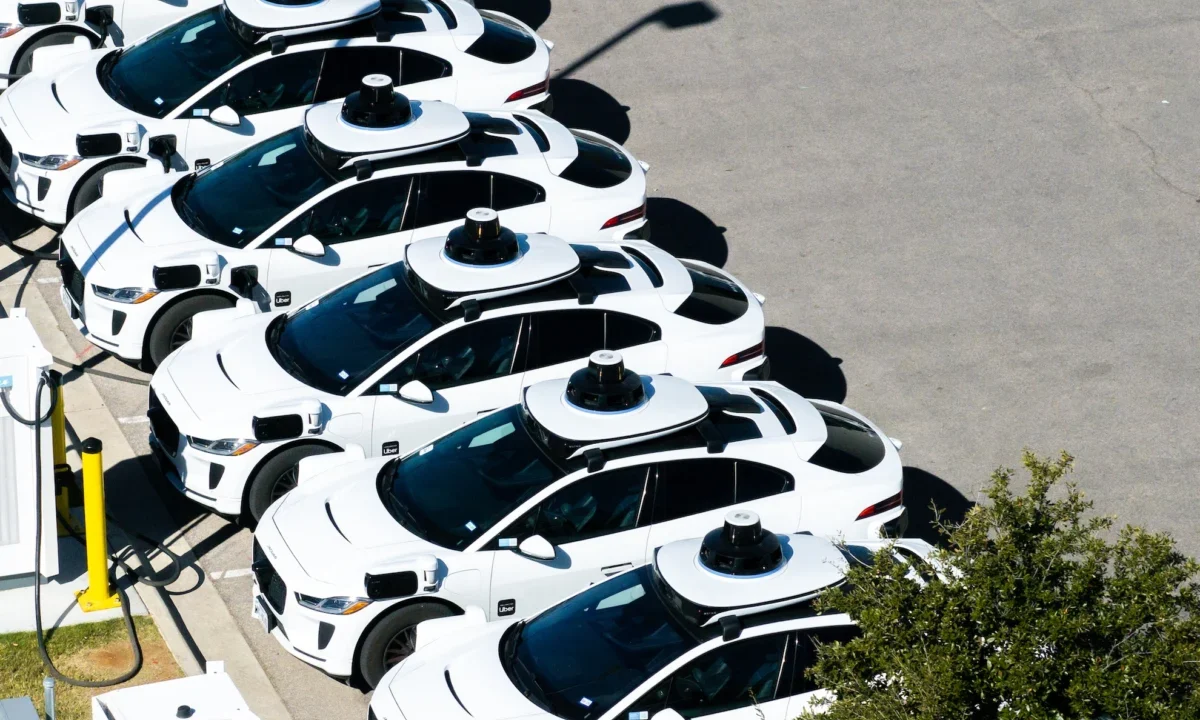
The commercial AV landscape is also witnessing a fragmentation of early-stage partnerships. Waymo is reportedly engaged in internal deliberations to dissolve its operating agreement with Uber in key expansion markets like Austin and Atlanta ahead of schedule. Meanwhile, legacy automakers are diversifying their software stacks. Ford has announced a strategic partnership with Apple to integrate Apple Maps and the MapKit developer suite into its upcoming 2027 EV lineup, signaling a subtle but important shift away from its exclusive reliance on Google’s in-car ecosystem.
Chronology: From the 2016 Otto Scandal to the 2026 Autonomy Reset
To understand the current state of play in the autonomous vehicle sector, one must trace the deeply intertwined history of its key actors. The current alignment of Kalanick, Levandowski, Uber, and Waymo is the culmination of a decade-long saga of litigation, corporate espionage, and executive reshuffling.
[2016] ------------------> [2017] ------------------> [2018] ------------------> [2020-2024] -------------> [Q2 2026]
Uber acquires              Waymo sues Uber           Uber & Waymo              Levandowski pardoned;    Atoms raises $1.7B;
Levandowski's Otto;        for trade secret          settle lawsuit            Kalanick builds Atoms;   Tesla delays volume
Kalanick is Uber CEO. theft; Kalanick resigns. for $245M. Pronto scales up. production to post-2026.- August 2016: Under the leadership of Travis Kalanick, Uber acquires Otto, a self-driving truck startup founded by former Google engineer Anthony Levandowski, for $680 million. Levandowski is placed in charge of Uber’s autonomous vehicle program.
- February 2017: Waymo (Google’s self-driving spin-off) files a landmark lawsuit against Uber, alleging that Levandowski stole over 14,000 highly confidential files and trade secrets regarding LiDAR technology before departing Google.
- June 2017: Following a series of unrelated corporate scandals, executive departures, and intense shareholder pressure, Travis Kalanick resigns as CEO of Uber.
- February 2018: On the fifth day of a highly publicized trial, Uber and Waymo reach a surprise settlement. Uber agrees to pay Waymo 0.34% of its equity (valued at roughly $245 million) and pledges not to incorporate Waymo’s intellectual property into its autonomous technology.
- August 2020: Anthony Levandowski is sentenced to 18 months in prison for trade secret theft. He is later granted a full presidential pardon in January 2021, allowing him to return to the technology sector to focus on his new startup, Pronto.
- Late 2025 – Early 2026: Kalanick’s holding company, Atoms, quietly negotiates the acquisition of Pronto. Uber makes a discreet $100 million investment into Atoms.
- July 2026: Atoms officially announces its $1.7 billion funding round. Concurrently, Tesla reports its Q2 2026 earnings, walking back its 2026 production targets and revealing a drop in robotaxi mileage.
Supporting Data: Mileage Drops, Capital Expenditure, and Safety Metrics
A closer inspection of the data reveals the financial and operational friction points that are forcing companies to adjust their timelines.
Tesla’s Robotaxi Operational Contraction
While Tesla’s shareholder letter presented a cumulative graph suggesting uninterrupted upward growth in paid robotaxi rides between August 2025 and June 2026, a quarterly breakdown of the underlying data paints a very different picture.
- Q1 2026 Paid Robotaxi Mileage: ~1.1 million miles
- Q2 2026 Paid Robotaxi Mileage: ~700,000 miles
- Quarter-over-Quarter Decline: -36.3%
Tesla Paid Robotaxi Miles (2026)
========================================
Q1 2026: █████████████████████ 1.1M miles
Q2 2026: █████████████ 700K miles (-36%)
========================================
This decline indicates that Tesla’s pilot programs, which utilize human-supervised Model Y vehicles acting as an interim robotaxi fleet, are hitting local demand ceilings or facing operational constraints.

Tesla’s Q2 2026 Financial Strain
Tesla’s financial performance during the second quarter highlights the immense capital cost of its transition toward AI and autonomy:
- Capital Expenditure (CapEx): Doubled year-over-year as the company invested heavily in H100 GPU clusters and manufacturing infrastructure.
- Free Cash Flow: Re-entered negative territory, reversing several quarters of positive cash generation.
- Net Income: Declined by 5% year-over-year, as rising operational and developmental costs outpaced marginal revenue growth.
Venture Capital Infusions and Acquisitions
While Tesla faces cash constraints, private markets are pouring capital into specialized sub-sectors of the mobility ecosystem:
- Atoms Funding: $1.7 billion led by Andreessen Horowitz, valuation undisclosed.
- Sila Nanotechnologies: Raised $300 million (led by Atreides Management and Sutter Hill Ventures) to expand its Moses Lake, Washington plant. The facility aims to produce advanced silicon anode materials sufficient to power over 100,000 EVs annually, bucking the broader electric vehicle market slowdown.
- Einride Acquisition: The Swedish autonomous and electric trucking company acquired EV charging orchestration startup Flipturn in an all-stock transaction valued at $38 million.
Autonomous Vehicle Safety Performance
The Insurance Institute for Highway Safety (IIHS) published a comprehensive study titled "Rise of the machines: crash experiences of highly automated vehicles and human drivers." The findings provide strong statistical backing for the safety profile of commercial Level 4 driverless systems:
- Waymo Crash Rate: In police-reportable accidents, Waymo’s autonomous passenger fleet demonstrated a 68% lower crash involvement rate compared to human drivers operating in the same geographic areas.
- Data Collection Caveat: The IIHS emphasized that federal and state-level vehicle-miles-traveled (VMT) data collection for Level 4 vehicles remains fragmented, calling for standardized reporting to facilitate more accurate, real-time safety assessments.
Official Responses and Executive Statements
Tesla’s Technical Calibration Hurdles
During the Q2 conference call, Elon Musk addressed the technical realities of deploying the purpose-built Cybercab. In doing so, he contradicted years of marketing assertions that Tesla’s existing consumer fleet of 10 million vehicles provides all the data necessary to train its Full Self-Driving (FSD) neural networks.
"We need to accumulate miles using Cybercabs retrofitted with steering wheels and accelerator and braking pedals so we can calibrate the software to the specific dynamics of the Cybercab chassis. The physical weight, center of gravity, steering ratios, and suspension dynamics of the Cybercab are distinct from the Model 3 and Model Y, requiring a dedicated data collection and calibration phase before driverless deployment can occur at scale."
— Elon Musk, CEO of Tesla
Atoms’ Industrial Autonomy Mandate
Following the announcement of the $1.7 billion funding round, an internal email sent by Anthony Levandowski to Pronto employees clarified the corporate mission of the consolidated Atoms entity.
"Atoms is investing heavily in Industrial AI and physical automation applied to mining and transport. Pronto is a core strategic priority for Atoms, and this round is designed to accelerate exactly what matters most to your operations: scaling practical, OEM-agnostic autonomy."
— Anthony Levandowski, Founder of Pronto
Ford’s Dual-OS Integration Strategy
Responding to inquiries regarding Ford’s decision to integrate Apple Maps and Apple’s MapKit for Automotive into its next-generation EV platforms starting in 2027, a Ford spokesperson clarified the company’s relationship with Google:
"Our collaboration with Apple to bring advanced MapKit capabilities to our next-generation midsize electric truck does not change the role of Google Automotive Services across our current and near-term production programs. We believe in offering a flexible, multi-platform ecosystem that serves the diverse preferences of our vehicle owners."
The Impending Waymo-Uber Divergence
Following reports that Waymo is planning to end its commercial partnership with Uber, spokespeople from both companies acknowledged the changing dynamics of their regional agreements in Austin and Atlanta.

"Waymo has indicated its intention to launch its own dedicated rider app and operating network in Austin and Atlanta starting in January 2028. While our current commercial agreement extends through May 2028, we are actively discussing the most orderly transition for riders in those markets."
— Uber Corporate Statement
Industry Implications and Future Outlook
The strategic moves observed in Q2 2026 point to a broader reorganization of the autonomous and electric vehicle landscapes.
                                 ┌────────────────────────┐
                                 │  Traditional Consumer  │
                                 │    AV Market Slows     │
                                 └───────────┬────────────┘
                                             │
                      ┌──────────────────────┴──────────────────────┐
                      ▼                                             ▼
        ┌──────────────────────────┐                  ┌──────────────────────────┐
        │  Shift to Heavy Industry │                  │   Platform-Agnostic      │
        │   (Mining, Freight, etc.)│                  │    Software & Alliances  │
        └──────────────────────────┘                  └──────────────────────────┘
The Pivot to Heavy Industry and "Unsexy" Autonomy
The massive capitalization of Atoms, paired with its acquisition of Pronto, signals a shift in venture capital focus. Investors are moving away from urban robotaxis and toward industrial, off-road, and heavy-freight autonomy.
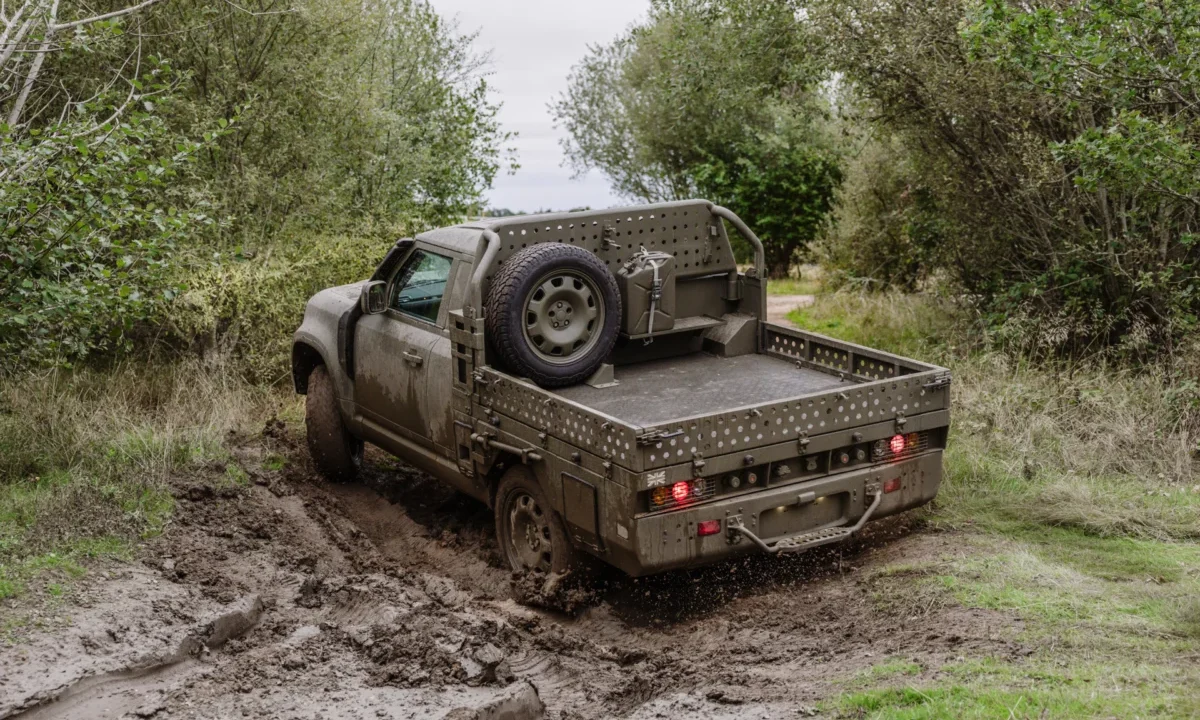
Urban passenger transport presents an incredibly complex "long tail" of edge cases, heavy regulatory scrutiny, and low margins. In contrast, closed-course industrial environments—such as mines, quarries, agricultural fields, and logistics hubs—offer predictable operating domains, fewer legal hurdles, and immediate return on investment. Atoms’ focus on "OEM-agnostic autonomy" indicates that the near-term future of self-driving technology may lie in retrofitting industrial machinery rather than deploying driverless passenger cars on city streets.
Aurora’s Driverless Freight Scaling
While passenger robotaxi programs encounter friction, autonomous trucking is quietly approaching commercial maturity. Aurora’s launch of its second-generation driverless hardware—designed for a million-mile service life and operating without human safety drivers on its Dallas-to-Houston route—marks a critical milestone. By targeting a fleet of 200 fully autonomous trucks by the end of the year, Aurora is positioning itself to capture high-volume commercial freight lanes. This is a sector where driver shortages and hours-of-service limitations create a clear economic incentive for automation.
The Fragmenting AV Ecosystem
The potential breakup of the Waymo-Uber partnership reveals a fundamental truth about the ride-hailing value chain: whoever controls the customer interface and the physical fleet controls the margins.
Initially, Waymo relied on Uber’s massive user base to bootstrap its commercial operations in new cities. However, as Waymo’s brand equity grows and its fleet expands, continuing to share revenue with Uber becomes strategically disadvantageous. By launching its own proprietary app in Austin and Atlanta, Waymo is attempting to vertically integrate its service, directly challenging Uber’s ride-hailing monopoly.
Regulatory and Legal Headwinds
Finally, macroeconomic and regulatory pressures continue to mount. The National Highway Traffic Safety Administration’s (NHTSA) decision to evaluate vehicle exit safety standards—triggered by complaints regarding Tesla’s emergency mechanical door releases—highlights the growing regulatory scrutiny on non-traditional vehicle designs.
Concurrently, the legal fallout from rapid corporate alliances remains a persistent risk, as evidenced by the federal insider trading charges leveled against Volkswagen engineers ahead of the VW-Rivian joint venture. As these companies navigate an increasingly complex web of trade, intellectual property, and financial regulations, the path to commercializing advanced mobility solutions will be defined as much by legal and regulatory compliance as by technological breakthroughs.
