





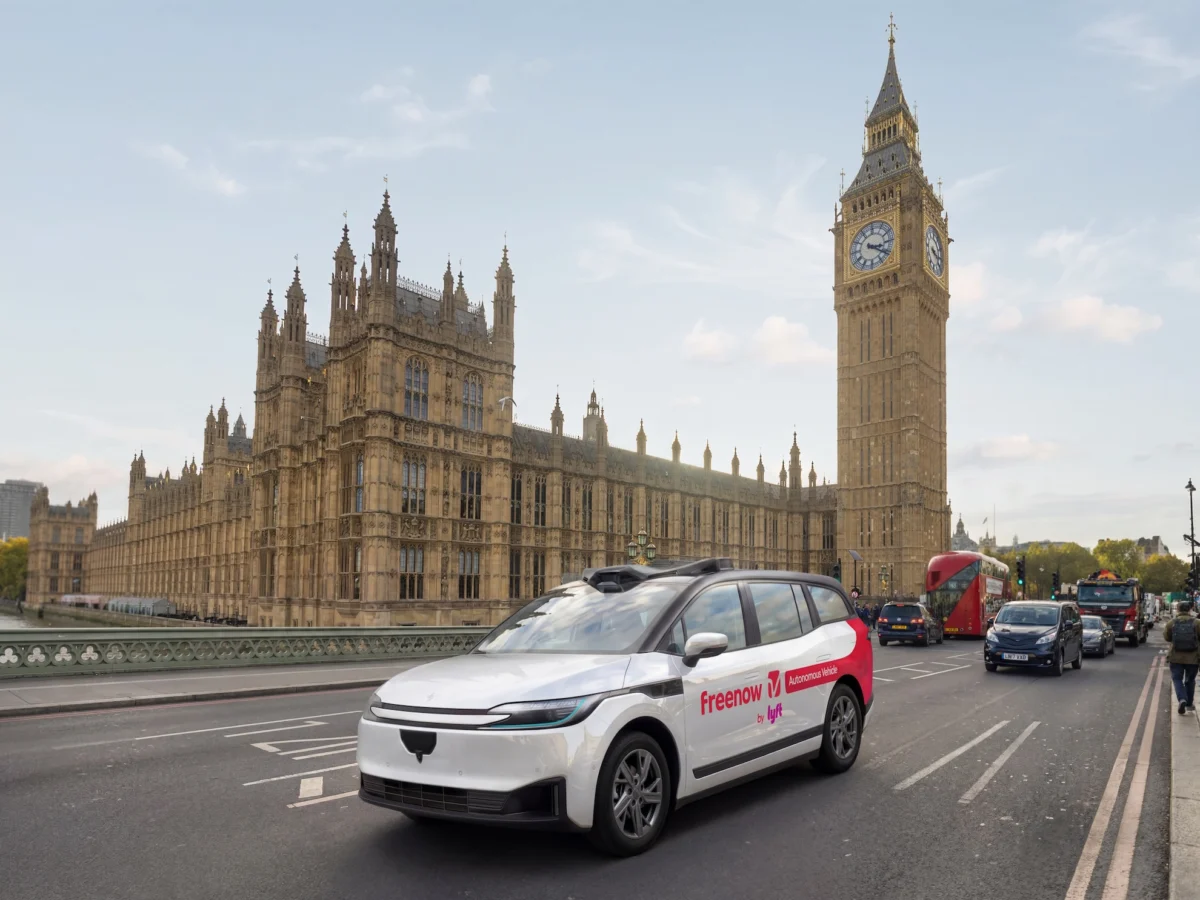
Main Facts: Baidu and Lyft Launch London AV Trials
Chinese technology powerhouse Baidu has officially commenced public road testing of its autonomous vehicles in London. This deployment marks a major milestone in its strategic partnership with Lyft and Freenow, the prominent European multi-mobility platform acquired by Lyft. The initiative represents Baidu’s first physical operational footprint in Europe, positioning the company directly in the middle of an increasingly crowded and highly competitive race to dominate the continent’s autonomous ride-hailing market.
+-----------------------------------------------------------------------------+
|                           LONDON AV TRIAL OVERVIEW                          |
+------------------------------------+----------------------------------------+
| Lead Technology Partner            | Baidu (Apollo Go RT6 platform)         |
| Fleet Operator & Network           | Freenow by Lyft                        |
| Initial Testing Location           | London Borough of Brent                |
| Operational Safety Setup           | Human safety operators behind the wheel|
| Target Commercial Launch Date      | 2027 (subject to regulatory approval)  |
+------------------------------------+----------------------------------------+
The testing, which began in the northwest London borough of Brent, utilizes a fleet of Baidu’s purpose-built Apollo Go RT6 vehicles. For this initial phase, all vehicles are staffed with trained human safety operators behind the wheel to monitor the driving systems and intervene if necessary.
The ultimate objective of the partnership is to integrate Baidu’s Level 4 autonomous vehicle technology directly into the Freenow app, which Lyft acquired for approximately $197 million. Once fully certified and cleared by UK regulators, the service will transition to fully driverless operations, allowing Londoners to hail a robotaxi through the rebranded "Freenow by Lyft" application. The companies have set a target launch window of 2027 for commercial operations, depending on the speed of regulatory approvals from British transport authorities.
Chronology: The Road to London’s Autonomous Future
The arrival of Baidu’s self-driving fleet in London is the culmination of a multi-year consolidation and expansion strategy by Lyft, combined with a rapidly accelerating regulatory push by the British government to position the UK as a global hub for autonomous vehicle development.
  2025: Lyft acquires Freenow for $197M to secure European footprint.
   │
   ├── Late 2025: Baidu and Lyft form strategic partnership to deploy Apollo Go RT6.
   │
   ├── April 2026: Waymo begins testing AVs with safety drivers in London.
   │
   ├── May 2026: UK Government opens applications for AV pilot program.
   │
   ├── June 2026: Uber and Wayve announce London robotaxi partnership and interest list.
   │
   └── Mid-2026 (Present): Baidu and Freenow launch physical testing in Brent.
   │
  2027 (Target): Projected commercial launch of Baidu-Freenow robotaxi service.
Key Milestones in the Baidu-Lyft-Freenow Alliance
- 2025: The European Foothill: Lyft completed its acquisition of Freenow, a German-founded taxi and multi-mobility app, for $197 million. This acquisition provided Lyft with an established network of licensed taxi and private-hire vehicle (PHV) drivers across key European markets, most notably in the United Kingdom, Germany, Ireland, and Spain.
- Late 2025: The Strategic Alliance: Approximately one year prior to the current London trials, Baidu and Lyft signed a landmark partnership. The agreement designated Baidu’s Apollo Go RT6 as a primary hardware platform for Lyft’s European autonomous strategy, leveraging Freenow’s dispatch and routing software.
- Mid-2026: Physical Deployment: Baidu and Freenow deployed their first physical test fleet on London streets, initiating active data collection and localized testing in the borough of Brent.
The Competitive Escalation in the UK Capital
The timeline of Baidu’s arrival in London coincides with a flurry of activity from rival autonomous vehicle developers, turning the UK capital into a primary testing ground for driverless technology:
- April 2026: Waymo, the autonomous driving subsidiary of Alphabet, officially deployed its vehicles on London roads with human safety operators, marking its first major expansion outside of the United States.
- June 2026: Ride-hailing giant Uber and British artificial intelligence pioneer Wayve announced a joint venture to launch a robotaxi service in London. The companies opened an online interest list, allowing London residents to sign up to be among the first to test the service, which is also operating with safety drivers ahead of fully driverless integration.
- Mid-2026: Baidu’s entry into Brent establishes a three-way competitive dynamic between Alphabet (Waymo), Uber/Wayve, and Baidu/Lyft.
Supporting Data: Technical Capabilities and Market Readiness
The deployment of autonomous vehicles in a dense, historic city like London requires highly sophisticated hardware and immense operational data.
Baidu’s Apollo Go RT6: A Purpose-Built Powerhouse
Unlike converted passenger cars, the Apollo Go RT6 is a purpose-built, all-electric vehicle designed specifically for robotaxi operations.
+----------------------------------------------------------------------------+
|                    BAIDU APOLLO GO RT6: KEY SPECIFICATIONS                 |
+-----------------------------------+----------------------------------------+
| Vehicle Architecture              | Purpose-built, all-electric (EV)       |
| Autonomy Classification           | Level 4 Autonomous                     |
| Sensor Suite Integration          | 38 sensors (including 8 LiDARs)        |
| Computing Power                   | Dual-redundant 1200 TOPS platform      |
| Interior Layout                   | Flexible (removable steering wheel)    |
| Global Operational Experience     | Over 6 million rides delivered (China) |
+-----------------------------------+----------------------------------------+
Baidu brings unparalleled operational data to the London trial. In China, its Apollo Go service is the largest robotaxi operator in the world, having completed more than 6 million commercial rides across major metropolitan areas, including Wuhan, Beijing, Shenzhen, and Chongqing. This vast repository of real-world driving data gives Baidu a distinct advantage in navigating complex urban environments, which it must now adapt to the unique road layouts, roundabouts, and driving habits of the UK.
The London AV Landscape: Waymo vs. Uber-Wayve vs. Baidu
The three coalitions currently vying for dominance in London represent fundamentally different approaches to autonomous vehicle technology:
+------------------+------------------------+--------------------------------+
| COALITION        | PRIMARY TECH PARTNER   | CORE ARCHITECTURAL APPROACH    |
+------------------+------------------------+--------------------------------+
| Baidu / Lyft     | Baidu (Apollo Go)      | Sensor-fusion, highly-mapped,  |
|                  |                        | purpose-built hardware (RT6)   |
+------------------+------------------------+--------------------------------+
| Waymo            | Waymo Driver (Alphabet)| Highly-mapped, localized Lidar |
|                  |                        | and camera-centric suite       |
+------------------+------------------------+--------------------------------+
| Uber / Wayve     | Wayve                  | "Embodied AI" end-to-end deep  |
|                  |                        | learning (mapless approach)    |
+------------------+------------------------+--------------------------------+
Official Responses and the UK Regulatory Environment
The successful deployment of robotaxis in the UK depends on navigating a strict regulatory environment. Both corporate leaders and public officials have emphasized that safety and collaboration with municipal bodies remain the top priorities.
Collaborative Governance: TfL, CCAV, and Safety Standards
Baidu and Freenow by Lyft have confirmed that they are working closely with British regulators to ensure their testing meets the highest safety standards. These bodies include:
- Transport for London (TfL): The local government body responsible for the transport system in Greater London, which oversees taxi and private hire licensing.
- The Centre for Connected and Autonomous Vehicles (CCAV): A joint policy unit established by the UK government to coordinate AV policy and funding.
The trials are launching under the auspices of the UK’s newly established regulatory framework for autonomous vehicles. In May, the UK government officially opened applications for its national AV pilot program. This initiative allows developers to test self-driving passenger and logistics vehicles under direct government oversight, paving the way for commercialization under the landmark Automated Vehicles Act.
Executive Insights: Balancing Innovation and Labor
In launching the London trials, leadership at Freenow by Lyft sought to reassure the traditional taxi and private-hire industry, which has historically viewed autonomous vehicles as an existential threat.
Thomas Zimmermann, Chief Executive Officer of Freenow by Lyft, issued a statement highlighting the company’s commitment to its existing driver pool:
"As a platform with deep roots in the taxi industry, our priority is ensuring that autonomous technology supports the professional drivers who keep London moving. We view this technology not as a replacement, but as a vital tool to meet the growing demand for urban mobility while maintaining the high standards of service our passengers expect."
Implications: The ‘Hybrid Network’ and the Geopolitics of Autonomy
The entry of Baidu, Lyft, and Freenow into the London market has wide-ranging implications for the future of urban transport, labor dynamics, and international technology competition.
                     ┌─────────────────────────────┐
                     │   Autonomous Ride-Hailing   │
                     │     Market Entry (UK)       │
                     └──────────────┬──────────────┘
                                    │
            ┌───────────────────────┴───────────────────────┐
            ▼                                               ▼
┌───────────────────────┐                       ┌───────────────────────┐
│     OPERATIONAL       │                       │     GEOPOLITICAL      │
│     IMPLICATIONS      │                       │     IMPLICATIONS      │
├───────────────────────┤                       ├───────────────────────┤
│ • Hybrid Network      │                       │ • Chinese AV tech     │
│   (human + robot)     │                       │   enters Western soil │
│ • 24/7 fleet coverage │                       │ • Regulatory standard │
│ • Shift in insurance  │                       │   setting in Europe   │
│   and liability       │                       │ • High-stakes patent  │
│ • Workforce transition│                       │   & data battleground │
└───────────────────────┘                       └───────────────────────┘
The Hybrid Network Strategy
Both Freenow by Lyft and its competitor Uber have adopted the term "hybrid network" to describe their mid-term operational models. Under this framework, autonomous vehicles and human drivers will co-exist within the same dispatch system.
This hybrid approach serves several strategic purposes:
- Demand Smoothing: Autonomous vehicles can be deployed to handle predictable, high-volume routes during peak hours or late-night shifts, while human drivers handle more complex trips, hospital runs, or routes outside the geofenced autonomous zones.
- Geofencing Limitations: Early-stage robotaxis are strictly geofenced—unable to operate in severe weather or outside of highly mapped areas. Human drivers remain essential to service passengers traveling beyond these designated zones.
- Labor Mitigation: By framing the transition as "hybrid," operators hope to minimize labor disputes and regulatory pushback from powerful taxi unions, particularly in highly unionized European capitals.
Geopolitical and Technological Rivalries
The London trials represent a significant geopolitical development: the direct competition of Chinese and American autonomous vehicle technologies on European soil.
Baidu is widely recognized as China’s national champion in autonomous driving. Its ability to successfully deploy and scale in a major Western capital like London will serve as a crucial test of whether Chinese AV platforms can overcome regulatory, geopolitical, and data-privacy hurdles in Western democracies.
As London becomes the primary battleground for Waymo, Wayve, and Baidu, the city’s regulatory decisions will likely set the standard for how autonomous ride-hailing is adopted, governed, and integrated across the rest of Europe.
