





Executive Summary: A Constitutional Collision
In a significant legal victory for a coalition of states and business advocacy groups, the US Court of Appeals for the First Circuit has denied the Trump administration’s request to stay an injunction against a controversial $100,000 fee for H-1B visa applications. The ruling, issued on Friday, reinforces a lower court’s decision that the executive branch overstepped its constitutional authority by attempting to unilaterally impose a massive financial levy on the hiring of foreign specialty workers.
The policy, which sought to increase the cost of obtaining an H-1B visa from the standard range of $2,000–$5,000 to a flat $100,000, was framed by the administration as a necessary measure to protect American labor markets. However, the three-judge appellate panel concluded that the government failed to demonstrate a likelihood of success on the merits of its appeal, signaling that the fee likely constitutes an unconstitutional tax—a power exclusively reserved for Congress under the US Constitution.
Chronology of the Dispute
The saga of the $100,000 H-1B fee has been defined by rapid administrative action followed by a swift and coordinated legal backlash.
The Proclamation (September 2025)
President Donald Trump issued a formal proclamation in September 2025, declaring that the H-1B program had become a tool for wage suppression. The administration argued that employers were using the program to import foreign labor at sub-market rates, thereby displacing American workers. The $100,000 fee was presented as a "market correction" intended to disincentivize the outsourcing of specialized roles.
The Multi-State Litigation (Late 2025–2026)
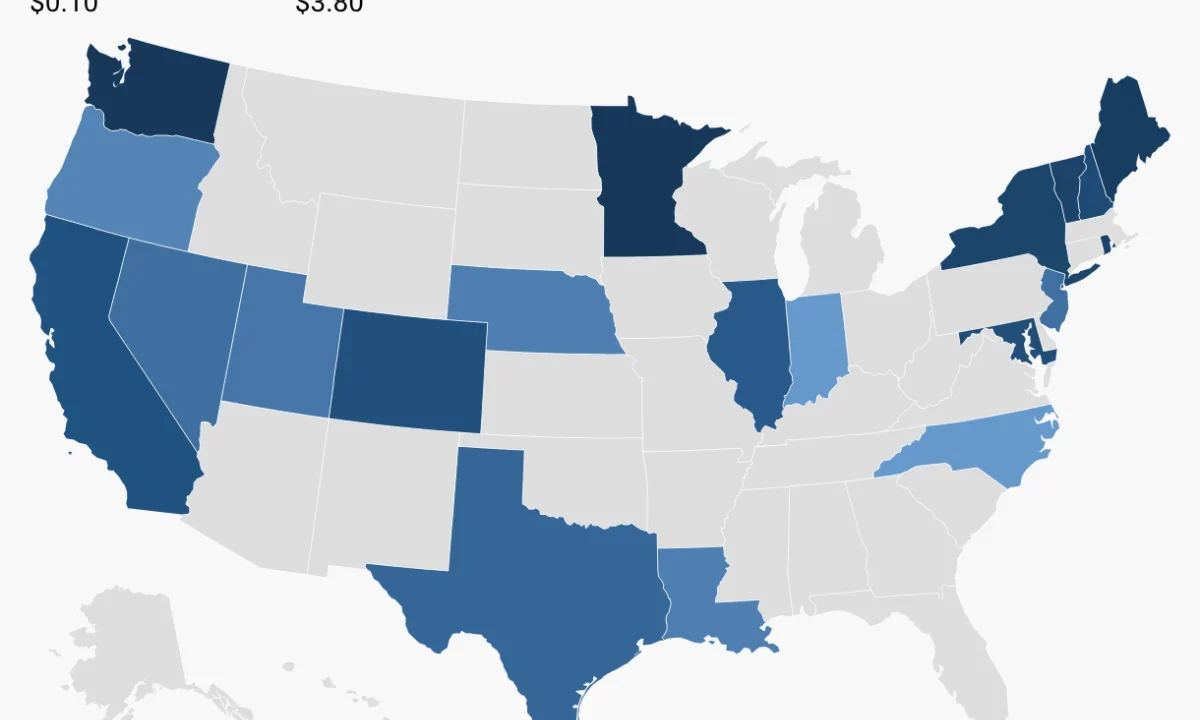
Following the announcement, a coalition of 20 states, spearheaded by California, filed suit in the US District Court for the District of Massachusetts. The plaintiffs argued that the fee was not a regulatory expense, but an unauthorized tax designed to dismantle the H-1B visa system entirely.
The District Court Ruling (June 2026)
In June 2026, US District Judge Leo Sorkin vacated the fee. Judge Sorkin’s opinion was scathing, highlighting that the fee lacked a nexus to the actual costs of administering the visa program. He ruled that the executive branch had violated the Administrative Procedure Act (APA) by failing to undergo the required notice-and-comment rulemaking process, and further violated the separation of powers by usurping Congress’s taxing authority.
The Appeals Court Decision (July 2026)
The administration immediately appealed the ruling to the First Circuit. On Friday, the appellate court denied the administration’s motion for a stay, effectively keeping the fee off the books while the broader legal challenge continues to wind through the judiciary.
Supporting Data: Understanding the H-1B Ecosystem
To understand the gravity of this legal battle, one must look at the mechanics of the H-1B visa program.
- The Nature of the Visa: H-1B visas are non-immigrant documents issued to workers in "specialty occupations" that require at least a bachelor’s degree. They are the lifeblood of the US technology, engineering, and medical sectors.
- Congressional Caps: Under current law, the program is capped at 65,000 standard visas per year, with an additional 20,000 visas reserved for applicants who hold advanced degrees (master’s or higher) from US institutions.
- The Financial Shift: Historically, the cost of filing for an H-1B visa has been relatively modest, usually ranging between $2,000 and $5,000 when accounting for filing fees, fraud prevention fees, and attorney costs. A $100,000 fee represents a 2,000% to 5,000% increase, effectively rendering the program cost-prohibitive for all but the largest multinational conglomerates.
- Industry Reliance: Technology companies, particularly in Silicon Valley and the Boston tech corridor, have long relied on H-1B talent to maintain a competitive edge in global innovation. Proponents of the program argue that these workers fill critical gaps in the domestic labor supply, particularly in artificial intelligence, software engineering, and biotechnology.
Official Responses and Stakeholder Positions
The legal battle has created a deep schism between executive prerogative and the business community.
The Administration’s Stance
The Trump administration remains steadfast in its narrative. A spokesperson for the Department of Homeland Security stated that the president’s authority to restrict entry is "broad and plenary," particularly when national security and economic stability are at stake. The administration maintains that the fee was an essential mechanism to prevent "labor arbitrage," where companies prioritize cheaper foreign workers over qualified American citizens.
The US Chamber of Commerce
The Chamber of Commerce has emerged as a primary antagonist to the administration’s policy. In their separate litigation, they argued that the fee acts as a de facto embargo. Their filings emphasize that startups and mid-sized businesses—which lack the massive cash reserves of "Big Tech"—would be disproportionately harmed, stifling innovation and forcing companies to relocate their research and development centers to countries like Canada or the United Kingdom.
The Coalition of States
California Attorney General and other state representatives have focused on the constitutional implications. Their argument is rooted in the "Non-Delegation Doctrine." They contend that if the President is permitted to set arbitrary six-figure fees on immigration categories, the executive branch effectively becomes the legislative branch, stripping Congress of its duty to regulate the nation’s borders and economic policy.
Legal and Economic Implications
The ongoing litigation carries profound implications for the future of US immigration policy and the separation of powers.
Constitutional Precedent
The First Circuit’s refusal to stay the injunction is a significant blow to the "unitary executive" theory often employed by the current administration. By framing the fee as a tax rather than a regulatory user fee, the courts are reinforcing the principle that the power of the purse rests solely with Congress. If this logic holds through a final ruling, it will set a strong precedent limiting the administration’s ability to use executive orders to reshape immigration law via financial mechanisms.
The "Split" Circuit Problem
A complicating factor is the conflicting ruling from the US District Court for the District of Columbia, which upheld the fee in December 2025. This creates a "circuit split" scenario. While the First Circuit has blocked the fee in its jurisdiction, the status remains precarious nationwide. The Supreme Court may eventually be forced to intervene to provide a definitive ruling on whether such fees fall under the President’s executive authority or the legislative powers of Congress.
Economic Consequences
The uncertainty surrounding the H-1B program is already creating a "chilling effect" in the labor market. HR departments at major tech firms report a slowdown in hiring foreign nationals, fearing that a sudden reversal of the court rulings could leave them with significant financial liabilities.
For the American economy, the implications are two-fold:
- Innovation Drain: If US companies cannot secure the specialized talent they need, they may be forced to outsource operations entirely, leading to a loss of intellectual property and long-term tax revenue.
- Wage Competition: Conversely, proponents of the administration’s policy argue that if the fee succeeds in limiting foreign labor, it may force companies to invest more heavily in domestic training and education, eventually raising wages for American engineers.
Conclusion: A Long Road Ahead
As the First Circuit’s decision makes clear, the judiciary is not yet prepared to grant the executive branch carte blanche to overhaul immigration through punitive financial measures. However, with the D.C. District Court case still pending and the potential for an appeal to the Supreme Court, the fate of the H-1B program remains in a state of suspended animation.
For the hundreds of thousands of workers currently in the US on H-1B visas, and the companies that depend on them, the upcoming months will be critical. The tension between the executive branch’s desire for stringent protectionism and the business community’s demand for global talent access is the defining economic conflict of the current term. Whether the $100,000 fee is ultimately struck down or finds a path to implementation, the legal battle has already rewritten the playbook for how immigration policy is contested in the 21st century.
